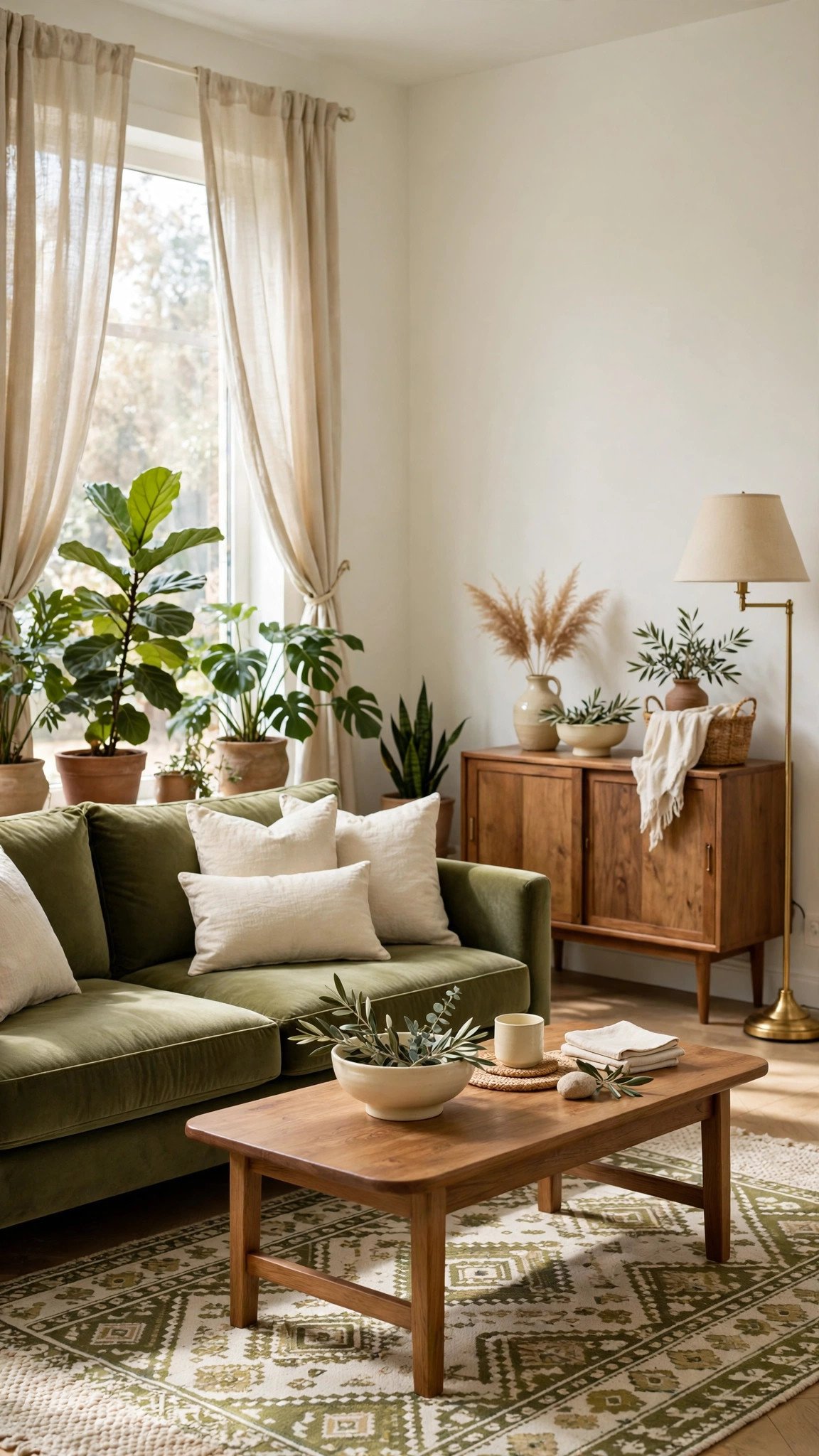
Olive Green Living Room Ideas: 12 Calm, Cosy Looks
Olive green is one of the calmest colours for a living room — softer than forest green, warmer than sage, and beautiful with cream, wood, and brass. These twelve olive green living room ideas are practical, budget-friendly, and made for real homes, whether you want a full olive room or just a few green touches. If you prefer a deeper green, a moody emerald green living room brings the same calm feeling with richer, darker walls.
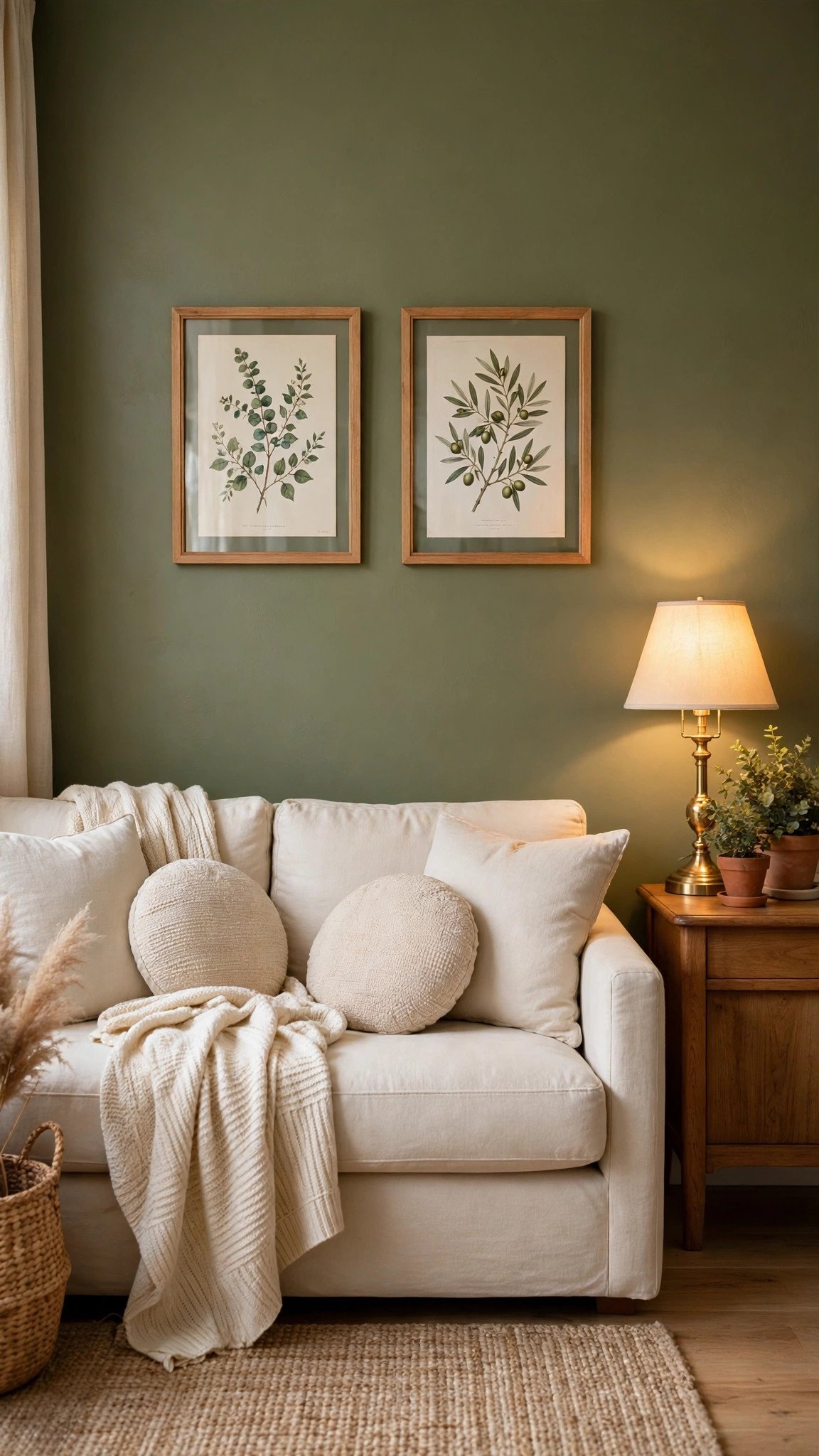
1. Paint an Olive Green Accent Wall
An olive green accent wall is the fastest way to give a living room its calm, cosy character. One wall in a soft olive shade makes the whole room feel grounded, and it turns an ordinary sofa wall into a feature. Pick the wall behind the sofa or the fireplace, so the colour frames the part you look at most.
Choose a muted olive rather than a bright one — a shade with warm, earthy undertones looks richer in daylight and softer in the evening. Test a sample first and look at it morning and night, because olive can shift between green and grey in different light. Once the paint is up, keep the other walls cream or warm white so the olive wall stays the star. If you are decorating on a tight budget, these budget living room decor ideas show how to get a polished look for less.
2. Choose an Olive Green Sofa
An olive green sofa is the centrepiece of a calm living room. Olive upholstery hides everyday marks far better than cream, and it pairs with almost every neutral in the room — cream cushions, a wooden coffee table, a patterned rug. Velvet feels luxurious, while linen or cotton feels relaxed and easy to live with.
Pick a sofa shape that suits the room: a deep two- or three-seater for long evenings, or a compact loveseat if the room is small. Keep the cushions in soft creams and beiges, with one darker green cushion for depth. An olive sofa is a big decision, but it is one that will still look good in five years.
3. Pair Olive With Cream and White
Cream and white are olive green’s best friends. A cream rug, white walls, or pale cushions stop olive from feeling heavy, and they make the room feel bright even on a grey day. The contrast is gentle, which is exactly what makes an olive and cream room feel so calm.
Use cream in the big soft pieces: the rug, the curtains, the throws, and the lampshades. White works best in smaller doses, like picture frames, a vase, or the ceiling, so the room stays warm rather than stark. If the room still feels dark, add one more cream layer — a pale throw over the arm of the sofa can lift the whole corner.
4. Add Warm Wood Furniture
Warm wood furniture keeps an olive living room from feeling cold. Oak, walnut, and pine all bring a honey warmth that balances the cool green, and wood grain adds the natural texture a plain painted room needs. A wooden coffee table, a sideboard, or a pair of side tables is usually enough.
Match the wood tones loosely rather than exactly — a mid-oak coffee table and a darker walnut sideboard look collected, not mismatched. Keep the wood natural or lightly oiled, so the grain shows. A wooden tray on the coffee table or a wooden bowl on the sideboard adds one more warm touch for almost no money.
5. Bring in Brass or Gold Accents
Brass or gold accents are the jewellery of an olive green living room. A brass floor lamp, gold picture frames, or brass handles on the sideboard catch the light and add a soft shine against the muted green. The warmth of brass suits olive far better than chrome or silver, which can feel too cold next to it.
Use brass in small touches rather than big pieces — a lamp base, a candle holder, a mirror frame, or the legs of a side table. Three or four brass pieces spread around the room are enough to tie it together. Mix brushed and polished finishes if you like, but keep the colour family the same.
6. Hang Linen Curtains
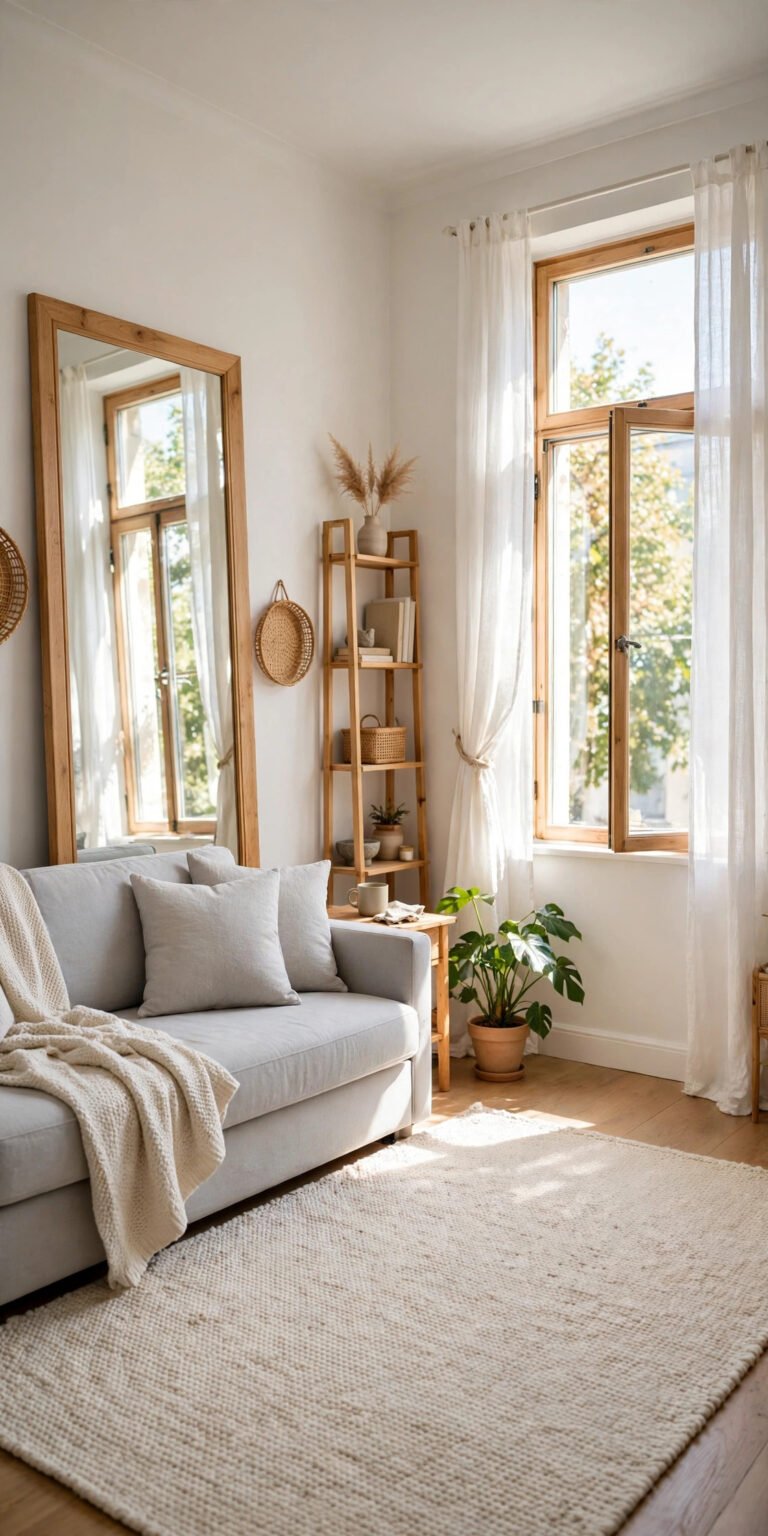
Linen curtains soften an olive living room like nothing else. The loose weave lets daylight filter through gently, and the natural texture of linen sits perfectly with olive walls and wood furniture. Cream or natural linen is the safest choice, but pale sage works too if you want more green.
Hang the curtains high and wide — a rod a few centimetres above the window frame and wider than the window makes the room feel taller and the window feel bigger. Let the curtains fall to the floor, and keep them unlined or lightly lined so the light still comes through. Linen wrinkles a little, and that is part of its charm.
7. Lay Down a Patterned Rug
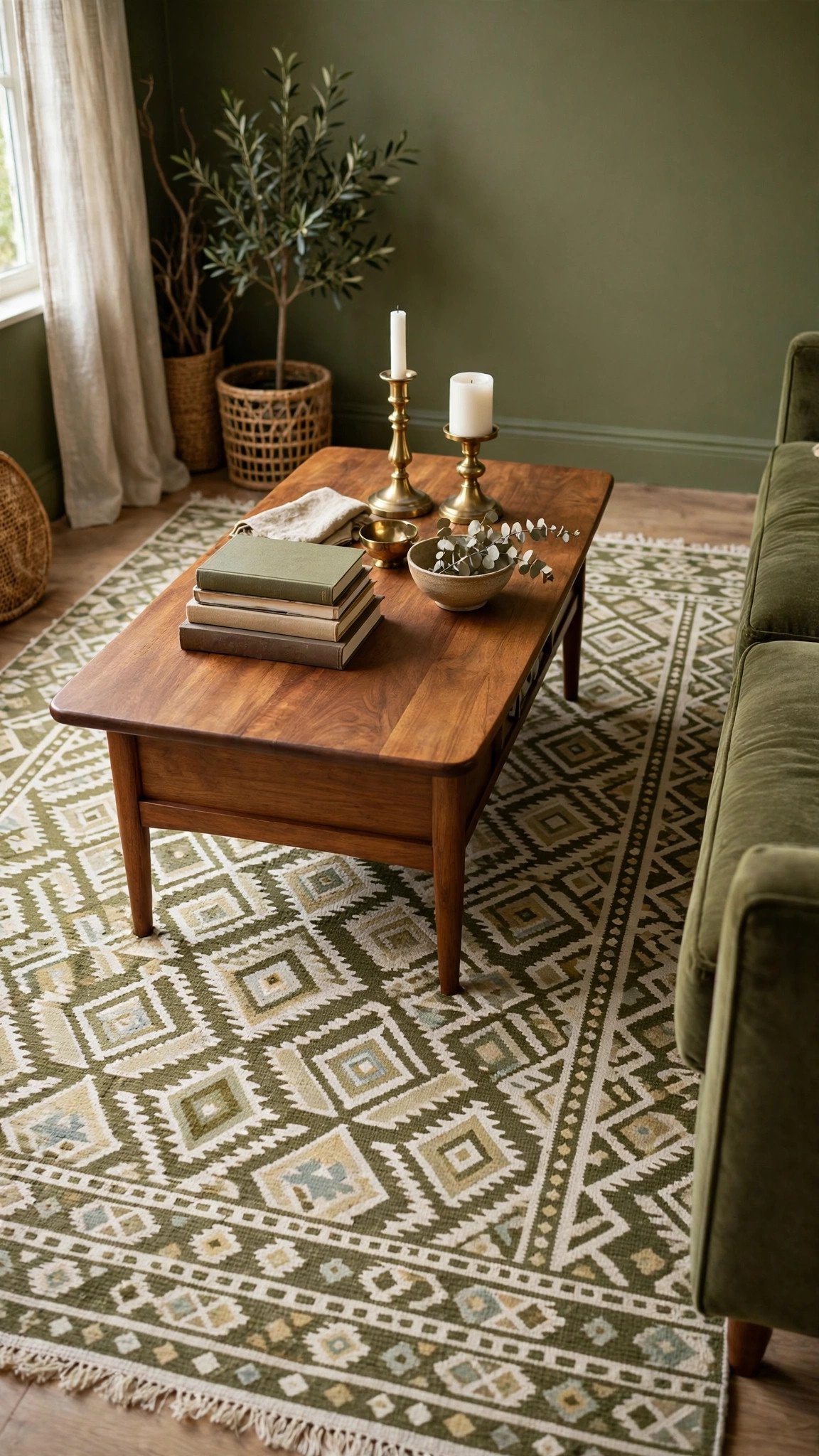
A patterned rug pulls an olive living room together. It anchors the sofa and coffee table, adds colour and pattern underfoot, and warms up a hard floor. A rug in cream with olive, rust, or terracotta echoes the sofa and walls without matching them exactly, which makes the room feel layered instead of flat.
Choose a rug big enough that the front legs of the sofa and chairs sit on it — a rug that is too small makes the furniture look like it is floating. A low-pile wool rug or a washable rug is the practical choice for a room used every day. If the pattern feels busy, keep the cushions plain so the rug does the talking.
For more on sizing, see Rugs.com’s rug size guide, which recommends a rug that rests under the front legs of all the furniture in the sitting area.
8. Fill the Corners With Houseplants
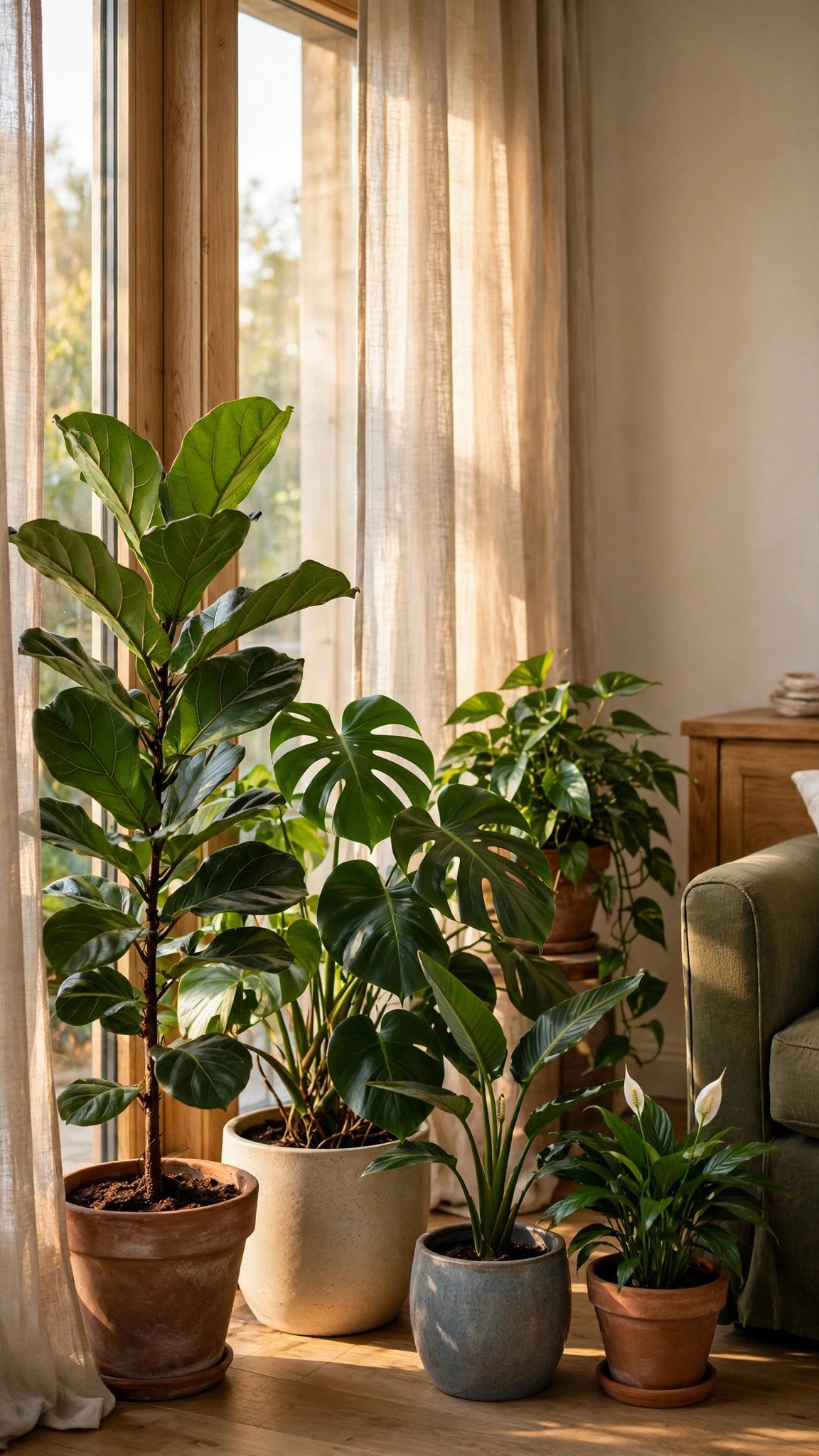
Houseplants are the easiest way to make an olive living room feel alive. Green leaves against olive walls and wood furniture look natural, and a tall plant in the corner fills space that would otherwise feel empty. A fiddle-leaf fig, a monstera, or a snake plant all thrive in a bright living room with very little care.
Group plants in twos or threes at different heights — a tall plant on the floor, a medium one on a side table, and a trailing one on a shelf. Use terracotta, cream, or woven baskets for the pots, so they add warmth instead of plastic shine. If you forget to water, pick hardy plants like a snake plant or a pothos, which forgive a missed week.
9. Layer the Lighting
Layered lighting is what makes an olive living room glow in the evening. One ceiling light is never enough — add a floor lamp beside the sofa, a small table lamp on the sideboard, and a few candles on the coffee table. Together they make the olive walls look rich instead of dark.
Keep the bulbs warm white, around 2700K, so the light feels like late afternoon rather than an office. A dimmer on the main light turns the whole room down to a soft evening mood, and a brass lamp base ties the lighting back to the room’s other brass accents. Good lighting is the difference between a room that is lit and a room that glows.
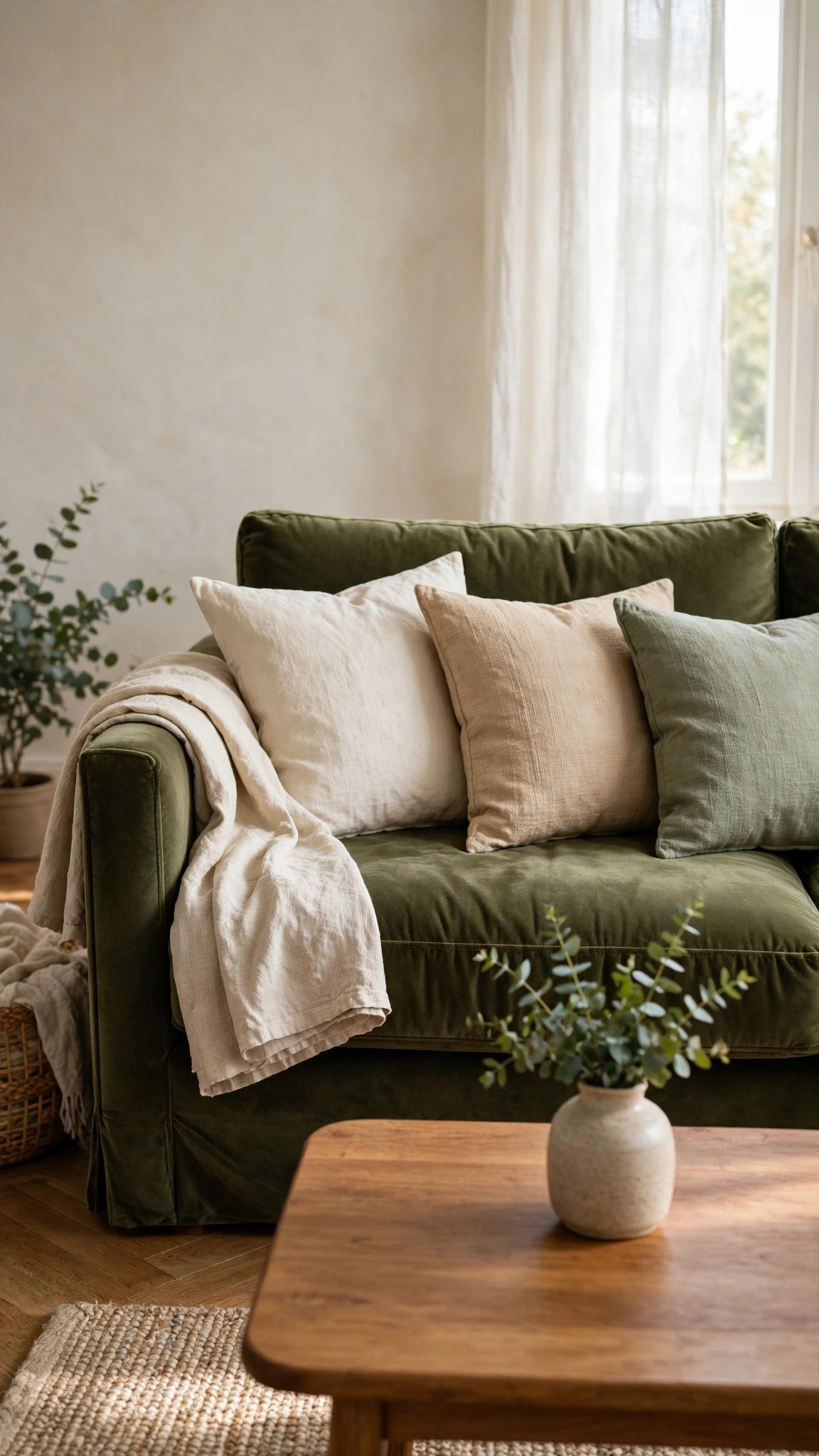
10. Pile on Cushions and Throws
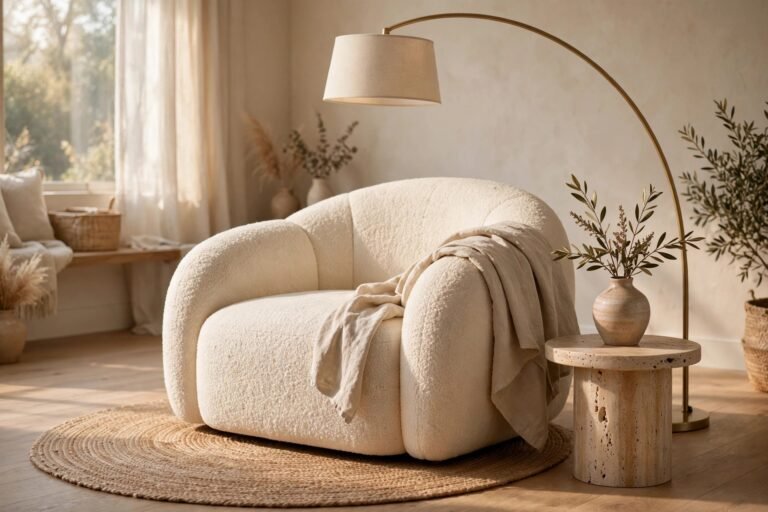
Cushions and throws are what turn an olive sofa into the most comfortable seat in the house. Mix textures — a linen cushion, a velvet one, a knitted throw — in creams, beiges, and one or two deeper greens. The mix of textures makes the sofa look inviting instead of flat, and costs far less than new furniture.
Keep the palette tight: three or four colours at most, with olive and cream doing most of the work. Fold a throw over one arm of the sofa and drape another over the back of a chair, so the softness spreads around the room. Swap the throw for a lighter one in summer and a chunkier knit in winter, and the room changes with the seasons.
11. Use Natural Textures Everywhere
Natural textures are what stop an olive living room from feeling flat. Linen, wool, rattan, jute, and raw wood each add a different surface for the eye and the hand, and together they make the room feel warm and lived-in. A woven basket, a rattan tray, a wool rug, and a linen cushion cost little and change a lot.
Spread the textures around the room instead of piling them in one corner — a basket beside the sofa, a jute rug under the coffee table, a wooden bowl on the sideboard. Avoid too much smooth plastic or shiny metal — it fights the natural feel. When every surface has a texture, the room feels calm and cosy without a single extra colour.
12. Hang Artwork With Green Tones
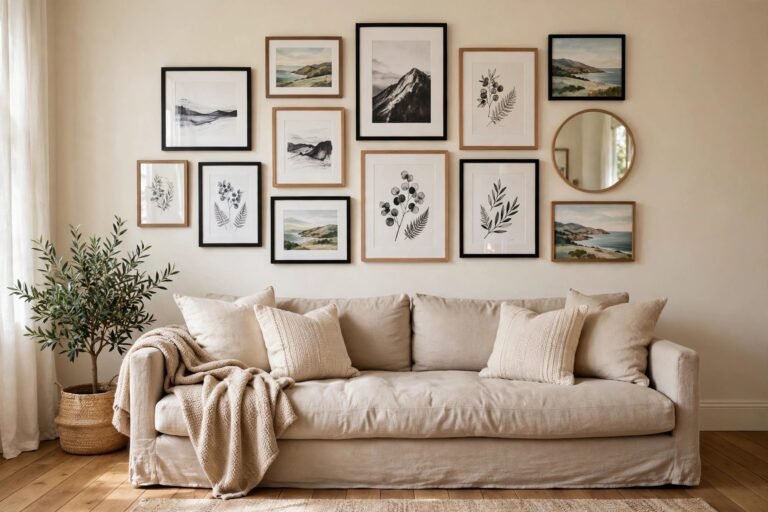
Artwork with green tones is the finishing touch for an olive living room. A landscape print, a botanical drawing, or a photograph of a forest ties the olive sofa and walls to the world outside the window. Green in the artwork makes the colour scheme feel deliberate, like the room was planned rather than put together by accident.
Hang one large piece above the sofa or the sideboard instead of many small ones — one strong picture gives the room a focal point. Keep the frame simple — light wood, thin black, or brass — so it supports the picture instead of competing with it. Hang it at eye level, about 145 centimetres from the floor to the centre, and the room will feel properly finished.
A Living Room That Feels Calm Every Day
A calm living room does not need to be expensive — it needs an olive accent wall or an olive sofa, cream and white to lift it, warm wood furniture, brass or gold accents, linen curtains, a patterned rug, houseplants, layered lighting, cushions and throws, natural textures, and artwork with green tones. Put those twelve things together and your living room will feel calm, cosy, and welcoming every single day. These ideas also sit naturally in a wider set of modern living room ideas, so you can mix olive with clean lines and simple furniture without losing the calm feel.