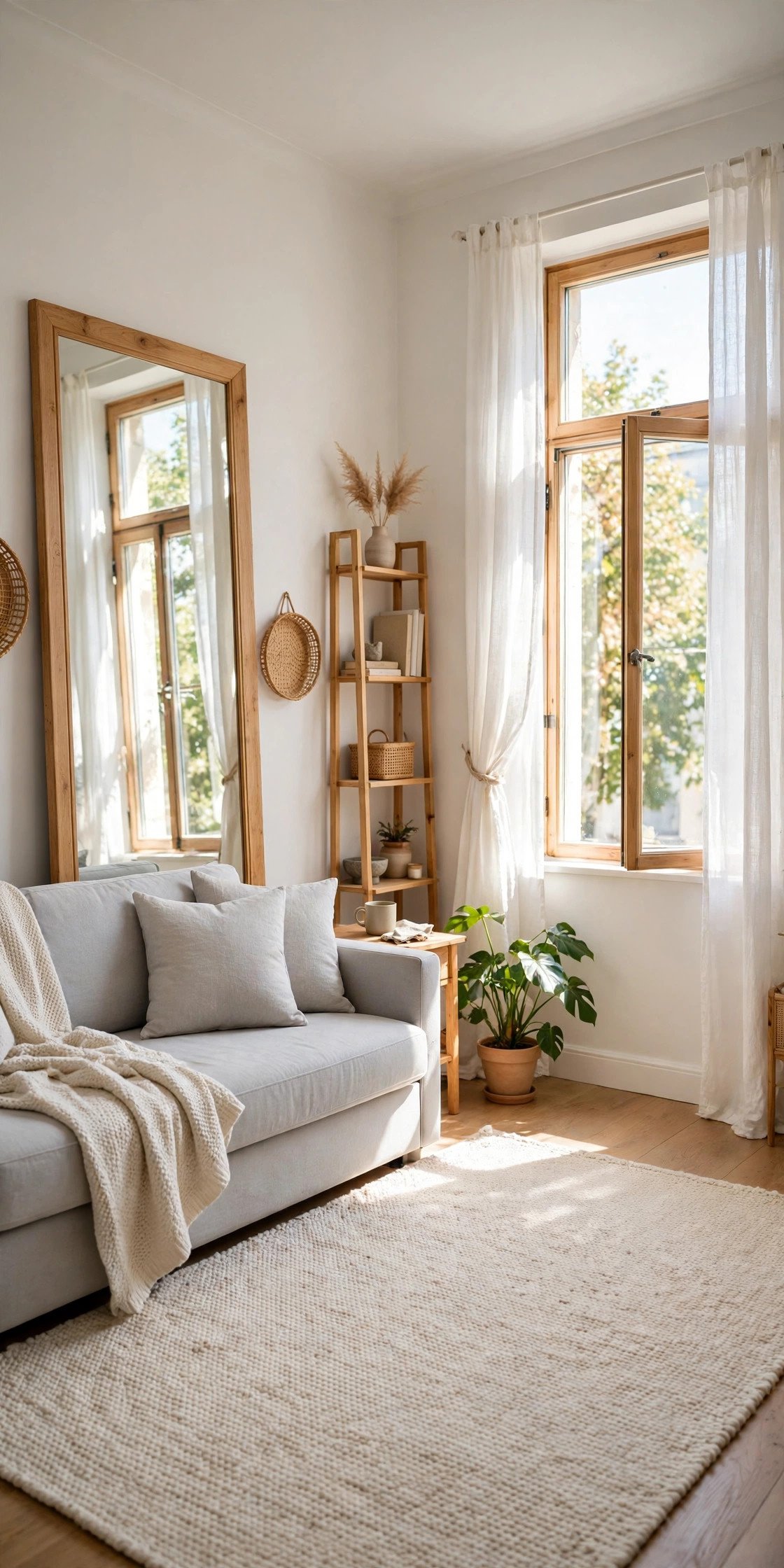
Tiny Apartment Living Room: 8 Ideas That Make a Small Space Feel Big
A tiny apartment living room feels cramped for one reason: everything in it is fighting for the same small patch of floor. The fix is not a bigger flat — it is making the room read as one calm space instead of ten small things crowded together. These eight ideas do exactly that, and none of them needs a remodel. For more current ways to style the same room, these modern living room ideas show clean, simple looks that work in any size space.
1. One Big Rug, Not Small Pieces
A small rug makes a small room look smaller, because it chops the floor into pieces. One big rug that reaches under the front legs of the sofa and the chairs pulls the whole seating area into one zone, and the floor reads as one big surface instead of several small ones.
Measure first: the rug should be at least as wide as the sofa. A rug that is too small is the most common mistake in a tiny living room, and it is the cheapest one to fix.
Size it by the sofa: for a 180 cm two-seater, a 160 by 230 cm rug works; for a 210 cm three-seater, go 200 by 290 cm, with the front legs of every seat on the rug. A low-pile wool or washable cotton rug costs $80–$150 at that size, and a $20–$30 non-slip pad underneath stops it creeping. Mistake to avoid: a rug that stops halfway under the sofa — the visible edge cuts the room in half and the sofa looks like it is perched on a mat.
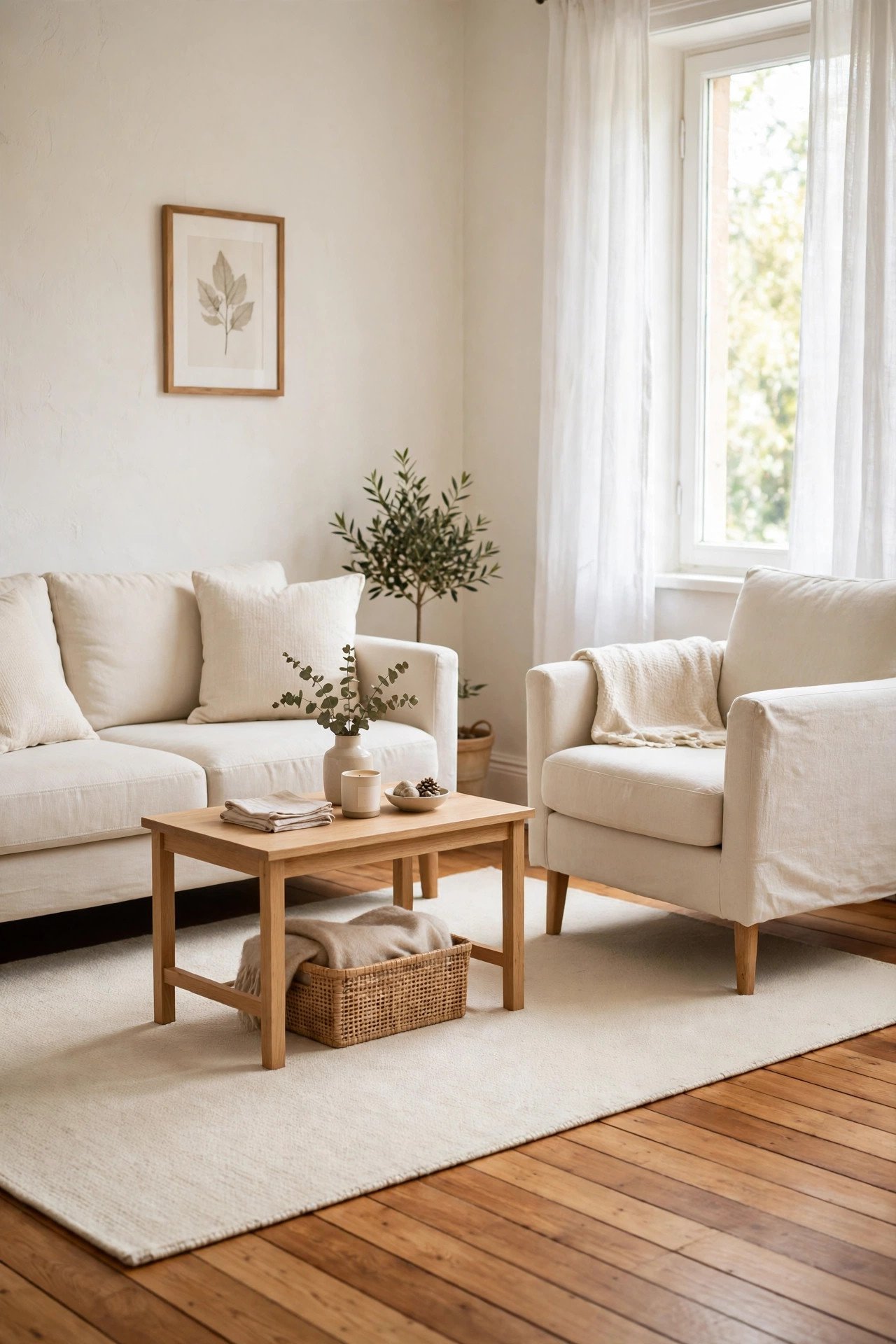
2. Push the Sofa Against the Wall
A sofa floating in the middle of a tiny room eats floor on both sides and leaves two dead gaps nobody can use. Push it against the longest wall, and the whole middle of the room opens up.
The room instantly feels bigger, because the open floor is one clear space instead of two thin corridors. If the sofa has to float because of a radiator or a door, push it as close to the wall as it will go — every inch of open floor counts.
Leave a 5–10 cm gap behind the sofa for air and cables, and check the radiator: a sofa pushed hard against a hot radiator wastes heat and fades fabric. If the wall has a skirting board, the gap is built in. Measure the walkway you gain: in a 3 by 4 metre room, moving the sofa to the wall frees about 60 cm of depth — enough for a coffee table and a clear path. Mistake to avoid: pushing the sofa against a wall with a window behind it; the back blocks light and the curtains bunch behind the cushions.
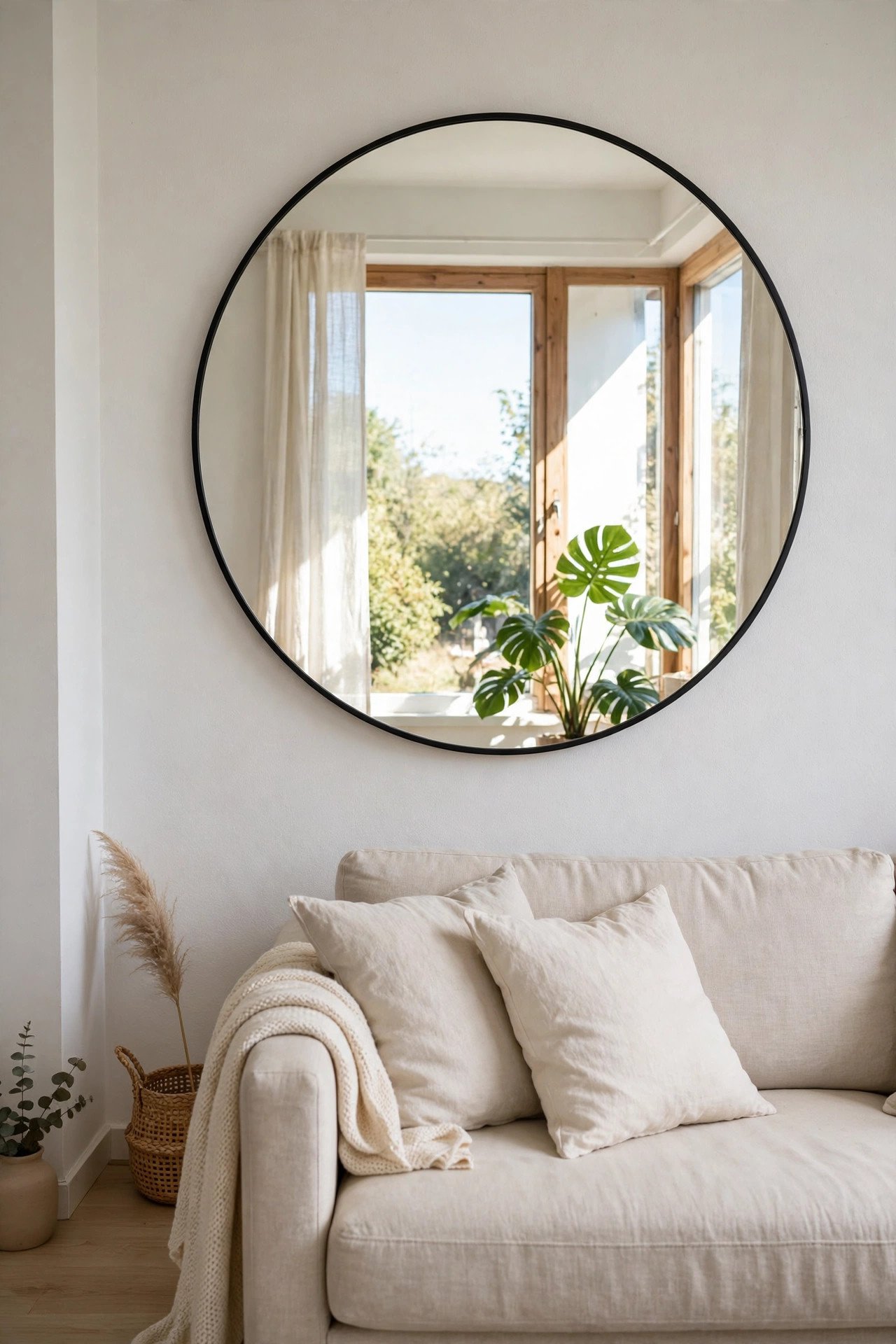
3. Put a Mirror Opposite the Window
A mirror opposite the window bounces daylight across the room and doubles the view, and the room reads as twice as bright. It is the oldest small-space trick there is, and it works because light is what makes a room feel big, not floor area.
Hang it at eye level, big enough to reflect the whole window. A small mirror does nothing — it has to be big enough to catch the light properly.
Buy the mirror 60–90 cm wide for a standard window — a 90 by 60 cm mirror costs $40–$80, and a leaner 120 by 60 cm mirror runs $80–$150. Hang it with two picture hooks rated for at least 10 kg, and centre it on the window, not on the wall. Mistake to avoid: a mirror opposite a blank wall or a cluttered shelf; it doubles the clutter instead of the light, and the room feels busier, not brighter.
4. Store Up the Walls, Not Across the Floor
Floor space is the scarcest thing in a tiny living room, so storage belongs on the walls. Tall narrow shelves, floating shelves above the sofa, a picture ledge that holds books and plants — all of it uses wall space that was doing nothing.
When the storage goes up, the floor stays clear, and a clear floor is what makes a small room feel big. The rule is simple: if it can live on a wall, it does not live on the floor.
Use the wall above the sofa: two floating shelves 60–80 cm long, fixed 150 cm from the floor, hold books and plants without eating floor space. A single shelf costs $15–$30, brackets $8–$15, and wall anchors rated for 15 kg cost $5. Mistake to avoid: shelves deeper than 25 cm above a sofa — heads bump them, and anything stored there ends up on the cushions. Keep the lowest shelf at least 40 cm above the sofa back.
For safe anchoring, see the CPSC Anchor It! guide.

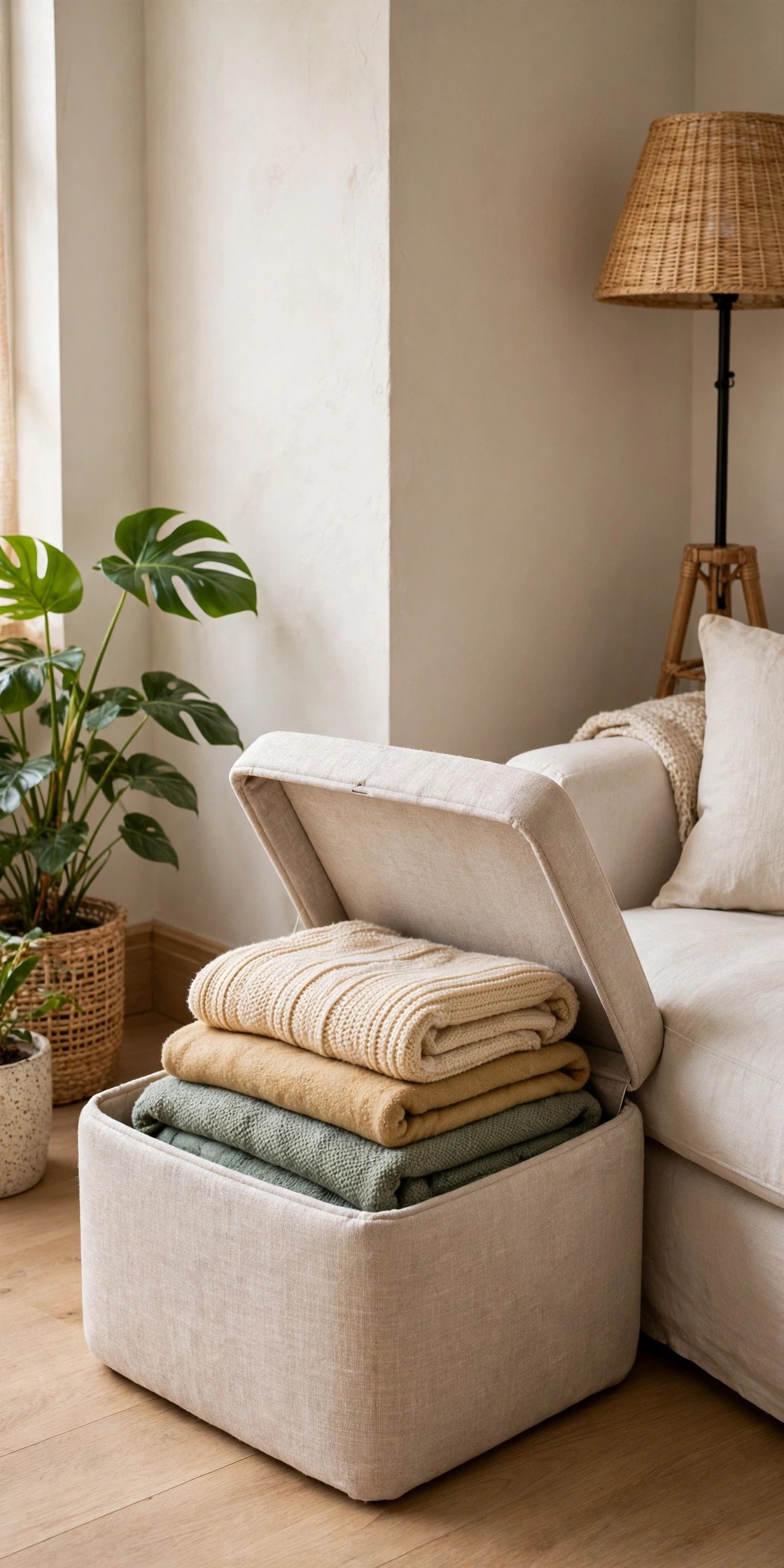
5. Buy Furniture That Does Two Jobs
In a tiny living room, every piece has to earn its floor space twice. A storage ottoman holds blankets and doubles as a coffee table. A sofa bed turns the living room into a guest room. A side table with a drawer hides the remotes and the chargers.
One piece doing two jobs means one less piece in the room, and one less piece is a whole square foot of floor back. Before buying anything new, ask what else it can do.
A storage ottoman 90 by 60 cm costs $60–$120 and holds two folded throws plus board games; add a $15–$25 wooden tray on top and it becomes a stable coffee table. A sofa bed adds $200–$400 over a standard sofa but replaces a $300 guest bed. Mistake to avoid: a storage ottoman with a hinged lid that slams — check the hinges in the shop, and choose one with a soft-close lid or a lift-off top.
6. Keep the Big Pieces Light
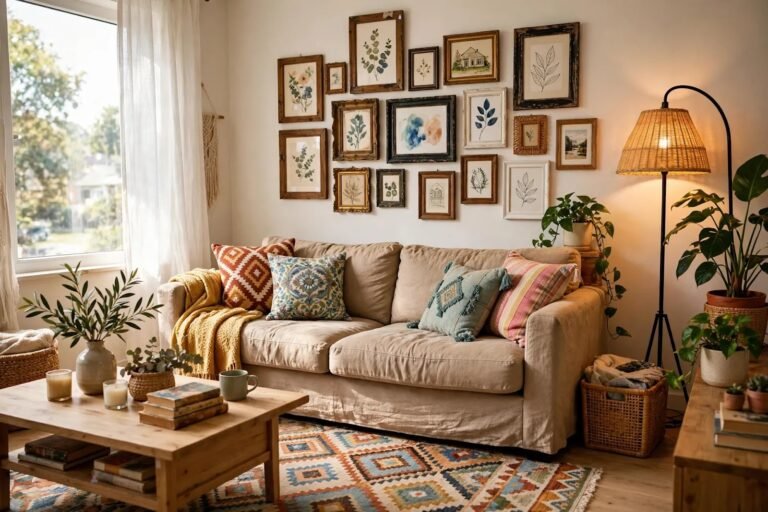
Dark furniture makes a small room feel heavy and closed in. Keep the big pieces — the sofa, the rug, the curtains — in light, warm neutrals, and let the colour live in the small things: cushions, throws, a plant, a framed print. A soft green works especially well — these olive green living room ideas show calm, earthy ways to use the colour without shrinking the room.
Light big pieces bounce the daylight around the room, and the room feels airy even on a grey day. The colour still shows up — it just lives in things you can move.
Pick the sofa in a light warm neutral — oatmeal, light grey or warm white — and a washable slipcover ($60–$120) if you have pets or kids. A light rug in a low-pile wool blend costs $80–$150, and light linen-look curtains run $25–$40 a pair. Mistake to avoid: a white sofa with no washable cover in a home with a dog; it greys in a month, and the room ends up looking dirtier than a mid-tone sofa would.
7. One Statement Light, Not Many Small Ones
Five small lamps and a ceiling light make a tiny room feel cluttered before anything is even switched on. One statement light — a pendant over the seating area or one good floor lamp in the corner — gives the room a single focal point and a single pool of warm light.
One light, one shadow, one calm room. The rest of the light comes from the window during the day and one soft lamp at night.
A pendant 30–40 cm wide hung 180–200 cm above the floor over the seating area costs $40–$90, plus $15–$30 for a warm 2700K LED bulb. One floor lamp with a linen shade costs $50–$100 and gives the same single pool of light in a rental where you cannot hardwire. Mistake to avoid: a pendant hung below 180 cm in a room with tall people — it becomes a head-height obstacle, and guests will duck under it all evening.
8. Clear the Floor Every Night
A tiny living room only stays feeling big if the floor is clear, and the floor only stays clear if it is reset daily. Two minutes every night: cushions straight, throws folded, shoes and bags out of the room, the coffee table wiped.
Two minutes a night beats an hour-long tidy every weekend, and the room greets you open and calm every morning instead of crowded and tired. The small room feels big because nothing is in the way.
Make the reset a 2-minute routine with a home for everything: a lidded basket ($15–$25) by the sofa for throws, a small tray ($10–$15) on the coffee table for remotes, and a hook by the door for bags. Set a phone alarm for 9 p.m. until the habit sticks — about 2 weeks. Mistake to avoid: a reset that needs a storage run to another room; if putting things away takes more than 30 seconds, it will not happen, and the floor will fill up again.
A Small Room That Feels Big
None of these ideas needs a bigger flat or a big budget. One big rug, the sofa against the wall, a mirror opposite the window, storage up the walls, furniture that does two jobs, light big pieces, one statement light, and a two-minute nightly reset. Start with the rug and the mirror — the two cheapest moves — and the tiny living room stops feeling like a squeeze, because everything in it finally has one calm place to be. If you want more ways to style a small room for less, these budget living room decor ideas show how to get the look on a tight budget.