Studio Apartment Layout Ideas: 12 Layouts That Make a Small Space Feel Big
A studio apartment gives you one room to do everything in — sleep, cook, eat, work, and relax. The good news is that a small studio does not need more square metres to feel bigger. It needs a clear layout. These twelve studio apartment layout ideas are practical, budget-friendly, and made for real homes where every corner has to earn its keep.
Before you move a single piece of furniture, read how to make a small apartment look bigger: the same mirror, colour, and light rules make every layout below feel roomier. And once the zones are set, these small space holiday hosting ideas show how the same one-room layout handles a full table of guests.
1. Start by Zoning with a Rug
The fastest way to make one room feel like several rooms is a rug. Lay a large rug under the sofa and coffee table and the living area suddenly has edges — your eye reads it as a room of its own, even though there is no wall in sight. A second, smaller rug by the bed does the same trick for the sleeping zone.
Choose rugs in the same colour family so the zones feel connected, and keep the rug big enough that the sofa’s front legs sit on it — a rug that is too small makes the whole arrangement look like it is floating.
2. Float the Sofa to Mark the Living Room
Pushing the sofa against the wall wastes the best zoning tool in a studio. Pull it out a little and let its back face the rest of the room, and the sofa becomes a soft wall that marks where the living room begins. The space behind it can hold a narrow console table, a reading lamp, or the walkway to the kitchen.
Face the sofa toward the brightest wall — the window, or the wall where the television hangs — so the seating feels intentional rather than squeezed in.
3. Tuck the Bed into a Nook
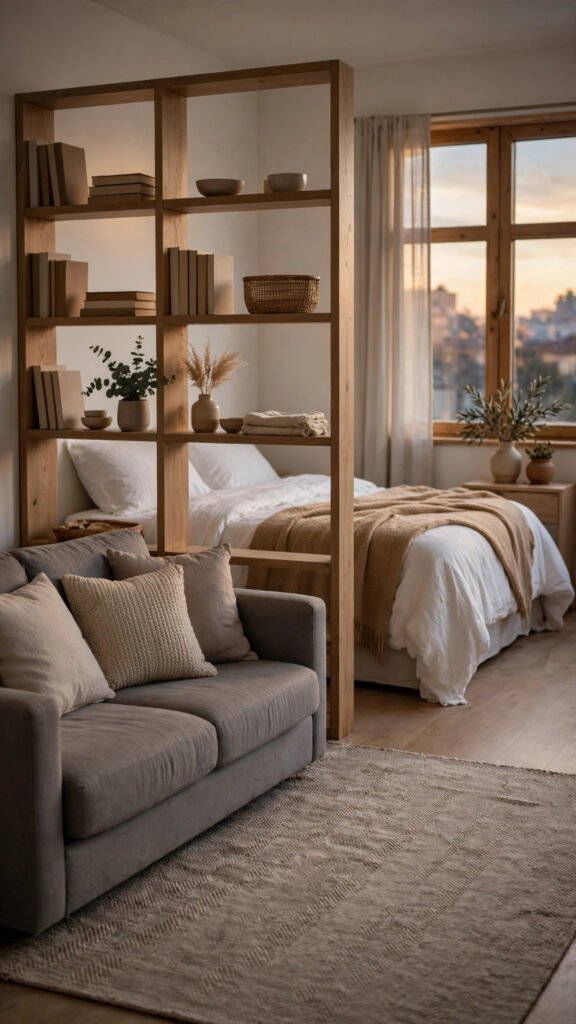
The bed is the biggest piece of furniture in a studio, so where it sits decides how the whole room feels. Tuck it into the darkest or quietest corner and the rest of the room is free to be a living room during the day.
A ceiling-mounted curtain or a daybed with plenty of cushions makes the sleeping corner feel like a cosy nook instead of a bed in the middle of the room. Make the bed every morning: in a studio, an unmade bed is the first thing anyone sees, and a made one makes the whole flat look tidy.
4. Give Dining Its Own Corner
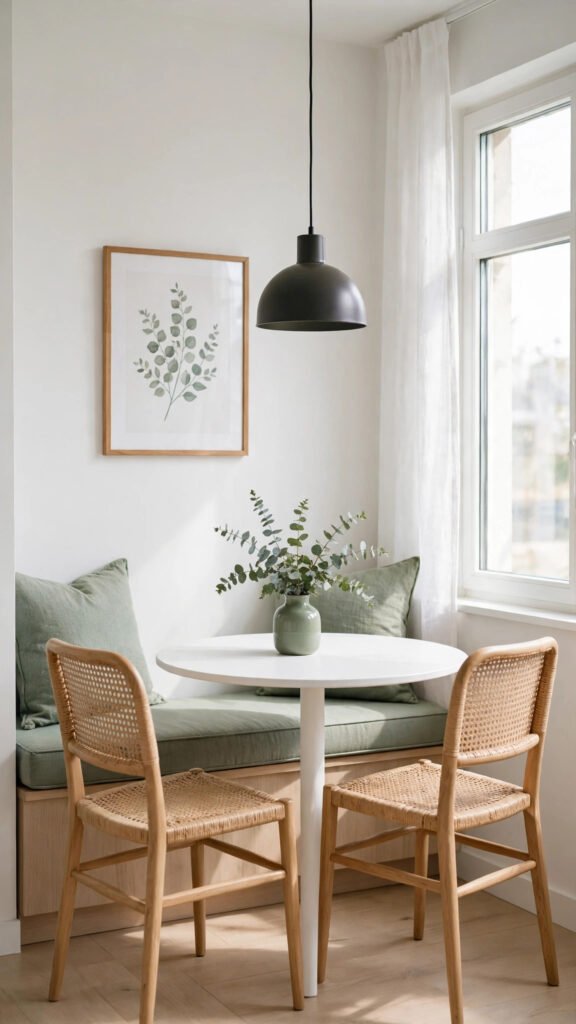
A studio still needs a place to eat that is not the sofa. Claim a small corner for dining — a round table for two pushed against the wall, a bench seat built into the wall, or a drop-leaf table that folds flat when it is not needed. A round table is the best shape for a tight corner because nobody bumps into its corners.
Hang one pendant light low over the table — that single light tells everyone this corner is for eating, and it makes even a weeknight dinner feel like a proper meal.
5. Carve Out a Small Work Zone
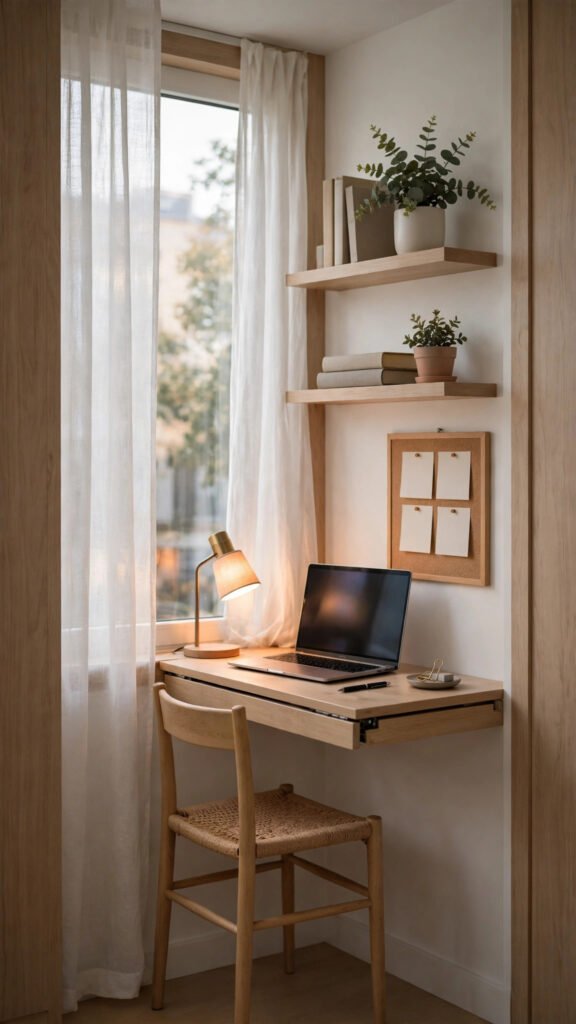
Working from a studio means the office has to live in the same room as everything else, but it does not need much space — a desk the width of a laptop, a chair that tucks away, and a little light. The best spot is an alcove, a window sill, or the short wall beside a wardrobe, where a fold-down desk can disappear when the working day ends.
Give the work zone its own lamp and small shelf so papers and chargers do not spread across the living area — and when work is finished, fold the desk up and the corner goes back to being part of the home.
6. Build One Big Storage Wall
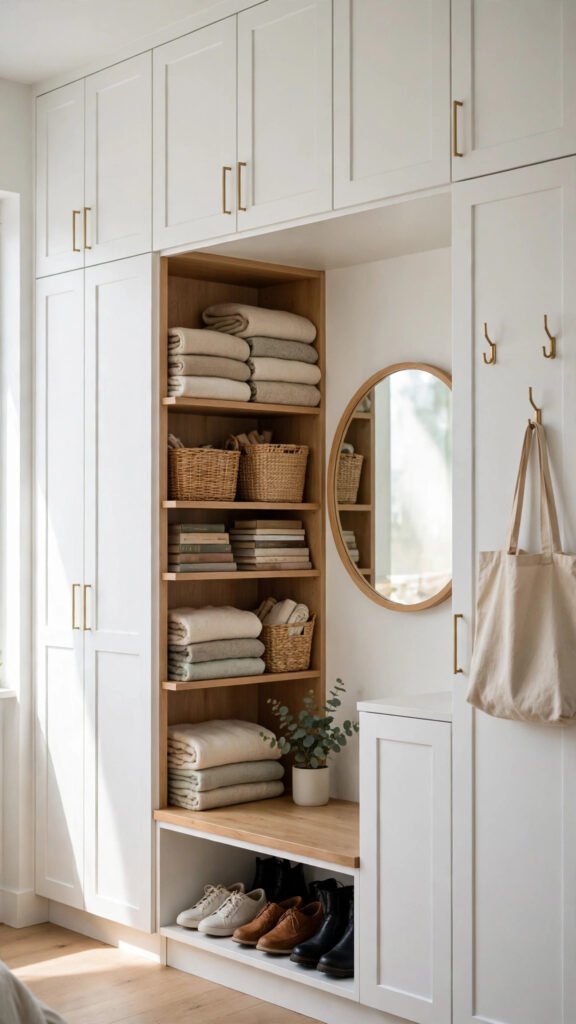
Scattered storage makes a studio look messy, but one big storage wall makes it look calm. Pick the longest empty wall and fill it floor to ceiling with wardrobes, cabinets, or open shelving — and put everything behind closed doors where you can. A single full wall of storage holds more than three separate chests, and it reads as architecture rather than clutter.
Mix closed cabinets for the messy things with one or two open shelves for books and baskets, and keep the whole wall one colour so it fades into the background.
7. Hang a Mirror to Double the Space
A large mirror is the cheapest way to make a studio feel twice its size. Hang one on the wall opposite the window and it bounces daylight across the room; hang one at the end of a narrow stretch and the room feels longer. A round mirror over the dining table or a tall one leaning by the door both work — the key is size, so go as big as the wall allows.
Choose a simple frame that matches the rest of the flat, and point the mirror at the view you like best — a tidy shelf or a plant, never a pile of laundry.
8. Go Vertical with Shelves and Hooks
When the floor is full, the walls are still empty. Floating shelves above the desk, hooks by the door for coats and bags, a tall narrow bookcase in a dead corner — vertical storage holds a surprising amount without taking a single extra centimetre of floor. The eye travels upward, and a room with things at different heights feels larger than a room where everything sits at knee level.
Keep everyday things at arm’s reach and rarely used things up high, and leave a little empty space on every shelf — a shelf packed edge to edge looks like a warehouse.
9. Divide with an Open Shelf, Not a Wall
A solid wall would chop a studio in half and kill the light, but an open shelf divides the room while letting light and air through. A low bookshelf between the sofa and the bed, a tall open unit that you can see through, or even a curtain on a ceiling track all give the sleeping area privacy without building anything permanent.
Style the divider from both sides — books facing the living room, a plant and a lamp facing the bed — and keep it easy to move, because the best studio layout is one you can change.
10. Choose Furniture That Folds Away
In a studio, furniture that does two jobs is worth twice the price. A drop-leaf table that seats four for dinner and two for breakfast, a sofa bed for guests, nesting tables that stack into one, a bench with storage inside — every piece that folds, stacks, or hides something earns its floor space twice over.
Before buying anything big, check how it moves: can the table fold with one hand, does the bed pull out without shoving the sofa? If a piece is hard to fold away, it will stay in the way.
11. Layer the Lighting
One ceiling light makes a studio feel like a single flat box. Three layers of light make it feel like several rooms. Start with the ceiling light for general brightness, add a floor lamp or table lamp by the sofa for evenings, and finish with a small warm light in the sleeping corner and one over the dining table.
Use warm white bulbs, around 2700K, everywhere so the layers blend, and put a dimmer on the main light: bright for cleaning and working, low and warm for the evening.
12. Keep One Calm Palette Throughout
A studio shows everything at once, so the colours have to agree with each other. Pick two or three colours — a warm white for the walls, a light wood for the furniture, and one soft accent like sage green or warm terracotta — and let those colours run through the sofa, the bedding, the rug, and the kitchen. A calm palette makes even a busy layout feel peaceful.
A mix of natural wood, soft linen, and one accent colour repeated in small doses — a cushion, a throw, a plant pot — is enough to tie the whole room together.
A Studio That Feels Like a Home
A small studio does not need more space — it needs a better layout. Zone with a rug, float the sofa, tuck the bed into a nook, give dining its own corner, carve out a work zone, build one big storage wall, hang a mirror, go vertical with shelves, divide with an open shelf, choose furniture that folds away, layer the lighting, and keep one calm palette. Do those twelve things and a single room becomes a whole home — bigger, calmer, and easier to live in every day.