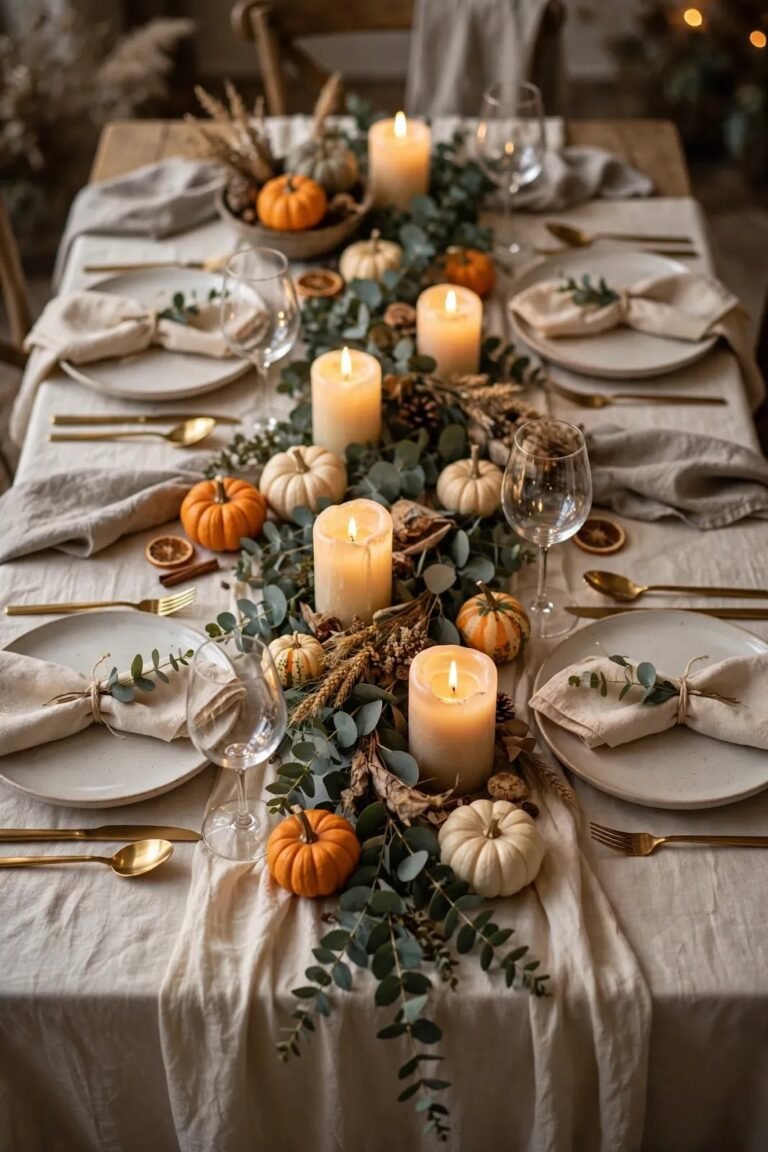
Christmas Dining Table Decor Ideas for a Warm, Magical Holiday Table
The dining table is where Christmas actually happens — the food, the long conversations, the candlelit hours. It deserves more than a tablecloth and a bowl of ornaments. These Christmas dining table decor ideas are warm, budget-friendly, and practical: the table still has to hold dinner, not just look pretty in photos.
1. Start With a Runner, Not a Tablecloth
A full tablecloth hides a beautiful table and shows every crumb. A runner down the center gives you the color, the texture, and the shape of the tablecloth — without hiding the table itself. It is the simplest way to make your table look intentional. Start with one runner that pulls your whole palette together. White linen for classic, kraft paper for a rustic feel, or velvet for the natural look. Size it right: your runner should be about 12 to 14 inches wide and hang 6 to 12 inches over each end of the table — too short and it looks like a placemat, too long and it catches on chairs. For a standard 6-foot table, a 72- to 84-inch runner is the sweet spot. Linen runners run $15 to $30, while a roll of kraft paper costs under $10 and lets kids draw on it before dinner. Layer it over a plain white or wood table, never over a busy patterned cloth, and iron or steam linen the day before so creases do not show in photos.
2. The 2026 Color Story: Burgundy and Gold
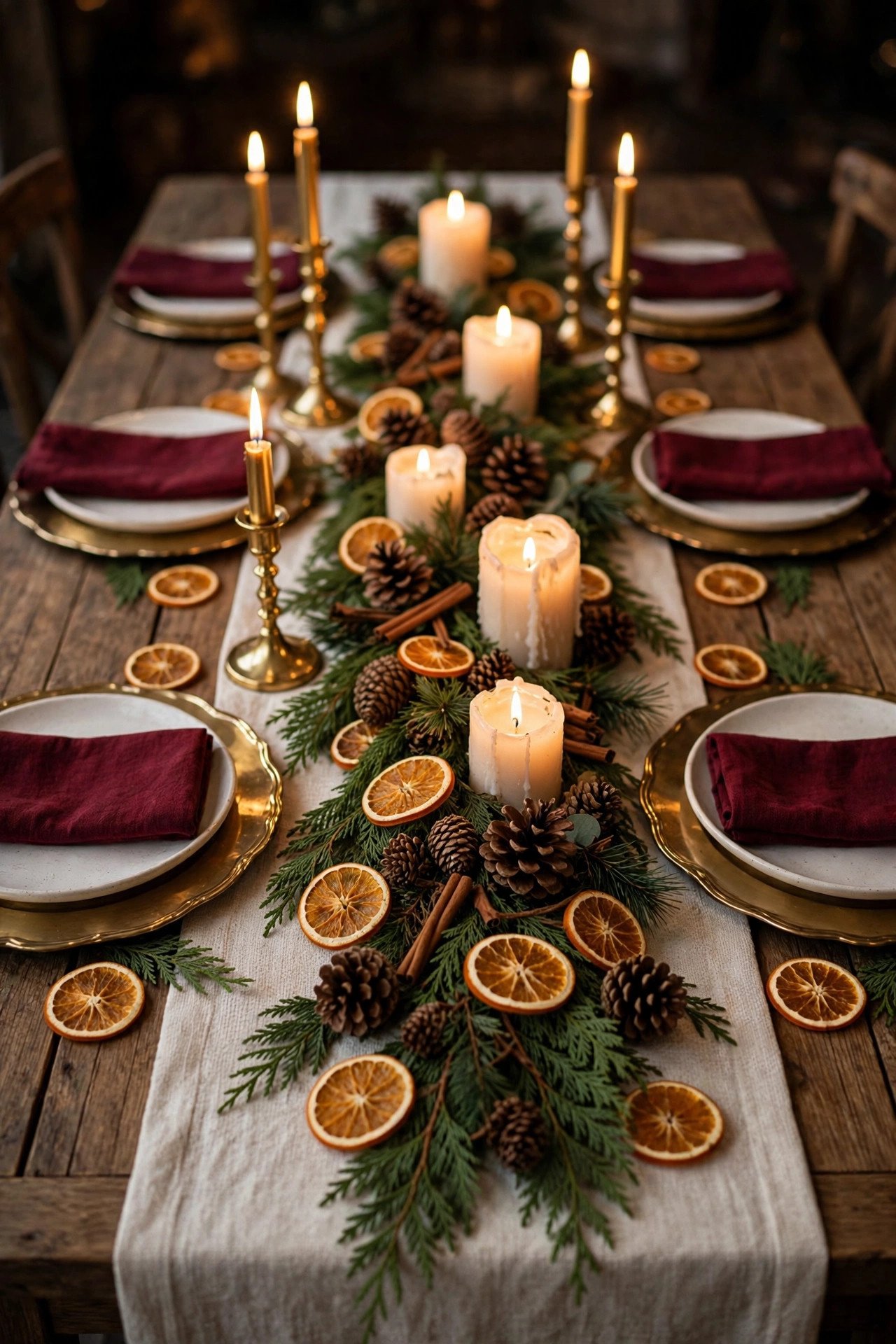
This year’s richest Christmas palette is deep burgundy with warm gold — jewel tones that look expensive and photograph beautifully. You do not need a full reset: swap in burgundy napkins or a runner, and add gold candlesticks or brass chargers you already own. Against dark green eucalyptus or cedar, burgundy glows. Start with just two burgundy pieces — a set of four linen napkins runs $12 to $20, and a thrifted brass candlestick pair is often under $15 — then repeat the gold in one more spot, like charger plates or a thin ribbon, so the color feels planned instead of random. Keep the rest of the table pale: white plates, clear glasses, and a cream runner let the burgundy do the work. The mistake to avoid is adding a third loud color, like bright red or silver, which turns rich into busy. If your dining room is small, this palette still works because the dark tones sit low on the table, not on the walls.

3. One Hero Centerpiece, Not Five
A crowded table cannot hold food. Pick one hero: a low garland of cedar running down the runner, a row of pillar candles at different heights, or a wooden tray with pinecones and ornaments. Keep it low enough that people can see each other across it — conversation is the point. Keep it low and long: a centerpiece taller than 12 inches blocks faces across the table, so aim for 6 to 10 inches high and about two-thirds the table’s length. A 6-foot cedar garland costs $20 to $35, or you can cut fresh cedar and eucalyptus from your yard for free. Set the garland on the runner first, then tuck in three pillar candles in different heights and a few pinecones. The mistake to avoid is building it the morning of the party — assemble it the night before, then just light the candles before guests sit down.
4. Bows Everywhere — The Easiest Upgrade
Ribbons are the 2026 obsession, and they are the cheapest one. Tie a velvet bow around each napkin, knot small bows onto the chair backs, and finish your centerpiece with one big bow. Burgundy or forest-green velvet ribbon: one spool, three uses, and the whole table is transformed.
Buy one spool of 2.5-inch velvet ribbon — about $8 to $12 for 10 yards — and cut it into 18-inch lengths so every bow matches. Tie napkin bows first, then use the leftovers on chair backs and the centerpiece, and trim the tails into a V so they look finished instead of torn. The mistake to avoid is mixing ribbon widths and textures; one velvet ribbon, repeated three times, reads as a deliberate design, while satin, grosgrain, and velvet together just look like leftovers.
5. Candlelight Is the Real Decor
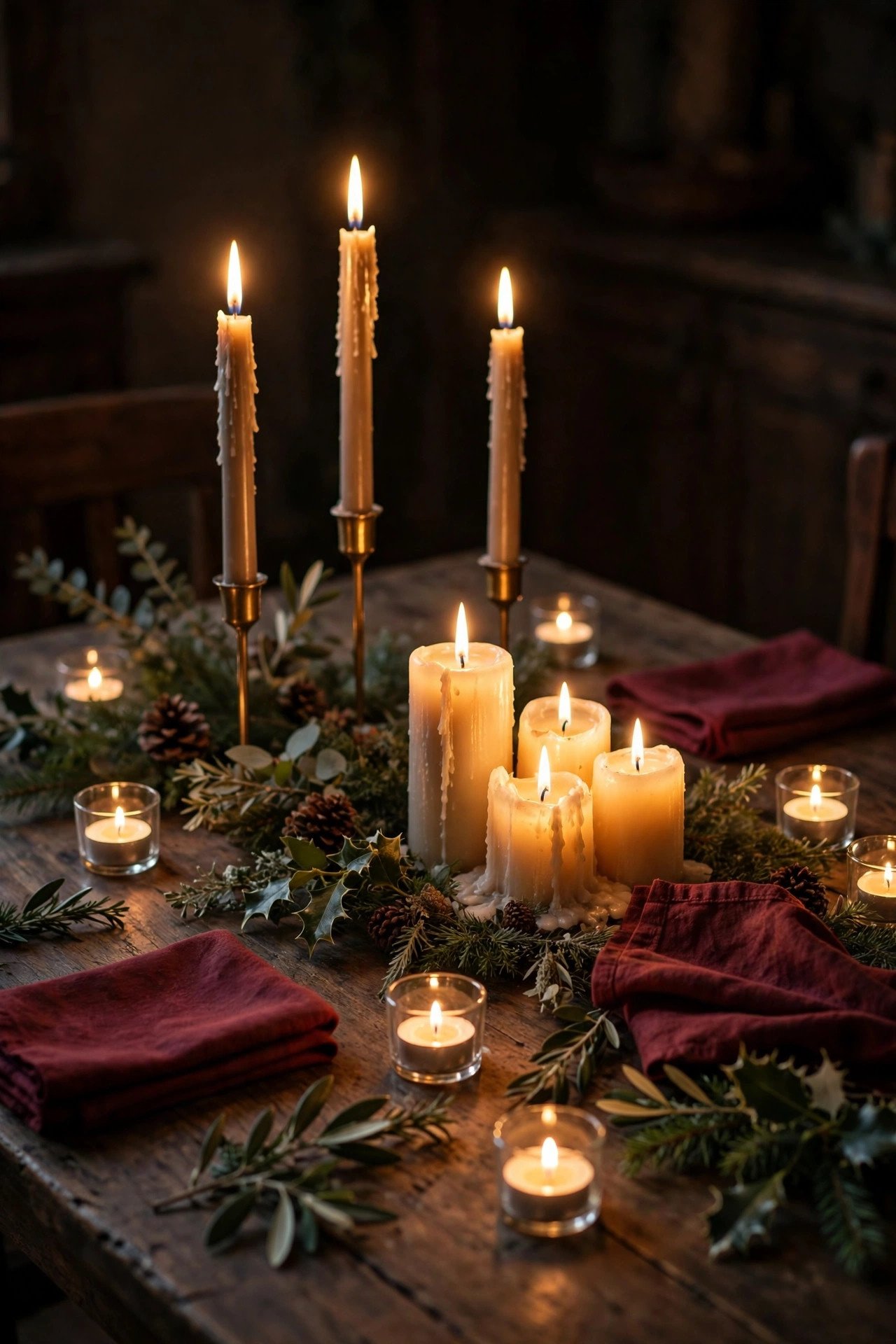
Christmas tables run on candlelight — it flatters the food and the faces. Mix heights: tapers in simple holders, tea lights in small glasses, one cluster of pillar candles. Battery candles are fine wherever kids can reach. Dim the overhead light and let the candles do the work.
Count candles before you light them: for a 6-foot table, 7 to 9 candles — three tapers, three tea lights, and one pillar cluster — gives a glow without a fire risk. Keep every flame at least 12 inches from greenery, ribbon, and paper, and never leave them burning in an empty room. Battery-operated tapers cost $10 to $15 for a set of six and are the smart choice with small children or pets. Put real candles in glass hurricanes if you use them, and blow everything out before you clear dessert.
6. Gingerbread Touches — The 2026 Sweet Trend
Food-inspired decor is this year’s sweetest trend, and gingerbread belongs on the table. A small gingerbread house as the centerpiece, gingerbread-man cookies as place cards with names piped on, a bowl of candy canes for after dessert. Edible, nostalgic, and the part the kids will remember.
Keep it edible and safe: one small gingerbread house, about 6 inches tall, makes the centerpiece, and a kit costs $12 to $18 — or bake your own from a $5 mix. Use gingerbread-man cookies as place cards with names piped in white icing, and put candy canes in a jar for after dessert, not on the table where they melt. The mistake to avoid is decorating with real cookies days early in a humid house; they soften and sag, so bake or assemble the house no more than two days before.
7. Natural Layers: Cedar, Oranges, Pinecones
The most expensive-looking tables are the most natural. Tuck sprigs of cedar or eucalyptus along the runner, scatter dried orange slices and pinecones, add a few walnuts or cinnamon sticks. It smells like Christmas for free and costs almost nothing — foraged from the yard or picked up in the grocery store’s spice aisle.
Dry your own orange slices: cut them 1/4 inch thick, bake at 200°F for 2 to 3 hours, and they keep for weeks in a jar. A bag of oranges costs $4 to $6, a bunch of eucalyptus $5 to $8, and pinecones are free from the yard — wash and bake them at 200°F for 30 minutes first so they are clean and dry. Lay greenery in a single loose line, never a thick mound, and keep it at least 6 inches from any candle. The mistake to avoid is using fresh-cut greenery days early; it wilts and drops needles on the food.

8. Mismatched Charm, Matched Palette
You do not need a matching set. White plates, borrowed glasses, thrifted candlesticks — the trick is one shared palette: all burgundy napkins, or all gold flatware. Unified color with mixed pieces reads as collected and elegant, not chaotic.
Start with what you already own: plain white plates are the anchor, and they cost nothing if they are already in your cupboard. Add one unifying color — burgundy napkins at $3 each, or gold flatware borrowed from a relative — and keep glasses clear so the mix does not fight. Thrifted brass candlesticks run $5 to $10 each, and mismatched ones look intentional once the palette matches. The mistake to avoid is mixing two palettes at once, like burgundy napkins with blue glasses; one shared color is what makes the mix look collected.
9. A Place Card That Doubles as a Gift
Handwritten name cards on a sprig of rosemary, a mini ornament with each name written in marker, or a small wrapped chocolate at every plate. Guests take them home. It costs minutes and makes everyone feel personally welcomed — the detail they will mention on the drive home.
Keep the gift under $2 per guest: a mini ornament costs $1 to $2 in a multipack, a sprig of rosemary is pennies if you grow it, and a small wrapped chocolate is about 50 cents. Write names with a metallic marker so they show on dark ornaments, and lay the card flat on the plate — a tall favor blocks the view across the table. The mistake to avoid is a favor guests have to hold while they eat; if it does not sit neatly on the plate or beside it, it becomes clutter instead of a keepsake.
10. The Five-Minute Reset Between Courses
Set a small side table or kitchen counter as your staging area: dessert plates ready, coffee cups out, the pudding hidden nearby. Clear in one pass, relight the candles, and the table is reborn for dessert. Hosting feels effortless when the reset is planned before the guests arrive.
Time it in advance: clearing should take 3 minutes, not 15, so practice the reset once before the day. Stack dessert plates in the order you will serve them, put coffee cups on a tray, and keep a small bin under the side table for used napkins and cutlery. Relight candles, straighten the runner, and add one fresh sprig of greenery so the second course feels like a new table. The mistake to avoid is clearing during dessert itself — guests notice the mess more than the pudding, so do the reset while everyone is still finishing the main course. For the kitchen side of the same meal, see our budget Christmas kitchen decor ideas.

Keep It Warm, Keep It Yours
The best Christmas table is not the most decorated one — it is the one where people linger. Pick the palette you love (burgundy and gold is this year’s winner), light the candles early, and do not stress the crumbs. A warm table with happy people beats a perfect table in a magazine every time.