Small Christmas Tree Ideas: 8 Festive Looks for Tiny Spaces
A small home does not need a small Christmas. It needs a tree that fits the room instead of fighting it — one that brings the smell of pine, the glow of lights, and the pile of presents without swallowing the only free corner in the living room. The trick is not to shrink a big tree; it is to choose a different kind of tree altogether. These eight small Christmas tree ideas work in flats, studios, and tiny living rooms, and none of them needs a seven-foot tree or a storage unit for January.
1. Go Tabletop
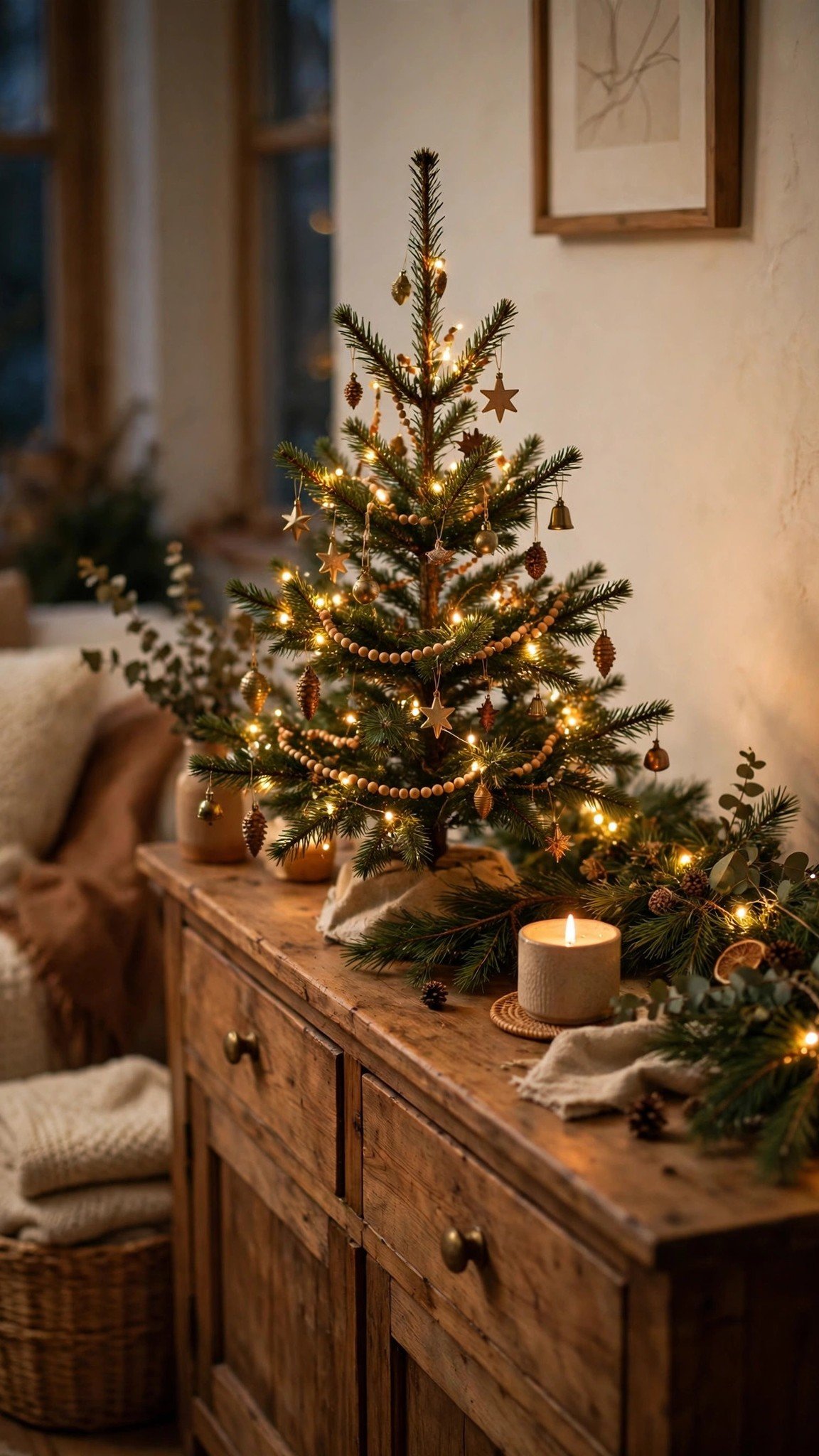
A tabletop tree is the easiest small-space Christmas win there is. A two- or three-foot tree on a sideboard, a console, or the top of a bookshelf gives you a fully decorated tree at eye level, and it takes up no floor space at all. Choose a full, bushy tabletop tree rather than a sparse one — a small tree with dense branches looks generous, while a thin one looks like an afterthought.
Tabletop trees work because they put the decorations where you actually look. The ornaments are at eye level instead of near the floor, the lights glow at the height of the room, and the presents fit underneath on the tabletop itself. When Christmas is over, the whole tree lifts into a box in one move.
2. Pick a Slim Pencil Tree
A pencil tree is a full-height tree with a narrow footprint — usually under two feet wide — and it is made for corners that a normal tree cannot fit. Place it in the corner beside the sofa or the television, where a wide tree would block the walkway, and it reads as a real Christmas tree from across the room.
The slim shape works because it gives you height without width. You still get the tall silhouette, the star on top, and room for a decent number of ornaments, but the tree never crowds the room. Choose one with hinged branches so it fluffs out properly; a pencil tree that is not fluffed looks like a green pole. For the whole apartment around the tree, see our small apartment Christmas decor ideas.
3. Put the Tree in a Basket
A woven basket, a galvanised bucket, or a wooden crate turns any small tree into a styled feature — and it hides the plastic stand at the same time. Set the tree’s base inside the basket, pack the gap with a towel or some newspaper so it stands straight, and let the basket be part of the decoration.
A basket works because it solves two problems at once: the ugly stand disappears, and the tree gains a finished, intentional base. A basket also suits a small room better than a tree skirt, which spreads out and eats floor space. Pick a basket slightly wider than the tree’s base, in a natural material that matches the room.
4. Try a Wall-Mounted or Half Tree
A half tree is flat on one side and full on the other, so it sits flush against a wall and takes up half the floor space of a normal tree. A wall-mounted tree goes further: felt, wooden, or branch trees that hang on the wall give you the shape of a tree with zero floor space at all.
Half and wall trees work because they respect the room’s real constraint, which is floor space, not height. A half tree against the wall looks complete from the front — nobody sees the flat back — and a wall tree is a genuine option for the smallest flats, where even a pencil tree blocks the door. Both decorate beautifully with lightweight ornaments.

5. Use a Stool or Plant Stand for Height
A small tree on a stool, a plant stand, or a sturdy side table instantly looks taller and more important, and it lifts the decorations above the clutter of the room. A two-foot tree on a foot-high stand reads like a four-foot tree, and the space underneath the stand holds the presents.
Height works because the eye reads the top of the tree, not the bottom of the trunk. Raising a small tree also keeps it out of reach of toddlers and pets, and it frees the floor underneath for gifts or a basket of throws. Make sure the stand is stable and the tree is secured to it — a wobbling tree is worse than a short one.
6. Keep the Ornaments Small and Light
Small trees need small ornaments. Large, heavy baubles pull the branches down, hide the tree, and make a small tree look overloaded. Use ornaments no bigger than a golf ball, hang them on the tips of the branches rather than deep inside, and leave breathing room between them.
Small ornaments work because they let the tree itself show. A small tree with twenty tiny ornaments looks full and sparkling; the same tree with ten big baubles looks crowded and tired. Mix matte and shiny finishes in one colour family plus a metallic, and the tree looks styled rather than stuffed.

7. Let the Lights Do the Work
On a small tree, lights matter more than ornaments. One string of warm white lights, woven deep into the branches from the trunk outward, makes a small tree glow like a big one — and it costs almost nothing. Add a second short string only if the tree is wider than two feet.
Lights work because they create depth: light from inside the branches makes the tree look fuller than it is, and warm white reads as candlelight rather than a shop display. Battery lights with a timer are the practical choice for a tabletop or wall tree, since there is no trailing wire across the room.
8. Style the Base, Not the Whole Room
A small tree does not need the whole room dressed to match. Style the base — a basket, a few wrapped presents, a folded throw — and leave the rest of the room alone. One well-dressed corner reads as Christmas; a whole room of small decorations reads as clutter.
Restraint works because a small room shows everything at once. A styled tree base gives the eye one festive focal point, and the rest of the room stays calm and liveable. When the tree comes down, the room is already back to normal — no big clean-up, no box of decorations to rehome. When the season ends, see our Christmas storage for small homes.

A Small Tree, a Full Christmas
A small space does not mean a small Christmas. Go tabletop or pencil-slim, set the tree in a basket, try a half or wall tree if the floor is truly tight, raise it on a stand, keep the ornaments small, let warm lights do the heavy lifting, and style the base instead of the whole room. Start with the tree that fits your corner — the rest of the decorating follows from there. And for the first thing guests see when they arrive, see our Christmas entryway decor ideas.