
7 Small Pantry Mistakes That Keep Your Kitchen Messy (and How to Fix Them)
A small pantry is not messy because you own too much food. It is messy because a few small habits quietly undo every tidy-up: the new bag goes in front of the old one, the bulk buy has nowhere to live, the back of the shelf becomes a graveyard for things you forgot you owned. Fix the habits and the pantry mostly looks after itself. These are the seven small pantry mistakes that cause most of the chaos — and the simple fix for each one. For the full setup, see our pantry organization ideas.
1. Storing Everything Mixed Together
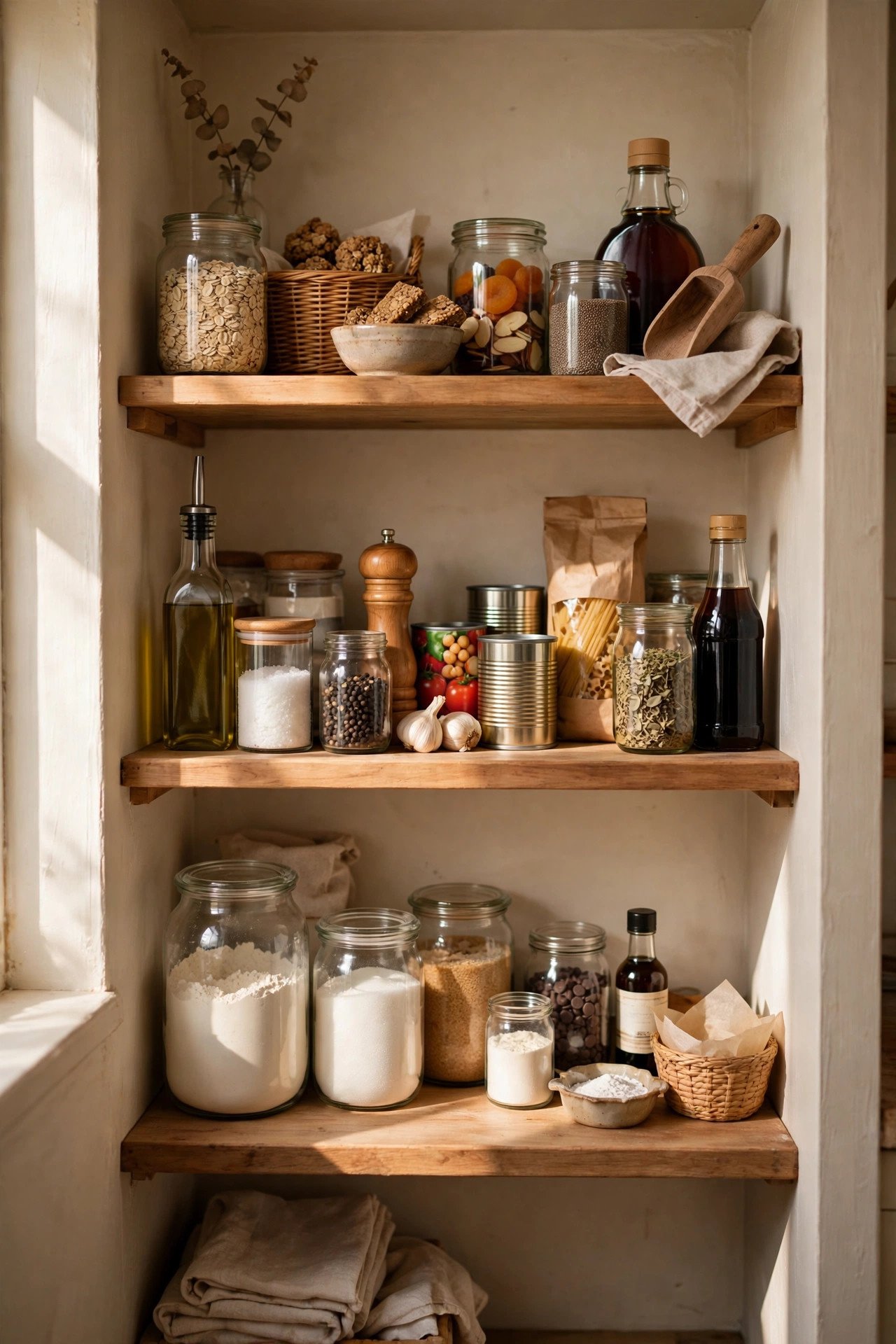
The most common small pantry mistake is treating the pantry as one big box: rice next to cleaning spray, baking supplies next to snack bars, everything wherever it happened to land. When nothing has a zone, every meal means hunting through the whole shelf, and putting shopping away takes twice as long because each item has no obvious home.
The fix is zones, not more containers. Give each shelf or basket one job: breakfast in one spot, cooking staples in another, baking in a third, snacks in a fourth. You do not need labels to start — just keep like with like. Once a zone exists, you can see at a glance what is running low, and the shopping list practically writes itself. For the full method, see how to organize a small pantry.
2. Buying in Bulk With Nowhere to Put It
A bulk deal is only a deal if the food fits. In a small pantry, a giant bag of rice or a twelve-pack of tins with no shelf space ends up on the floor, on top of the fridge, or balanced where it falls — and that overflow is what makes the whole kitchen feel crowded.
The fix is a simple rule: buy bulk only for the three or four staples you genuinely use every week, and keep a single overflow basket for them. When the basket is full, that is the limit — no more bulk until it empties. Everything else, buy in the size that fits the shelf you already have. Your wallet and your floor will both thank you.

3. Decanting Everything Into Matching Jars
Matching jars look beautiful in photos, and that is exactly the trap. Decanting every single item eats a whole afternoon, hides the expiry date and cooking instructions, and leaves you with a cupboard of mystery powders once the label washes off. In a small pantry, a wall of jars also wastes the very space you are trying to save.
The fix is to decant only the messy few: flour, sugar, rice and oats — the things that spill, tear or attract pests in their bags. Everything else stays in its original packaging, folded and clipped shut. You keep the labels, the dates and the instructions, and you get your Sunday afternoon back.
4. Never Rotating Stock — So Food Expires at the Back
Every pantry has a back row, and the back row is where food goes to expire. When new shopping always goes in front, the older tin or packet behind it sits there for months or years, and you eventually throw away food you paid for — the most expensive kind of clutter there is.
The fix takes ten seconds per shop: new items go at the back, old items move to the front. That is it. No spreadsheet, no app, just front-to-back rotation. If you want one extra step, keep a small “eat first” basket at eye level for anything close to its date, so it gets used this week instead of discovered next year.

5. Letting Deep Shelves Become a Graveyard
Deep pantry shelves look generous, but in a small kitchen they are a trap: you can only reach the front third, so the back two-thirds become a dark archive of forgotten sauces and half-used packets. The deeper the shelf, the worse the problem, and the more often you buy a duplicate of something you already own.
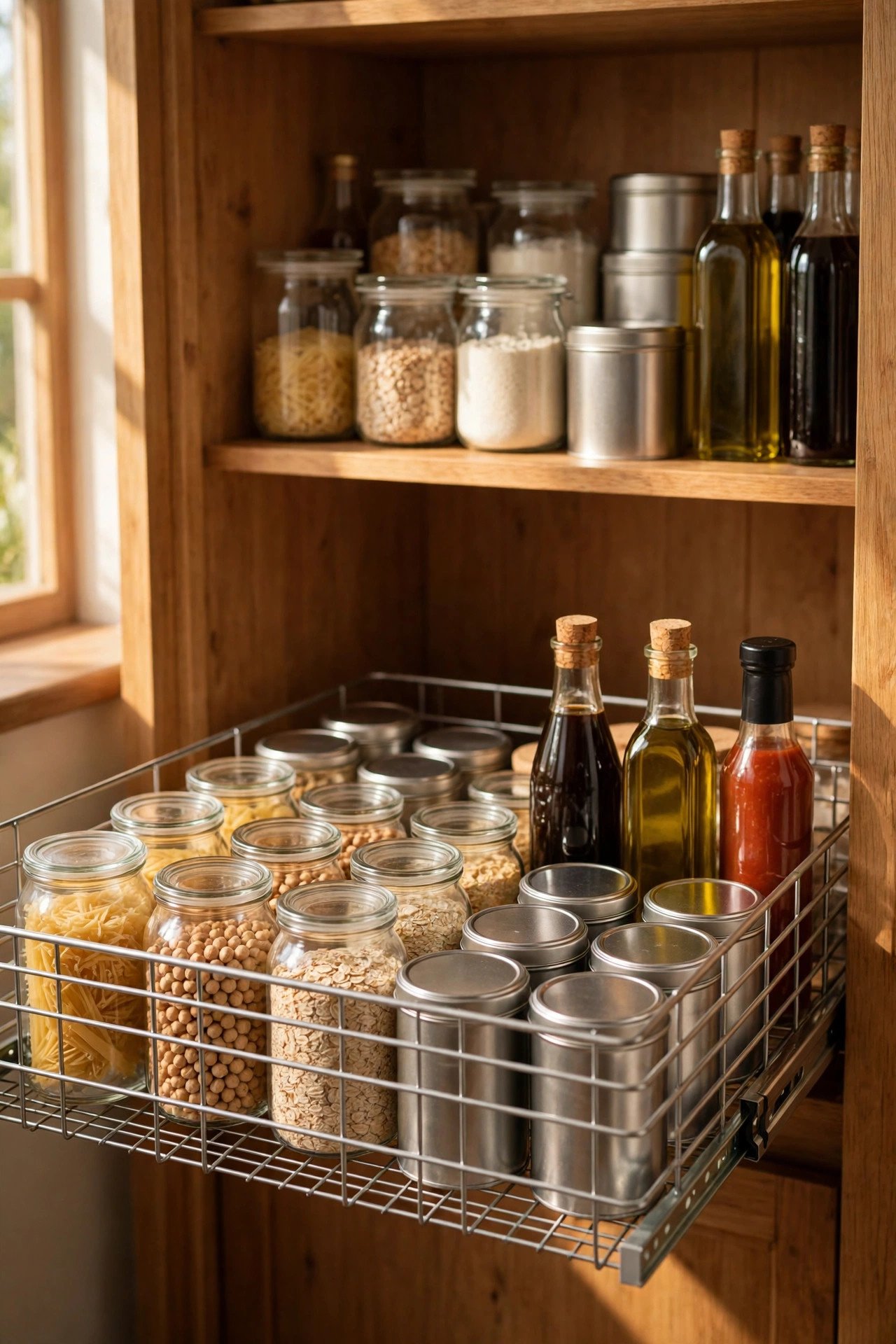
The fix is to bring the back to you. A single pull-out basket or a low bin that slides toward you turns a deep shelf into a drawer you can actually see into. If a pull-out does not fit, use a small turntable for jars and bottles instead — one spin, and the back row is in front. Either way, nothing should live anywhere you cannot reach without moving three other things.
6. Storing Heavy Things Up High and Daily Things Out of Reach
It is tempting to fill every inch of a small pantry, including the top shelf — but heavy tins and big bags up high are awkward to lift down, easy to drop, and the first thing that makes you dread opening the pantry at all. The opposite mistake is just as common: the salt, oil and coffee you use daily buried behind the once-a-month baking supplies.
The fix is height by frequency. Daily cooking staples go at eye level and within easy reach. Weekly items go one shelf up or down. Heavy things go low, where they are safe to lift, and the top shelf is reserved for light, rarely used items like the big serving platter or the holiday baking set. When the things you use most are the easiest to grab, the pantry stops fighting you.
7. No Home for Half-Used Packets
Open packets are the quiet clutter of a small pantry: the half bag of pasta, the opened spice pouch, the snack bag folded over with no clip. With no home, they migrate to the counter, the top of the fridge, or jammed sideways into a gap — and every one of them is a small spill waiting to happen.
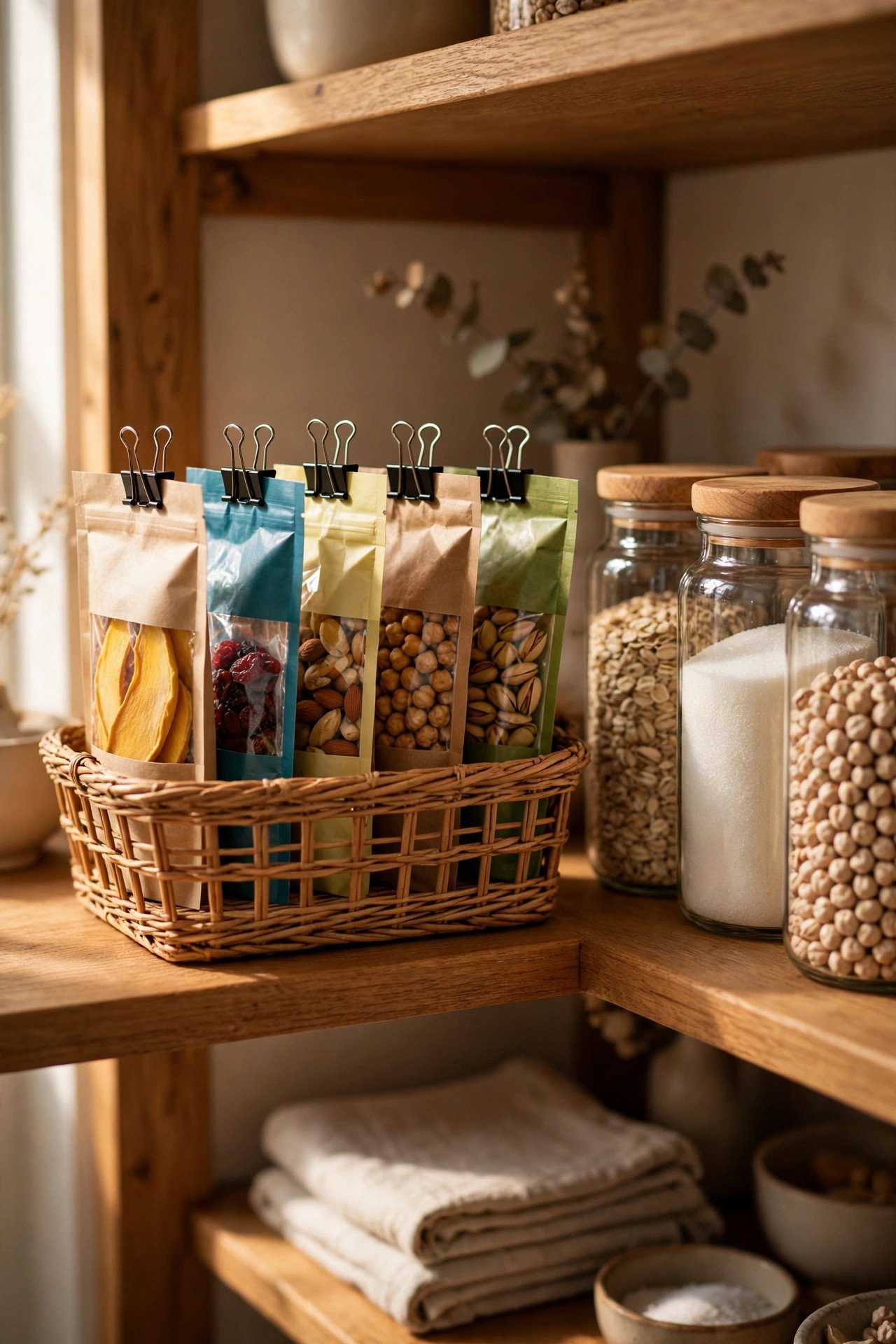
The fix is one small basket, kept in the same spot, for open packets only. Clip each bag shut, stand it upright in the basket, and when the basket is full, finish something before opening anything new. A basket that small forces the habit by itself: you can see exactly what is open, and nothing half-used ever has to live on the counter again. The same one-basket rule works for seasonings. See our guide to spice organization for a small kitchen.
A Pantry That Stays Tidy by Itself
None of these fixes needs a remodel or a shopping spree. Zone the shelves, limit bulk to what fits, decant only the messy few, rotate front to back, pull the deep shelves toward you, store by frequency, and give open packets one basket. Start this week with zones and rotation — the two cheapest moves — and watch the small pantry stop being the messiest corner of the kitchen.


