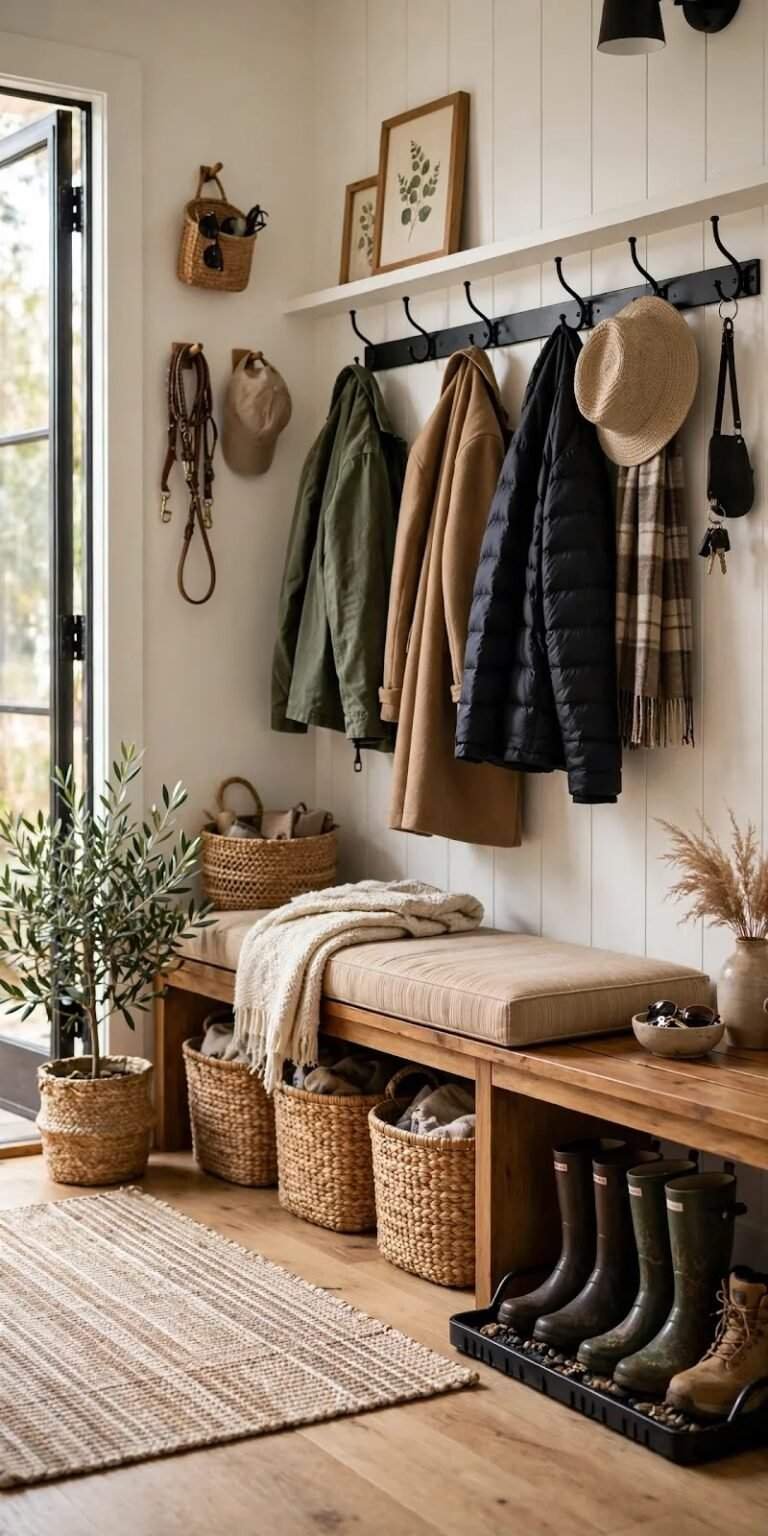
Entryway Organization for Small Homes: 7 Ideas When You Have No Mudroom
A small home without a mudroom means the front door does all the work: shoes, coats, keys, bags and mail all land in the same square metre, usually on the floor. Entryway organization for small homes is not about buying a big hall tree you have no room for. It is about giving every arriving item one small, obvious home — a hook, a tray, a basket — so the pile never gets a chance to form. The same thinking works in even smaller flats. See our ideas for tiny apartment storage.
1. Start With the Landing Strip, Not the Furniture
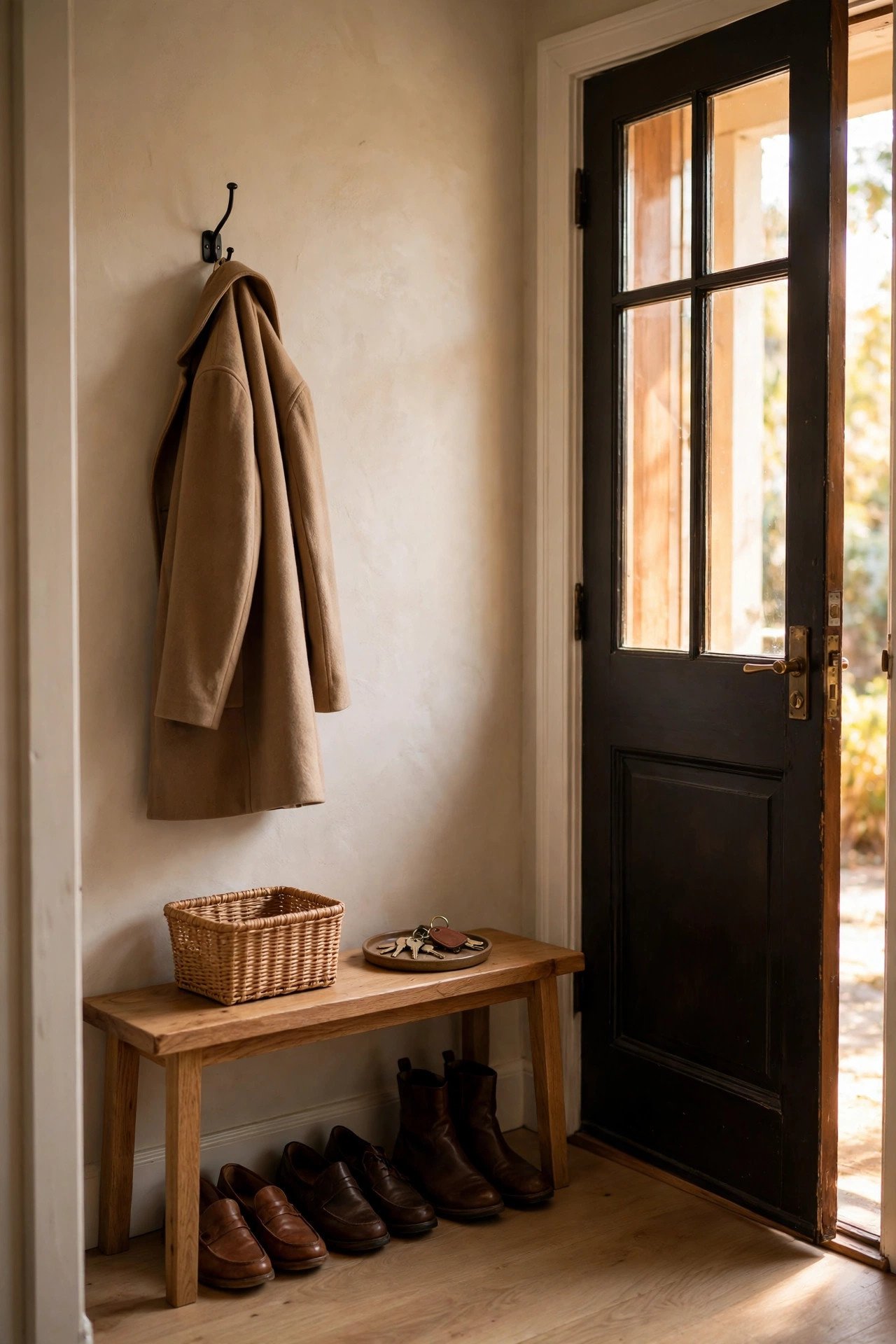
Before you buy anything, watch what actually lands by your door for three days. For most small homes it is the same five things: shoes, a coat, keys, a bag and the day’s mail. That short list is your whole brief. A landing strip is simply a narrow zone — a small bench, a wall rail, or even one shelf — where those five things live and nothing else does. If an item is not on the list, it does not belong by the door, and that one rule keeps the entryway from becoming a second closet.
Size the strip to the door: a 60–90 cm wide bench or a 90 cm wall rail covers the five daily items without blocking the swing of the door — measure the door’s arc first and keep the strip outside it. A small bench 90 by 30 cm costs $40–$80, a wall rail with 5 hooks costs $20–$40. Mistake to avoid: a landing strip wider than the wall it sits on; if the bench sticks out past the door frame, it becomes the thing you trip over every time you carry groceries in. For narrow corridors, see our guide to hallway storage for small homes.
2. Hooks Beat a Coat Rack Every Time
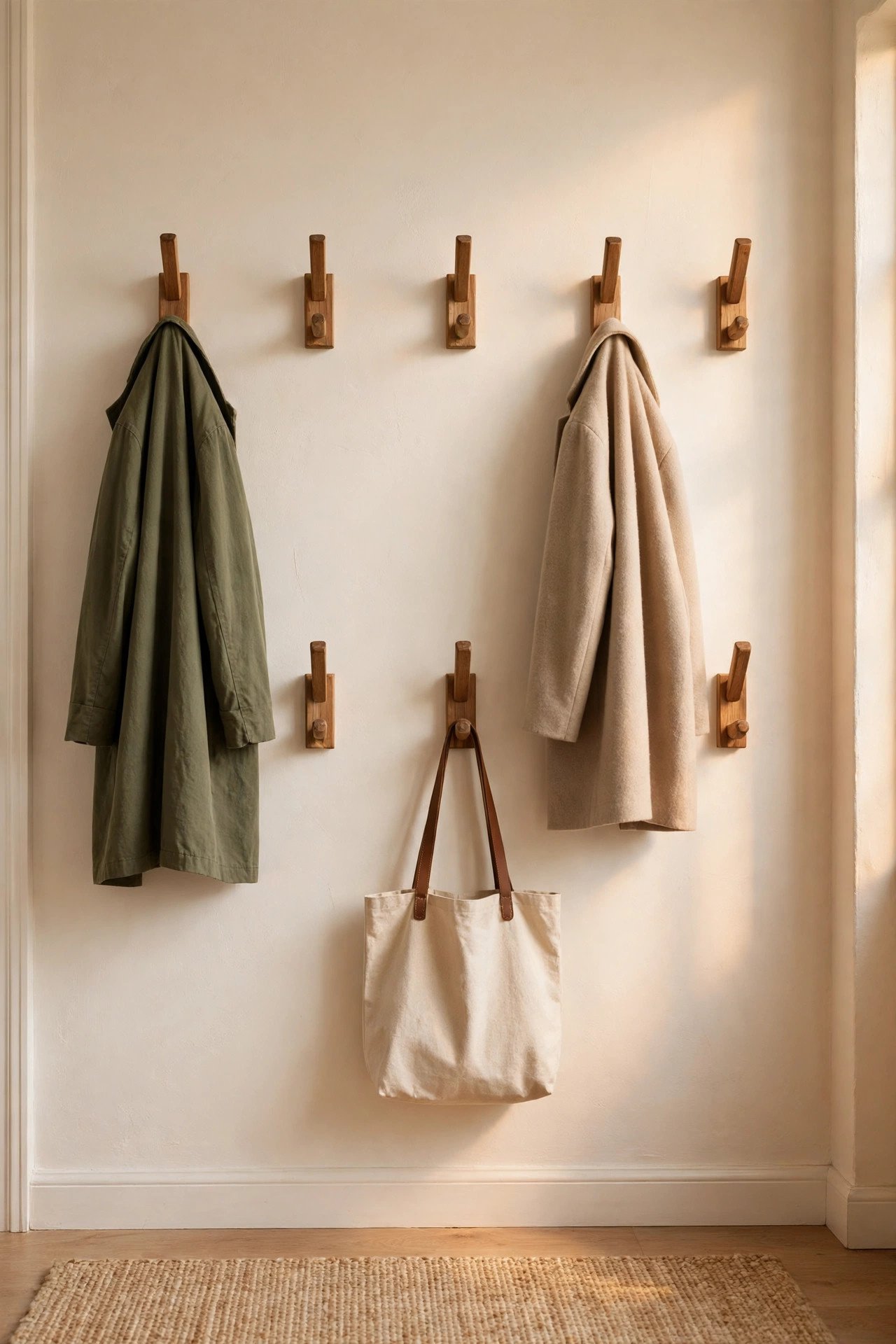
A freestanding coat rack needs floor space a small entryway does not have, and it tips over the moment it is full. A row of sturdy wall hooks at two heights does the same job on zero floor space: adult coats up high, kids’ coats and bags down low, and one hook kept empty for a guest. Space hooks about 20 centimetres apart so coats hang flat instead of bunching into one damp lump, and screw them into a stud or a proper wall anchor — a hook that pulls out of plasterboard teaches nobody to hang anything up again.
Buy hooks rated for at least 5 kg each — a wet winter coat weighs 2–3 kg, and a bag adds another 1–2 kg. A row of 5 solid brass or matte-black hooks costs $15–$30, and mounting them into studs with 5 cm screws holds far better than plasterboard plugs. Space them 20 cm apart at 170 cm height for adults and 120 cm for kids. Mistake to avoid: adhesive hooks for coats; they hold 1–2 kg at best, peel off painted walls in weeks, and drop everything on the floor at 2 a.m.
3. One Basket Per Person, No More
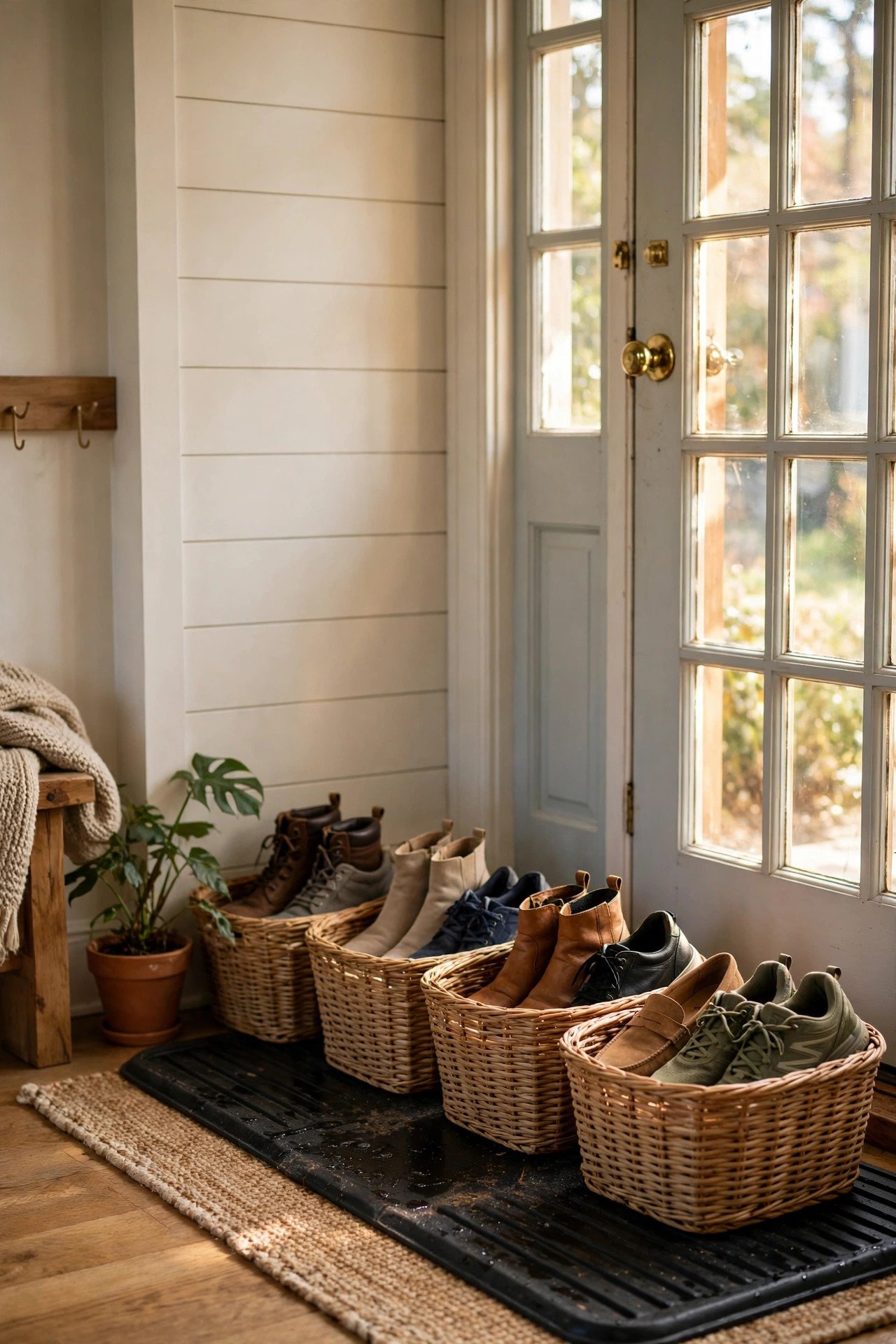
Shoes are the entryway’s worst enemy because they arrive in pairs and multiply fast. The fix that actually sticks is one basket or low tray per person, sized to hold two pairs at most. When the basket is full, the oldest pair moves to the bedroom closet — the basket is the limit, not a suggestion. A boot tray under the baskets catches wet-weather mud and wipes clean in seconds, which is the difference between a system you keep and one you abandon by November.
Choose baskets 30 by 40 cm with a low 20 cm height so shoes slide in without stacking, and a washable boot tray 40 by 60 cm underneath ($15–$25) for wet days. Seagrass baskets cost $12–$20 each; a set of two for a couple runs $25–$40. Mistake to avoid: a basket big enough for four pairs per person — the limit is the system, and a bigger basket just hides a bigger pile for longer before it overflows.
4. A Tiny Tray for Keys, Wallet and Sunglasses
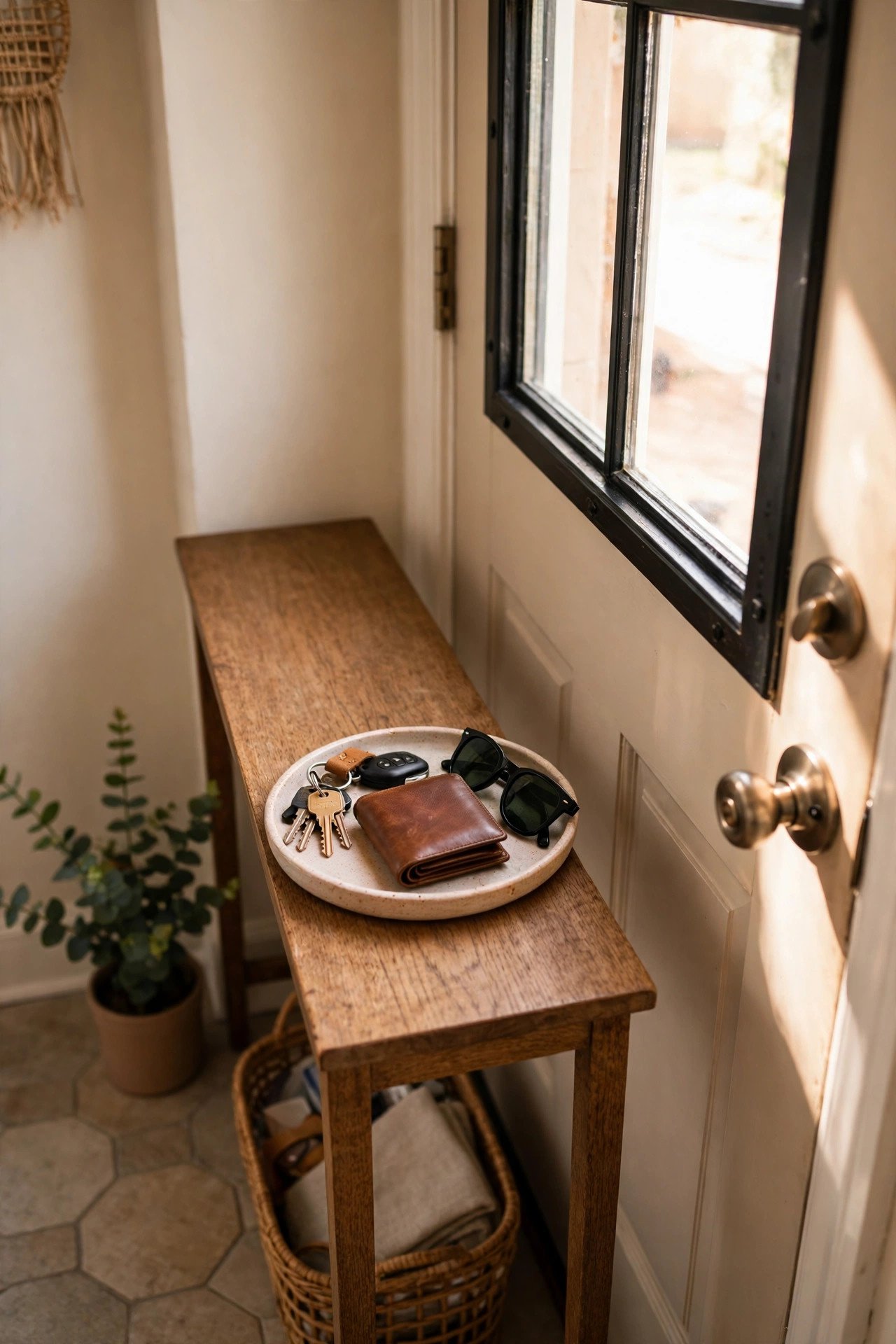
Small things vanish fastest at the door, and hunting for keys is how mornings fall apart. One small tray, dish or magnetic strip right where you walk in — at hand height, not on a high shelf — holds keys, wallet, sunglasses and the dog lead. Everything goes in the tray the second you arrive, without thinking. The tray works because it is one step, not a routine: no lids to open, no drawers to pull, nothing to remember except “tray”.
Mount or place the tray at 90–100 cm height, right beside the door handle, so dropping keys in is a reflex, not a task. A small ceramic dish costs $8–$15, a leather valet tray $15–$25, and a magnetic key strip $10–$18 with two screws. Keep the tray to four items maximum — keys, wallet, sunglasses, dog lead — because a fifth item turns it into a junk dish. Mistake to avoid: a tray with a lid; the extra step of opening it is enough that keys end up on the bench instead.
5. Use the Wall Above the Bench
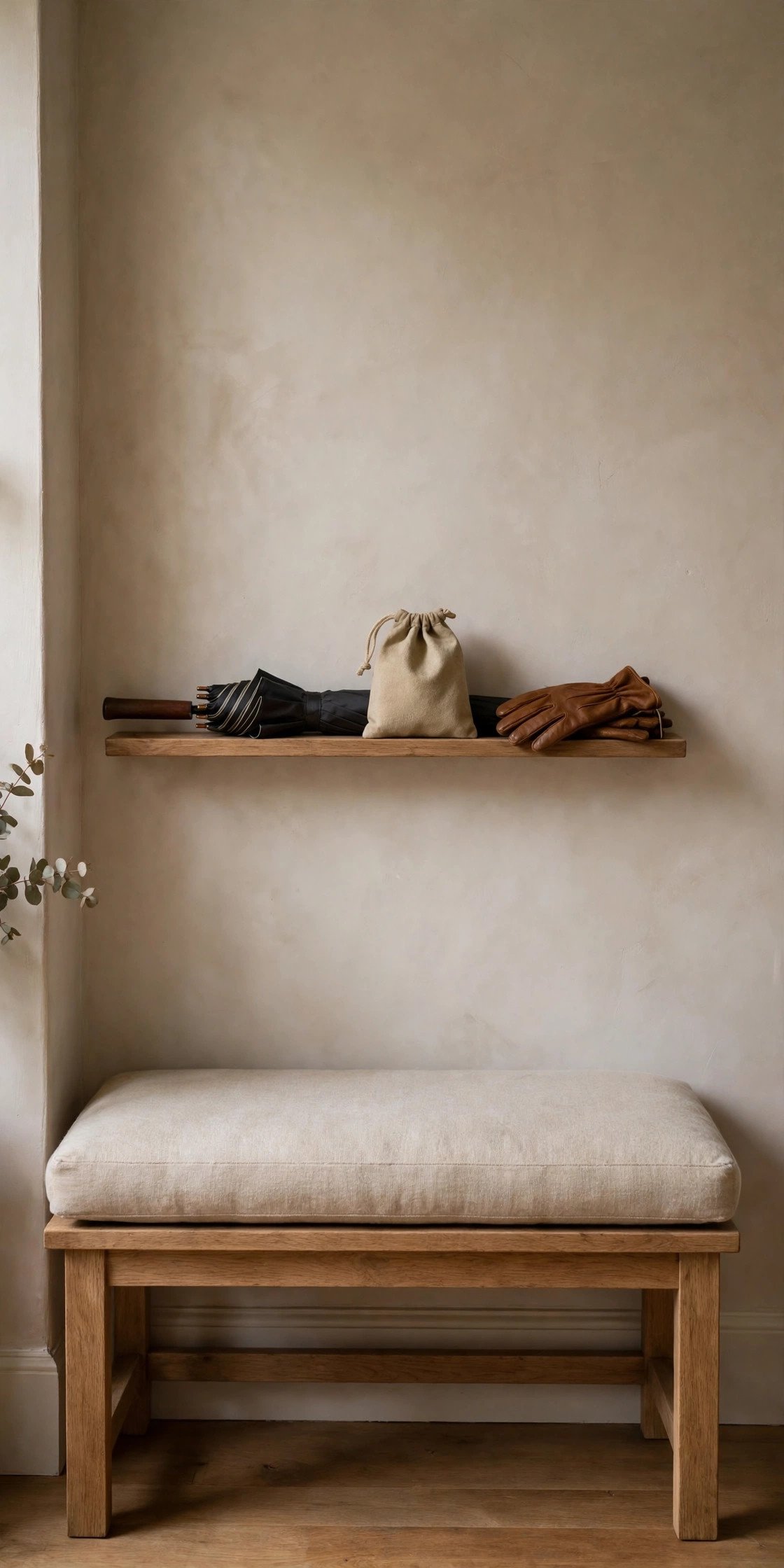
In a small entryway the wall is the only storage you are not using. A narrow shelf above the bench or hooks holds the things you need weekly but not daily: a spare umbrella, a small first-aid pouch, sunscreen in summer, gloves in winter. Keep it to one shelf, one row deep, and label-free — if you need a label to find it, it is in the wrong place. The shelf also stops the bench from becoming a dumping ground, because the bench stays clear for sitting while the shelf does the storing.
A single shelf 60–90 cm long and 15–20 cm deep costs $15–$30 plus $5–$8 for brackets, and it should sit 180–200 cm from the floor so it clears heads but stays reachable. Fix it into studs or use anchors rated for 15 kg — a shelf of books and umbrellas is heavier than it looks. Mistake to avoid: a shelf deeper than 20 cm above a bench; you will hit your head standing up from tying shoes, and the shelf becomes a hazard instead of storage.
6. Sort the Mail at the Door, Not on the Table
Mail is the quiet clutter: it arrives daily, looks harmless, and becomes a pile on the dining table within a week. Put a slim wall pocket or a single small basket by the door and sort on arrival — recycle goes straight in the recycling, bills go in the pocket, everything else gets dealt with or binned the same day. The rule is simple: mail never travels further into the house than the entryway pocket. One minute at the door saves a Saturday clearing the table.
A slim wall pocket 25 by 35 cm costs $12–$20 and mounts with two screws beside the door; one pocket per household, not per person, keeps the system simple. Add a small recycling bin or bag hook directly below it so junk mail never reaches a surface — it goes from the pocket to recycling in one motion. Mistake to avoid: a mail basket with no outflow; if nothing ever leaves it, the pocket fills in two weeks and the dining table becomes the mail pile again.
7. The Two-Minute Nightly Reset
No entryway system survives without a tiny habit, and this one takes two minutes, not twenty. Each night before bed: shoes back in their baskets, coats on their hooks, keys in the tray, mail sorted or binned. That is it. A small entryway forgives a busy day but not a skipped week — skip the reset for a month and the pile is back, no matter how good the hooks are. The reset is what keeps all six ideas above working in February, not just on organizing weekend.
Attach the reset to an existing habit — right after brushing teeth, or when the kettle goes on — because a reset with no trigger gets forgotten by Thursday. Keep a small lidded box ($10–$15) by the door for the things that have no home yet, and empty it every Sunday; without the weekly clear-out, the box becomes a second junk drawer. Mistake to avoid: a reset that takes more than two minutes; time it once, and if it runs over, remove a step rather than stretching the habit until it breaks.
An Entryway That Greets You, Not Trips You
You do not need a mudroom, a renovation or a hall tree the size of a wardrobe. You need a landing strip for five items, wall hooks instead of a rack, one basket per person, a tray for keys, one wall shelf and a two-minute nightly reset. Start this week with the hooks and the tray — the two cheapest, highest-impact moves — add the baskets and the mail pocket next, and watch the front door stop being the messiest square metre in the house. When the entryway is sorted, the next squeeze point is outside. See our guide to balcony storage for small apartments.