Small Bathroom Storage: 9 Clever Ideas That End the Counter Chaos
A small bathroom feels messy for one reason: everything lives on the counter. Toothpaste, skincare, hair tools, medicines, cleaning sprays — all fighting for the same two feet of space. Small bathroom storage works when things move off the counter and onto walls, doors, and inside cabinets, and when every item has one obvious home you can reach half asleep. The good news is that a small bathroom is actually easier to fix than a big one: there are fewer places for things to hide, so one weekend of organizing touches every single item you own, and the result shows every morning. Even renters can do all of this without drilling or damage, using adhesive hooks, suction holders and freestanding shelves. The same one-home rule works beyond the bathroom. See our guide to small laundry room organization.
1. Clear the Counter Completely First
Every bathroom fix starts the same way: take everything off the counter and out of the cabinets. Toss expired medicines, empty bottles and the hotel samples you will never use. Sort what is left into daily, weekly and rarely used. Most people find three half-empty lotions and a brush they replaced months ago. You cannot organize a bathroom you cannot see, and the counter should end up holding only what you use every single morning and night.
Keep a small tray or a 30-centimetre caddy on the counter for the five things you actually use twice a day — toothbrush, toothpaste, face wash, moisturiser and deodorant — and put everything else behind a door. A clear acrylic tray about 25 by 18 centimetres costs $8–$15 and stops bottles sliding into the sink, while a second caddy under the sink holds the weekly items. The mistake to avoid is buying storage before the clear-out: measure the counter first, because a tray wider than 35 centimetres crowds a 60-centimetre vanity and leaves no room for hands and a cup.

2. Over the Toilet Is Prime Real Estate
The wall above the toilet is usually the biggest unused space in a small bathroom. A simple over-toilet shelf unit or two floating shelves holds towels, spare toilet paper and everyday toiletries without touching the floor. Keep daily items on the lowest shelf, backups up high, and leave one shelf half empty — a bathroom that looks full feels cramped no matter how tidy it is.
Measure the wall above the toilet before you buy: the tank lid needs about 10 centimetres of clearance to lift off, and shelves should sit at least 15 centimetres above it. A two-shelf over-toilet unit in bamboo or powder-coated steel, about 60 centimetres wide, costs $25–$45 and holds four rolled towels plus spare rolls. Avoid glass shelves here — steam fogs them daily and a dropped bottle can chip an edge.

3. Cabinet Doors Are Hidden Shelves
The inside of a bathroom cabinet door is a shelf you already own. Stick-on racks or small wire baskets on the door hold hair tools, cleaning sprays, small bottles and brushes, freeing the cabinet shelves for bigger items. This is renter-friendly — adhesive mounts peel off cleanly — and it moves the fiddly things out of the pile where they always sink to the back.
Use Command strips or small screws, not the cheap foam tape that comes in the box — steam loosens foam tape within weeks and a falling rack can crack a tile. A wire rack about 20 centimetres wide costs $7–$12 and fits most cabinet doors, but measure the door’s inner panel first: a rack wider than 28 centimetres hits the hinges on a standard 40-centimetre door. Leave a 2-centimetre gap at the hinge side so the door still closes flat.
4. One Basket Per Person, Per Routine
Shared bathrooms get messy because everyone’s things mix. Give each person one basket or caddy: morning routine in one, evening skincare in another, hair tools in a third. Baskets slide onto a shelf or under the sink as a unit, so the counter stays clear and nobody hunts through someone else’s products. Label them if the household needs the reminder — masking tape and a marker cost almost nothing.
Size each basket to the shelf, not the person: a basket about 25 centimetres wide and 15 deep fits a standard vanity shelf and still leaves room for a spare roll. Woven seagrass baskets cost $6–$12 each and survive steam better than cardboard boxes, which soften and sag within a month. The mistake to avoid is one giant family basket — it becomes a junk drawer within a week, because nobody can find their own things in a shared pile.
5. Stackable Bins Under the Sink
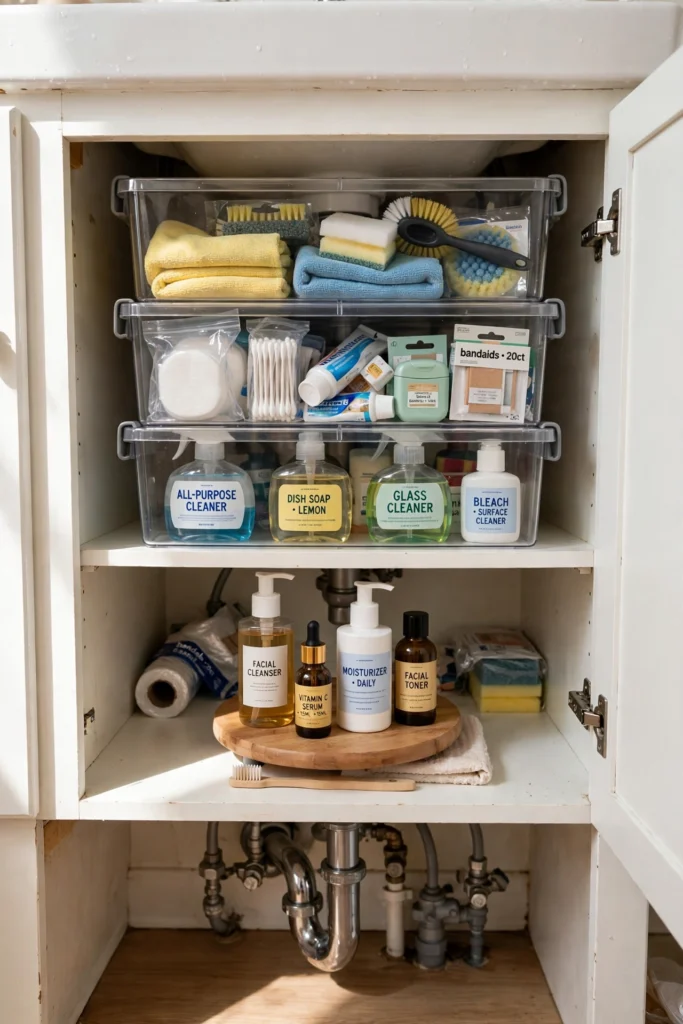
Under-sink cabinets are deep, dark and full of pipes, which is why they become a dumping ground. Stackable clear bins fix it: one for cleaning supplies, one for spare toiletries, one for first aid and medicines. A small turntable in front holds the daily bottles you reach for most, so one spin brings the back row to you. If you can see it, you will use it before it expires.
Measure the cabinet before you buy bins: most under-sink cabinets are 45–60 centimetres wide, but the U-shaped pipe trap eats the middle 20 centimetres, so shallow bins about 25 centimetres deep fit best on either side. Clear stackable bins cost $10–$18 for a set of two, and a 25-centimetre lazy Susan turntable costs about $8. Avoid tall bottles on the top shelf — they tip when you pull the bin out, so keep sprays low and light items up high. For a deeper dive, read our guide to under-sink organization for a small bathroom.
6. Towels: Roll, Don’t Fold
Rolled towels take less space than folded stacks and look better doing it. Roll bath towels and stand them upright in a basket, on a shelf, or in a wall-mounted wine rack repurposed as a towel holder — a trick that costs a few dollars and looks intentional. Keep two towels per person in rotation and store the rest elsewhere; a small bathroom should never warehouse a linen closet.
A rolled bath towel is about 12 centimetres across, so a basket 30 centimetres wide holds two rolls side by side, and a wall-mounted wine rack about 35 centimetres long holds three. Choose quick-dry cotton or bamboo towels — thick luxury towels stay damp for hours in a steamy room and start to smell within two days. The mistake to avoid is rolling hand towels the same way: they unroll constantly, so fold hand towels in thirds and stack them flat instead.

7. Magnetic and Suction Tricks for the Walls
Bathroom walls hold more than you think. A magnetic strip inside a cabinet door organizes bobby pins, tweezers and nail clippers — the tiny metal things that always vanish. Suction baskets in the shower hold shampoo and soap without drilling a single hole. A suction toothbrush holder frees the counter edge where brushes always fall over. Small wall tricks, big counter payoff.
Test suction on your tile before loading it: press a suction hook on, hang a 1-kilogram bottle from it, and leave it overnight — on glossy flat tiles it holds for months, but on textured or matte tiles it drops within a day. A two-pack of heavy-duty suction baskets costs $9–$14, and a 30-centimetre magnetic strip costs about $10. Avoid sticking anything to grout lines or painted walls: suction needs a smooth sealed surface, and adhesive on paint peels the finish when it comes off.
8. A Slim Cart for the Gap
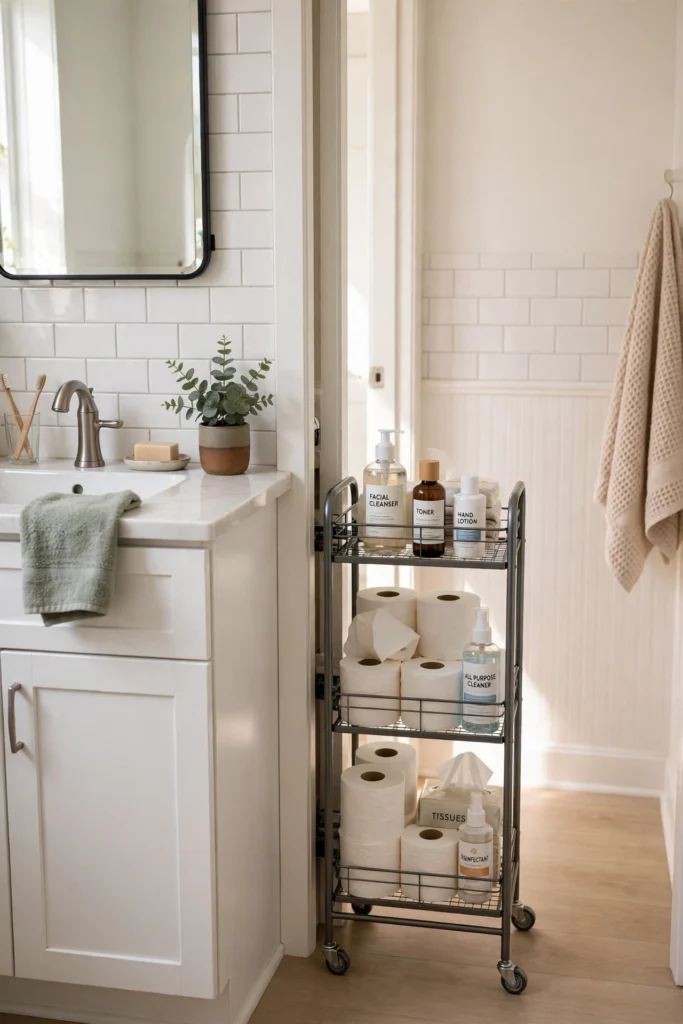
Almost every bathroom has a gap: between the toilet and the wall, beside the vanity, next to the tub. A slim rolling cart — the kind that fits in a six-inch gap — slides in with three tiers of storage for sprays, bottles and rolls. It pulls out when you need it and disappears when you don’t, turning dead space into the hardest-working storage in the room.
Measure the gap at the floor and at waist height — walls are rarely straight, and a cart that fits at the bottom can jam 10 centimetres up. A three-tier slim cart about 13 centimetres wide and 40 deep costs $18–$30, and lockable castors stop it rolling when you pull a bottle out. Avoid carts wider than 15 centimetres for a six-inch gap: they scrape the vanity and trap moisture behind them, which grows mould on the wall within weeks.
9. The Two-Minute Nightly Reset
A small bathroom stays organized the same way a kitchen does: with a tiny habit, not a big project. Two minutes before bed: wipe the counter, return bottles to their baskets, hang the towel, and toss the empty roll. A bathroom forgives a busy day but not a skipped week. The reset is what keeps all eight ideas above working in month three, not just on organizing weekend.
Anchor the reset to something you already do: wipe the counter while you brush your teeth at night, and put the two-minute timer on your phone so it rings before you drift off. Keep a small spray bottle of diluted all-purpose cleaner and a microfibre cloth under the sink — a 500-millilitre bottle costs about $3 and lasts a month. The mistake to avoid is resetting only when guests come: a skipped week takes 20 minutes to fix, while a nightly two minutes keeps it at two minutes.
A Calm Bathroom, Every Morning
You do not need a bigger bathroom or a remodel — you need shelves over the toilet, baskets on the doors, stackable bins under the sink, rolled towels, and two minutes a night. Start this weekend with the counter clear-out and the over-toilet shelf, add the door racks and the slim cart next week, and watch the busiest room in the house finally feel calm. That is the whole budget: a few small buys, a few honest decisions, and a bathroom that starts your day right. And once the counter is clear, keep it that way with one simple rule: if something new comes into the bathroom, something old leaves it the same day. If the laundry room is next on your list, take a look at our sage green laundry room makeover.