Small Dining Room Organization: 8 Ideas for Tiny Dining Spaces
A small dining room has one job — somewhere to eat — and a dozen things competing for the space: the table, the chairs, the dishes, the linens, the candles, the homework, and the mail that somehow lives on the table. When the dining room is also the walkway, the office, and the homework station, it needs a system, not more furniture. These eight small dining room organization ideas give every dining item a home, and none of them needs a bigger room. The same thinking frees up outdoor space too, so try this balcony storage for small apartments.
1. Let a Sideboard Do the Heavy Lifting
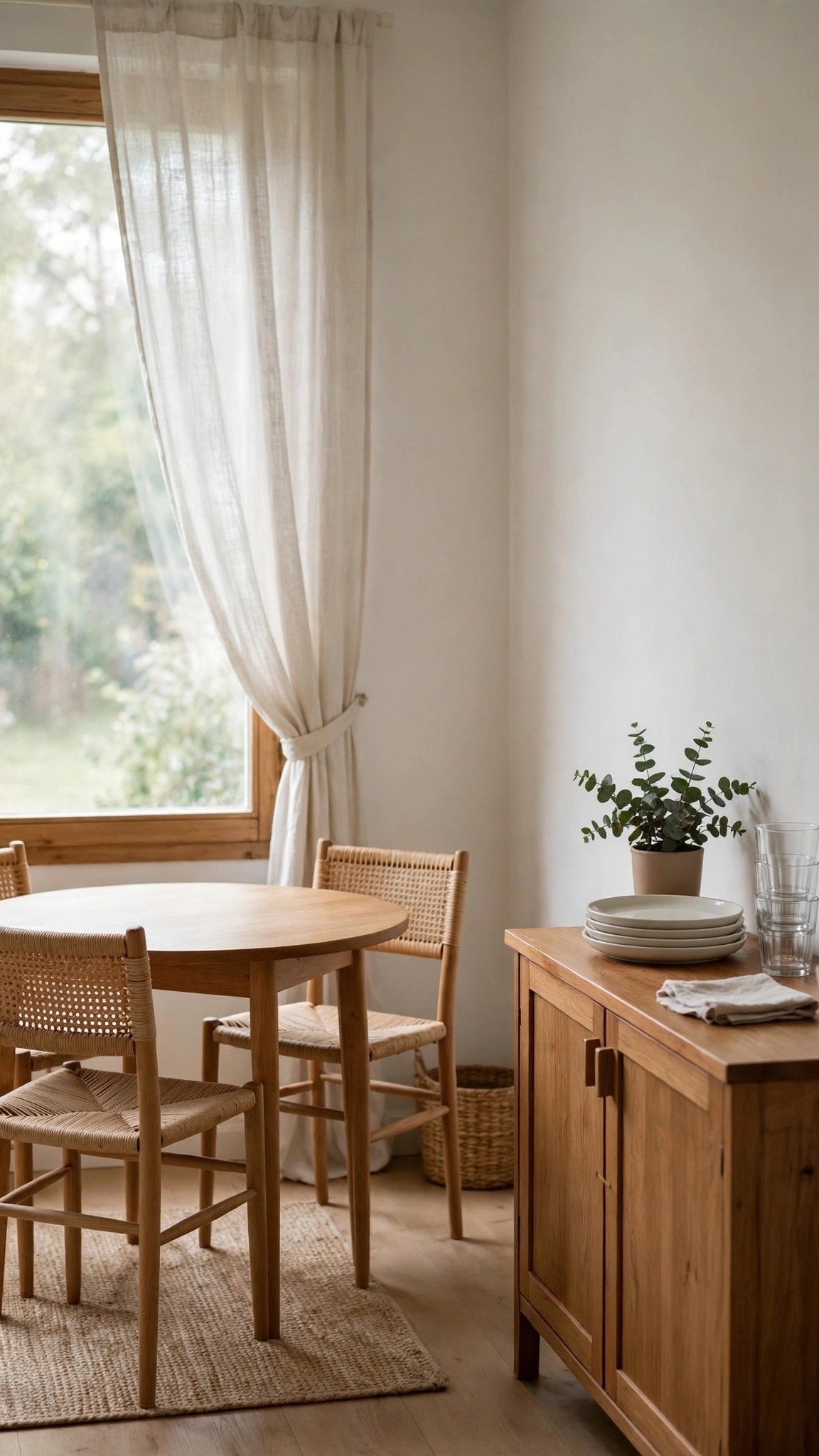
A sideboard is the single best piece of furniture for a small dining room, because it stores everything the table needs within arm’s reach. Plates, glasses, serving dishes, tablecloths, and candles live inside it, and the top holds a lamp, a small plant, or the salt and pepper — nothing else. One sideboard replaces a whole wall of cabinets.
A sideboard works because it keeps the dining clutter off the table and out of the kitchen. Everything you need to set the table is three steps away, and everything you need to clear it has a place to go back to. Choose a sideboard with drawers for linens and cutlery, and doors for the bulky serving dishes. The same furniture thinking works next door, so see this small living room storage.
2. Use Wall Shelves, Not More Furniture
When the floor is full, the walls are the only space left. Two floating shelves above the sideboard hold the everyday glasses, a stack of plates, and a few serving bowls — the things you reach for daily — while the bulky items stay inside the sideboard. Shelves add storage without adding a single square foot of furniture.
Wall shelves work because they keep the daily items visible and reachable, which is what actually gets used. A shelf of glasses you can see is a shelf you will use; a cabinet of glasses you cannot see is a cabinet you forget. Keep the shelves to two, and keep them tidy — open shelves show everything, including the mess.

3. Keep Only What You Use Weekly Within Reach
A small dining room cannot store the full set of everything. Keep the four everyday plates, the four everyday glasses, and the cutlery you use weekly in the sideboard or on the shelves. The good china, the extra glasses, and the once-a-year serving dishes go elsewhere — a high kitchen shelf, a storage box, anywhere but the dining room.
Editing works because the dining room only needs to serve the meals you actually eat. Four plates in reach beats twelve plates buried behind each other, and the room feels calmer when every item in it is used weekly. The rest is not gone; it is just stored where it belongs.
4. Choose a Table That Fits the Room, Not the Dream
A table that seats eight in a room that fits four is not generous; it is a obstacle. Measure the room, leave at least 90 centimetres behind each chair for someone to pull it out and walk past, and choose the table that fits that space — usually a round table or a drop-leaf that expands only when guests come.
The right table works because a dining room is judged by how it feels to move through it, not by how many people it could theoretically seat. A round table also suits a small room better than a rectangle: no corners to bump into, and everyone can reach the middle. A drop-leaf table is the honest compromise for a room that hosts six twice a year.

5. Store Table Linens Where You Set the Table
Tablecloths, placemats, and napkins belong in the dining room, not in a linen closet two rooms away. Keep them in the top drawer of the sideboard, folded and stacked by use: everyday placemats on top, the good tablecloth underneath. When it is time to set the table, everything is in one drawer.
Storing linens at the table works because it removes the friction from setting the table properly. A tablecloth that lives in another room never gets used; a tablecloth in the sideboard drawer gets used every Sunday. Fold placemats in a stack, roll napkins, and the drawer stays neat without any special organizers.
6. Give Every Chair a Job (and a Home)
In a small dining room, chairs drift: one holds a bag, one holds tomorrow’s clothes, one becomes the homework chair. Assign each chair a job — these four are for eating, this one is the spare that lives against the wall — and clear them every night. A chair with a job gets sat on; a chair without one becomes a shelf.
Chairs work because they are the most visible clutter in a dining room. Four clear chairs around a clear table make the room look finished, even if the sideboard is full. Folding chairs for guests stack in a closet and come out only when needed, instead of crowding the room all week.
7. Use a Tray to Corral the Centerpiece
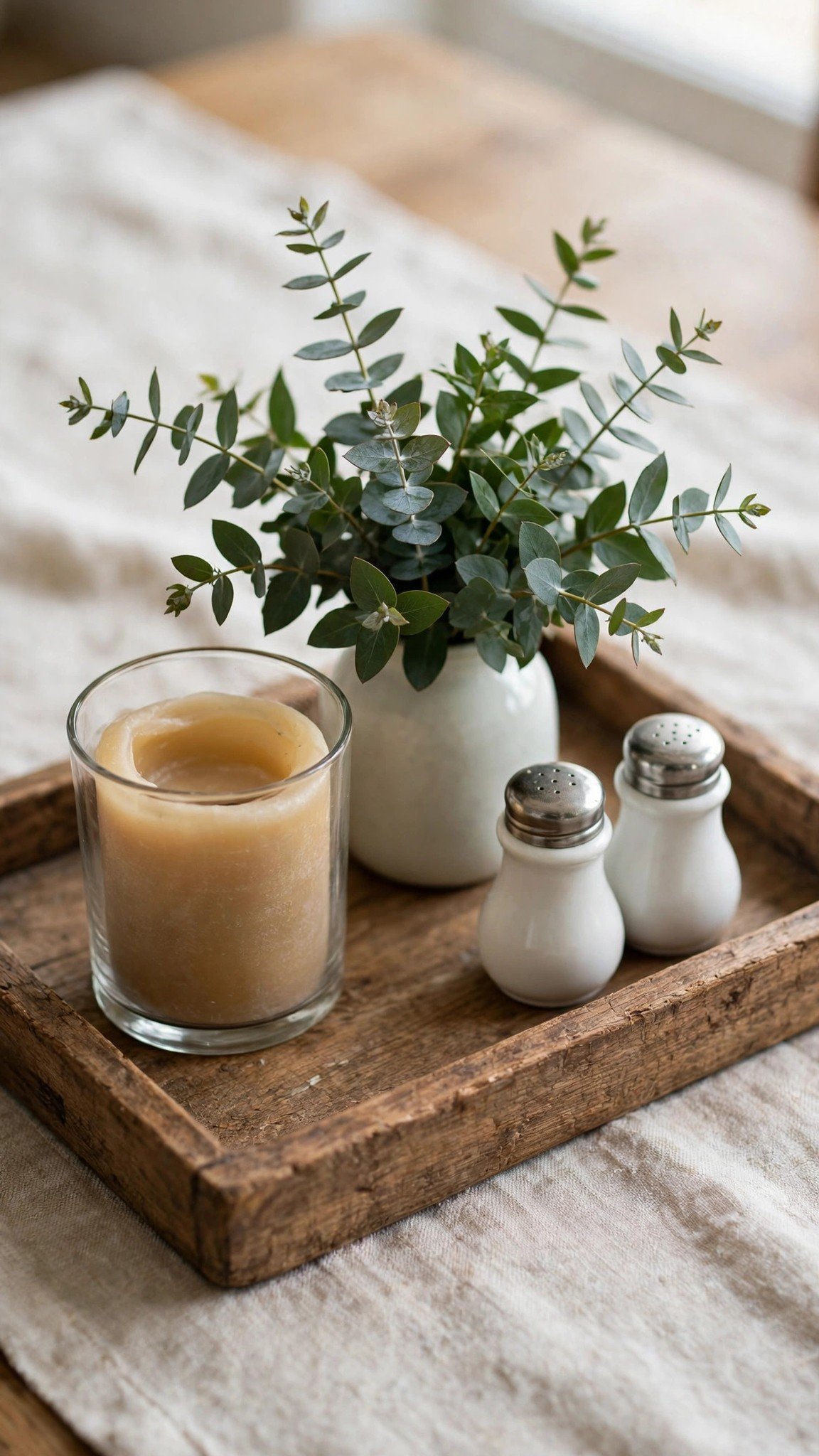
A centerpiece that spreads across the table — candles, a vase, the salt and pepper, a bowl of fruit — eats the eating space. Put the whole centerpiece on one tray, and the tray becomes a single object you can lift off the table in one move when it is time to eat, and set back down when the meal is over.
A tray works because it turns five loose objects into one portable unit. The table clears in seconds, the centerpiece stays styled, and nothing gets knocked over in the move. Choose a tray that fits the table’s centre with room for plates on either side — about a third of the table’s length.
8. Reset the Table Every Night
The dining room stays organized only if it is reset. Every night, clear the table completely, wipe it down, return the chairs, and put the centerpiece tray back in the middle. Two minutes, every night, and the dining room is ready for breakfast without a morning rescue mission.
A nightly reset works because a dining room collects the day’s debris faster than any other room: mail, homework, bags, and half-finished projects all land on the table. Clearing it nightly stops the pile from becoming furniture, and it means the table is always a table — not a storage surface that happens to have chairs.

A Dining Room That Works Every Day
A small dining room does not need more space; it needs everything to have a home. Let a sideboard do the storage, use wall shelves instead of more furniture, keep only the weekly items within reach, choose a table that fits the room, store linens where you set the table, give every chair a job, corral the centerpiece on a tray, and reset the table every night. Start with the sideboard — the rest of the system falls into place around it. All of it costs very little, as shown in these home organization ideas on a budget.