Under Sink Organization: 8 Ideas for Small Bathrooms
The cabinet under a small bathroom sink is where cleaning supplies go to disappear: bottles tip over, the drain pipe eats the middle of the space, and the thing you need is always behind the thing you do not. The fix is not a bigger bathroom — it is giving the awkward space a simple system, so every bottle has a place and nothing hides behind the pipes. These eight under sink organization ideas do exactly that, and none of them needs a plumber. The same small-space thinking works across the room, so try this small bathroom storage.
1. Empty It and Measure the Real Space
No under-sink system works until you know what you are actually storing. Pull everything out, throw away the empty bottles and the products nobody uses, and measure the space around the pipes: the width, the depth, and the height on each side of the drain. Most under-sink cabinets are really two small spaces — left of the pipe and right of the pipe — and the system has to fit those two spaces, not the cabinet as a whole.
Measuring first matters because the pipe decides everything: a bin that is two centimetres too wide will not fit, and a tall bottle will not stand under a low pipe. Write the measurements down and buy storage to fit them. Ten minutes with a tape measure saves a drawer full of bins that do not fit.
2. Sort Into Bins by Job
One big pile under the sink is the problem, and small bins are the fix. Sort what is left into three or four bins by job: daily cleaning, bathroom cleaning, laundry, and spare supplies. One small bin per job, each one light enough to lift out with one hand, turns the cabinet into a set of drawers you can pull out and put back.
Bins work because they make the cabinet searchable: pull the cleaning bin out, find the spray, put the bin back. Nothing falls over, nothing hides behind the pipe, and the whole cabinet stays tidy because each bin has one job. Clear bins are best — you can see what is inside without opening anything.
3. Hang Spray Bottles From a Tension Rod
The smartest under-sink trick costs almost nothing: fit a short tension rod across the cabinet, just under the top, and hang the spray bottles from it by their triggers. The bottles hang in a neat row, the floor of the cabinet stays clear for bins, and every spray is visible and reachable the moment you open the door.
The rod works because it uses the empty air at the top of the cabinet — space that bins can never use. It also stops the classic problem of a spray bottle tipping over and leaking into everything below it. Keep the rod to the sprays you use weekly; the rest stay in their bins on the floor of the cabinet.
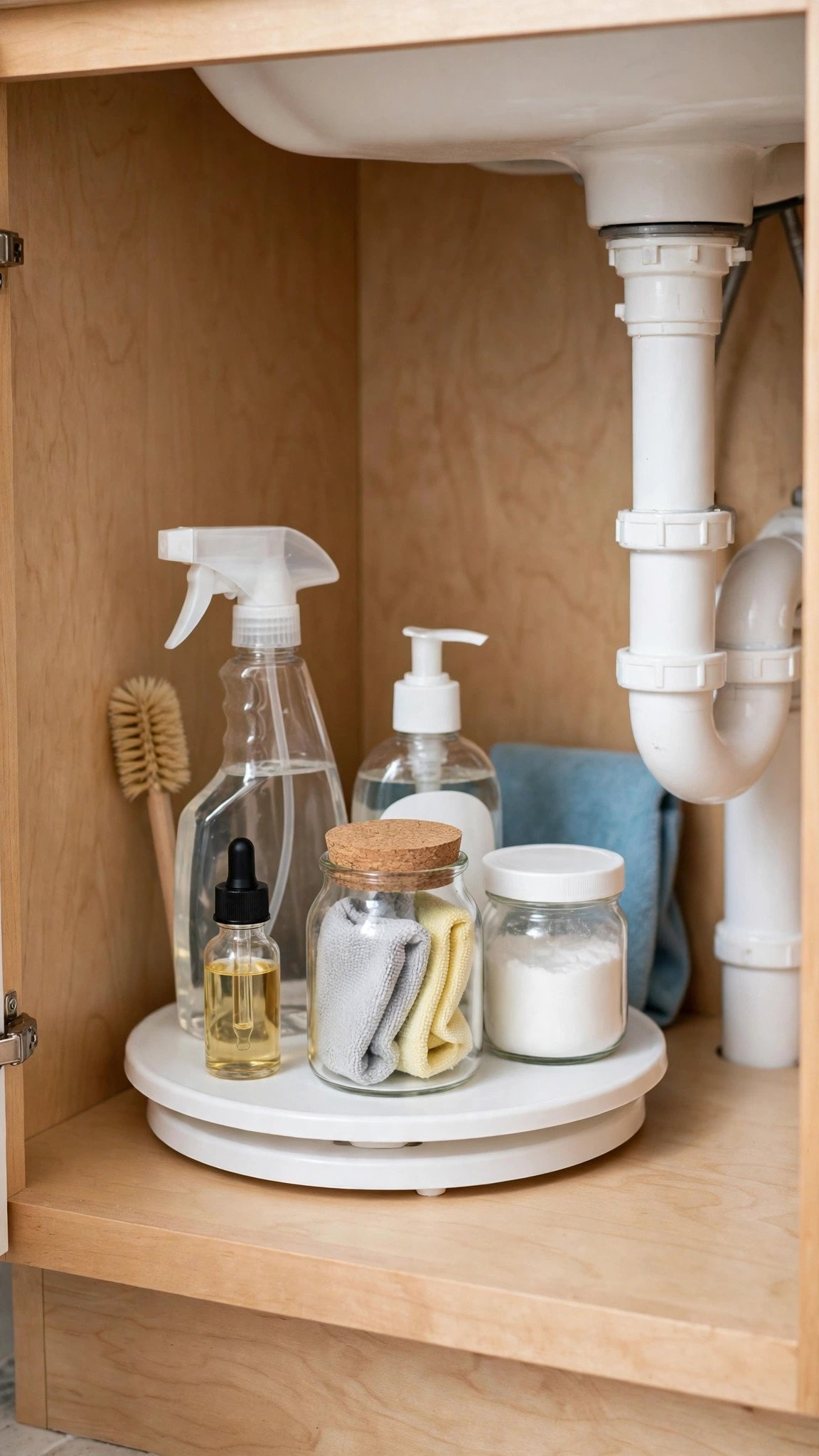
4. Put a Turntable on Each Side of the Pipe
A small turntable — a lazy Susan — on each side of the drain pipe turns the deepest, darkest corner of the cabinet into the easiest place to reach. Load one with daily items and the other with cleaning supplies, spin it once, and the bottle at the back comes to the front without you crawling halfway into the cabinet.
Turntables work because the under-sink cabinet is deep and dark, and reaching the back is the whole problem. A spin replaces a dig. Choose turntables with a low rim so bottles do not slide off, and keep them small enough to clear the pipe — two small turntables beat one big one that does not fit.

5. Use the Inside of the Cabinet Door
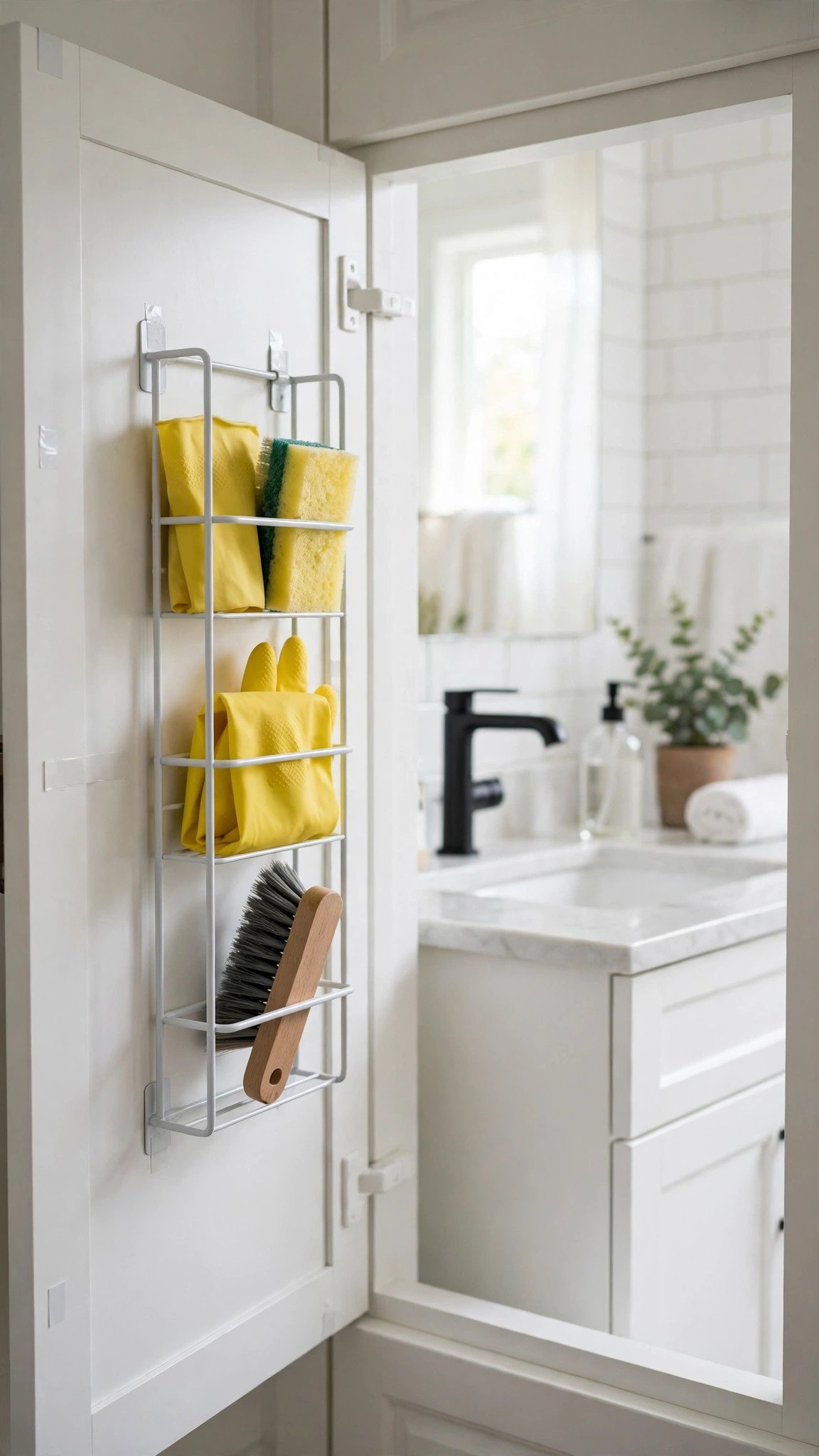
The inside of the under-sink door is free storage, and it is the best home for the small things that get lost in bins: sponges, gloves, scrub brushes, and the spare bin bags. A slim door-mounted caddy or a row of adhesive hooks holds them flat against the door, visible the moment you open it and out of the way of everything else.
Door storage works because it takes the small, flat things out of the bins, where they always end up buried at the bottom. Keep the caddy shallow so the door closes over the bins, and keep it to the light things — a heavy caddy pulls the door out of alignment over time. The door is for the tools; the bins are for the bottles.
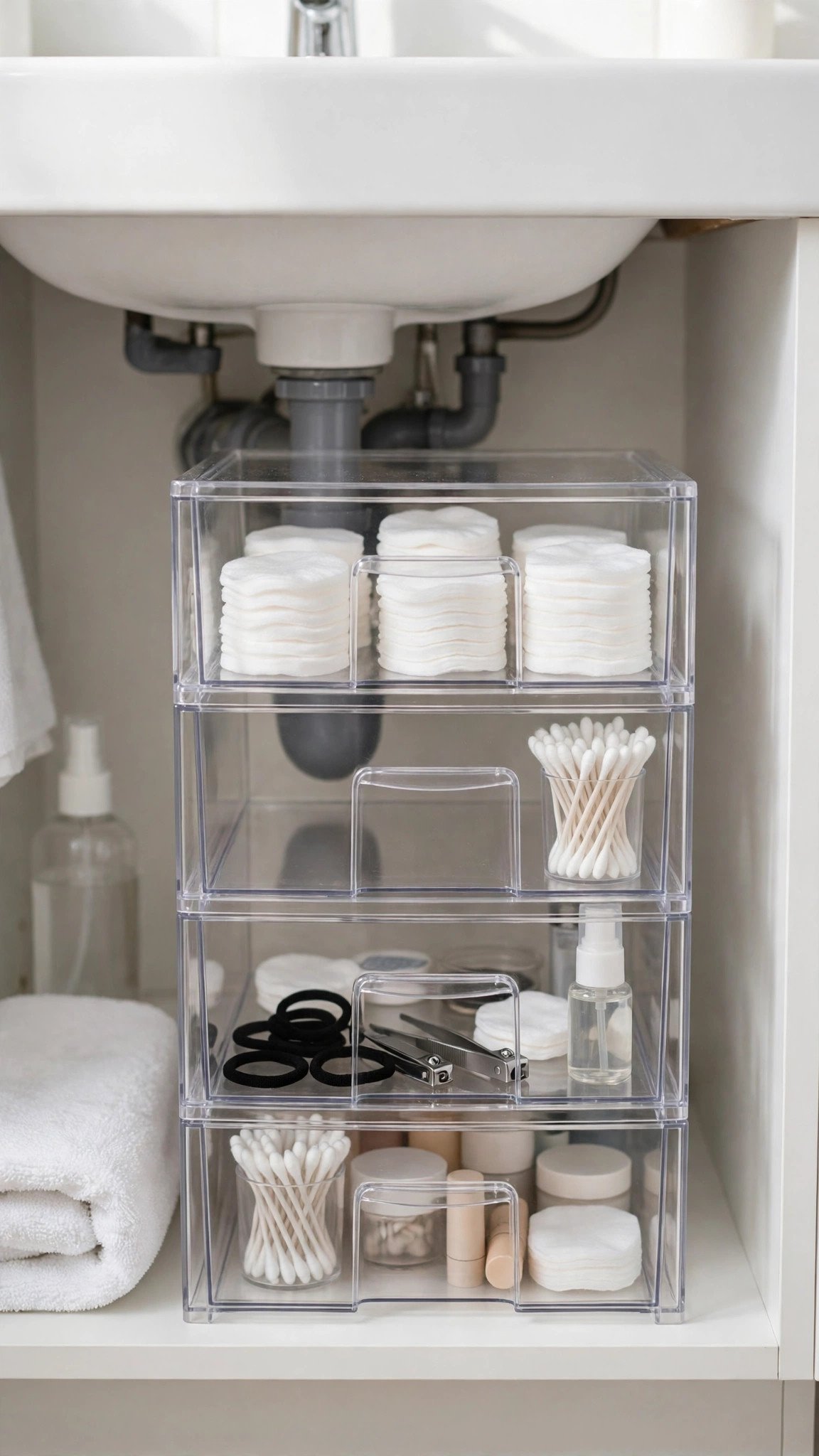
6. Stack Clear Drawers for the Small Stuff
Small things — cotton pads, hair ties, spare toothbrush heads, medicine — vanish in an under-sink cabinet unless they have their own home. A small stack of clear drawers, one per category, sits on the cabinet floor beside the pipe and keeps every little thing visible and separate. Pull the drawer, take what you need, push it back.
Clear drawers work because they turn a dark pile into a tiny chest of drawers. You can see what is inside without opening anything, and the drawers stack without wasting the vertical space that bins leave empty. Label the front of each drawer so the whole household puts things back in the right place. The same clear-bin system tames the laundry shelf too, so see this small laundry room organization.
7. Label Every Bin and Drawer
An under-sink system only survives if everyone in the house can use it without thinking. Label every bin and every drawer with what lives inside: “daily cleaning”, “bathroom”, “spare supplies”, “first aid”. A label maker is nice, but masking tape and a marker do the same job for pennies.
Labels work because they make putting things back as easy as taking them out. Without labels, the system lasts a week: someone puts the bleach in the daily bin, the next person cannot find it, and the cabinet is a pile again within a month. With labels, the system maintains itself, because the right place is written on the box.
8. The Five-Minute Monthly Reset
An under-sink cabinet only stays organized if it is reset regularly, and the reset only happens if it is short. Five minutes, once a month: pull the bins out, throw away anything empty or expired, wipe the cabinet floor, and put the bins back in their places. That is the whole job.
Five minutes a month beats an hour-long cleanout twice a year, and the cabinet never reaches the stage where opening it feels like a chore. The reset also tells you what you actually use, so the shopping list gets shorter and the cabinet stops filling up with products nobody touches. Set a phone reminder for the first of the month and the system looks after itself.
An Under-Sink Cabinet That Works
None of these ideas needs a bigger bathroom or a plumber. Empty the cabinet and measure the real space, sort into bins by job, hang the sprays from a tension rod, put a turntable on each side of the pipe, use the inside of the door, stack clear drawers for the small stuff, label everything, and reset for five minutes a month. Start with the empty-and-measure and the bins — the two cheapest moves — and the cabinet under the sink stops being a dark hole, because everything in it finally has one clear place to be. A fresh coat of paint finishes the job, as shown in this sage green laundry room makeover.