Fridge Organization for Small Kitchens: 8 Ideas That Save Space and Food
A small kitchen fridge fails for one reason: everything goes in wherever there is a gap, so the yoghurt hides behind the leftovers, the vegetables rot in the drawer, and you buy a third bottle of the same sauce because you cannot see the first two. The fix is not a bigger fridge — it is giving every shelf one job, so you can see everything you own at a glance. These eight fridge organization ideas do exactly that, and none of them needs a new appliance. The same zone logic tames the smallest shelves too, so try this spice organization for a small kitchen.
1. Give Every Shelf a Zone
A fridge only works when it has zones, not random gaps. Top shelf: drinks and ready-to-eat food. Middle shelf: dairy and eggs. Bottom shelf: raw meat, on a tray so nothing drips. Door: condiments only. Crisper drawers: vegetables in one, fruit in the other.
Zones work because they stop the daily hunt. When the milk always lives on the middle shelf, you never dig for it. When raw meat always lives on the bottom, nothing drips onto the salad. Draw the zones once, tell the household, and the fridge stops being a mystery box that eats food and money.
2. Clear Bins and Labels
You cannot organize what you cannot see. Two or three clear stackable bins per shelf turn a flat surface into tidy compartments: one bin for yoghurts, one for cheeses, one for sauces. Add a small label on the front of each bin so everyone in the house puts things back in the right place.
Clear bins work because they make the fridge searchable at a glance — pull the bin out, see everything, put it back. No more moving six jars to reach the one at the back. One bin per category is the rule; a bin for “miscellaneous” is just a junk drawer with a lid.

3. First In, First Out
Food waste in a small fridge is almost always a visibility problem: the new carton goes in front, the old one hides behind it, and the old one expires unseen. Move older food to the front of the shelf every time you put shopping away, and put the new food behind it.
First in, first out takes ten seconds per shop and saves real money. The yoghurt with two days left gets eaten because you can see it; the one behind it never would have been. Small fridges waste more food than big ones precisely because things hide — so make the old food the easiest food to grab. The same first-in-first-out habit works next door, so learn how to organize a small pantry.
4. Decant Into Stackable Containers
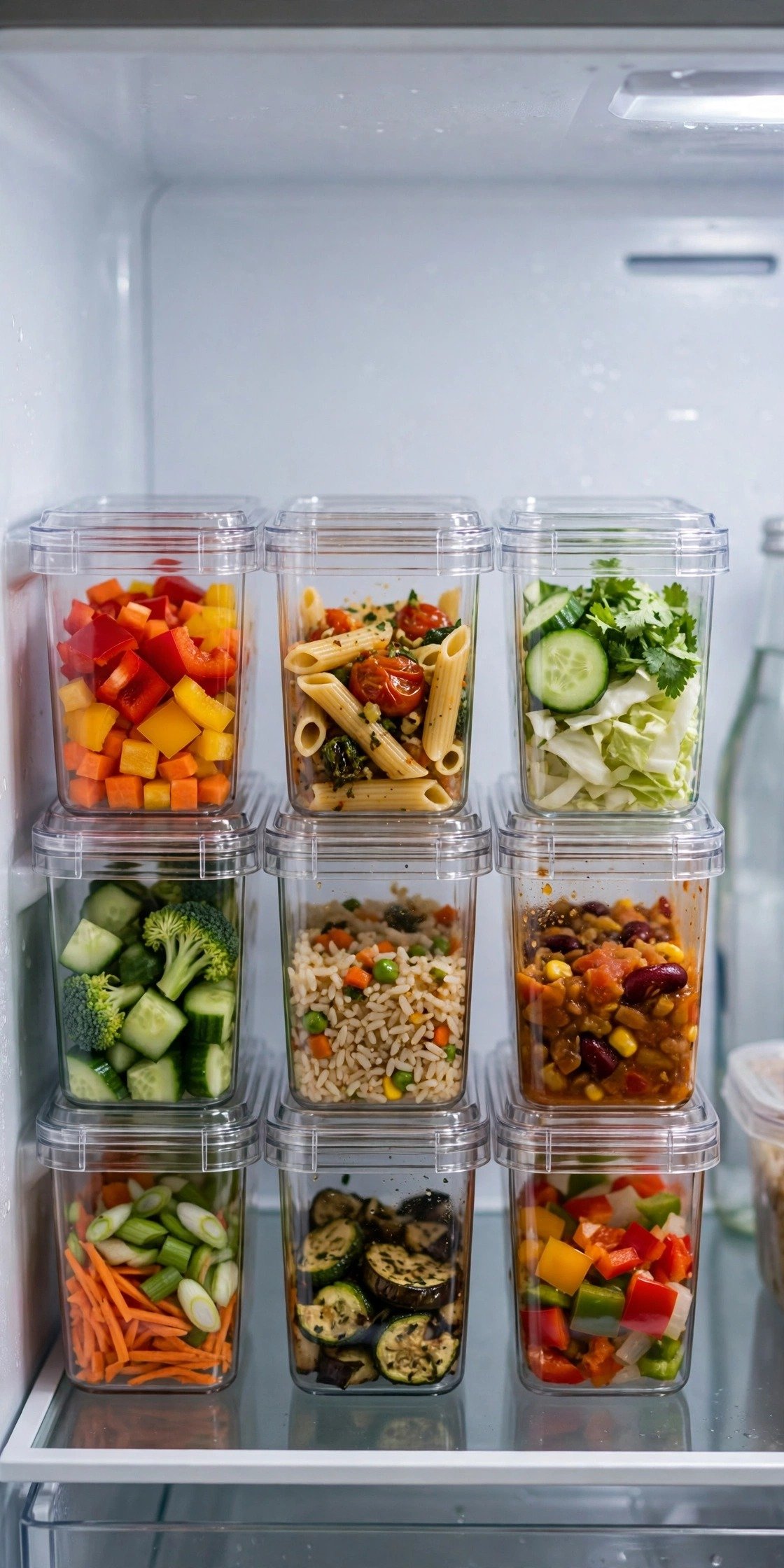
Packaging is what wastes fridge space: half-empty boxes, floppy bags, round tubs that do not stack. Decant leftovers, rice, and chopped vegetables into square stackable containers with lids, and the same shelf suddenly holds twice as much.
Square containers stack neatly and their flat lids become extra shelves. Round tubs waste the corners; square ones do not. Keep one set of matching containers and retire the odd shapes — a matching set stacks, a random collection topples. The fridge gains space without gaining a single centimetre.
5. Door Rules: Condiments Only
The fridge door is the warmest part of the fridge, so it is the worst place for milk and eggs — yet that is where most people put them. Door rule: condiments, sauces, jams and pickles only. Milk, eggs and dairy belong on the middle shelf where the temperature stays steady.
The door works for condiments because they are built to survive the temperature swings, and the tall narrow bottles fit the door racks perfectly. Moving the milk off the door also frees the biggest door rack for the bottles that actually belong there. One rule, and the fridge runs colder and safer.
6. The “Eat Me First” Box
Every fridge needs one small box, front and centre, labelled “eat me first”: the half onion, the last two slices of cheese, the yoghurt expiring tomorrow, the leftover rice. Anything that needs eating in the next two days goes in the box, and the box is the first thing you open at mealtimes.
The box works because it turns “use it or lose it” into a visible decision instead of a forgotten one. Small kitchens throw away more food than big ones, and most of it is small amounts — exactly what the box catches. When the box is empty, the fridge is healthy.

7. The Weekly Ten-Minute Fridge Reset
A small fridge only stays organized if it is reset weekly, and the reset only happens if it is short. Ten minutes, once a week, before the big shop: pull out anything expired, wipe one shelf, move older food forward, and check the “eat me first” box.
Ten minutes a week beats an hour-long deep clean every month, and the fridge never reaches the stage where opening it feels like a chore. The reset also tells you what you actually use, so the shopping list gets shorter and cheaper over time.
8. A Freezer Inventory on the Door
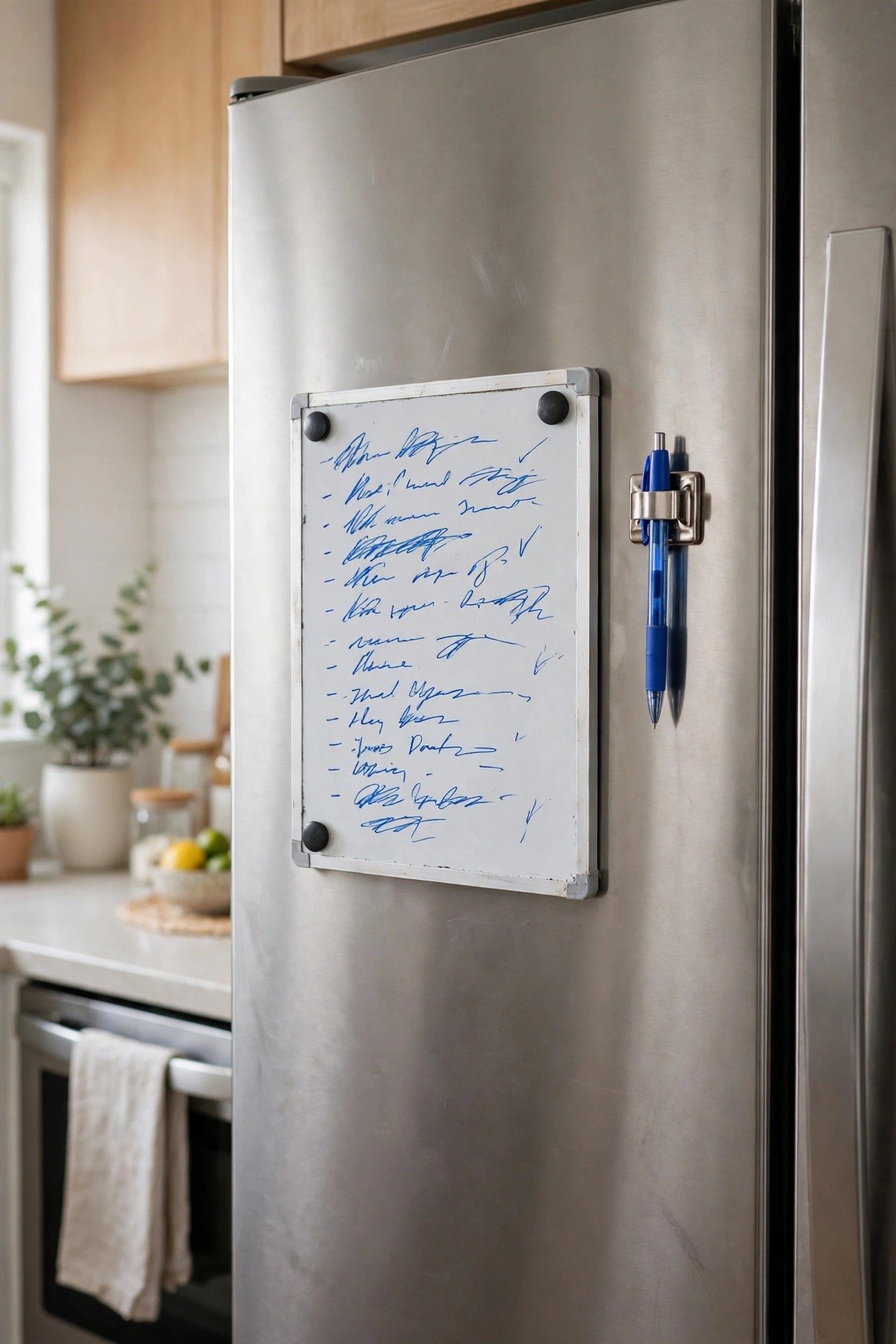
The freezer is where small kitchens lose the most food, because nobody remembers what is in there. Stick a small whiteboard or a notepad on the fridge door and write down everything in the freezer, crossing items off as you use them. New bag in, write it down; bag out, cross it off.
The list works because it stops the double-buying: you can see the two bags of frozen peas before you buy a third. It also stops the mystery bags that sit in the freezer for a year because nobody knows what they are. A freezer you can read is a freezer you actually use.
A Small Fridge That Saves Money
None of these ideas needs a bigger fridge or a big budget. Zones on every shelf, clear bins and labels, first in first out, stackable containers, condiments-only doors, an “eat me first” box, a ten-minute weekly reset, and a freezer list on the door. Start with the zones and the bins — the two cheapest moves — and the small fridge stops wasting food and space, because everything in it finally has one clear place to be. It all adds up to a calmer kitchen, as shown in these small kitchen organization ideas.