
Small homes do not need more storage products. They need better systems — one zone at a time, with the cheapest fix tried before any new container is bought. Start by emptying a single zone completely, keeping only what you actually use, and putting everything else in a donate box the same day. Then give every remaining item a home you can reach without moving three other things, and label it so anyone in the house can put it back. That zones-first, labels-second method is the backbone of this guide, and it works whether you rent a studio or own a small house. The cheapest fixes cost nothing: decluttering, moving daily items to eye level, and reusing jars and boxes you already own. After that, a full zone-by-zone reset usually runs about $150–$400 in total for the core systems — basic bins, baskets, hooks, and shelf risers bought one zone at a time, not all at once. Spend the most where the mess costs you the most time, usually the kitchen and the closet. Below are 27 smart ideas, one for every corner of a small home, from the pantry to the garage. If money is tight, start with our home organization ideas on a budget and our guide to tiny apartment storage — both prove that a small space can feel calm without a big spend.
## Kitchen & Pantry
The kitchen is where a small home wins or loses the day. Counters double as worktops, cabinets hide the overflow, and one messy drawer can slow down every meal. Work this zone first, in small steps, and keep only the tools you use weekly within arm’s reach.
### Pantry Organization Ideas
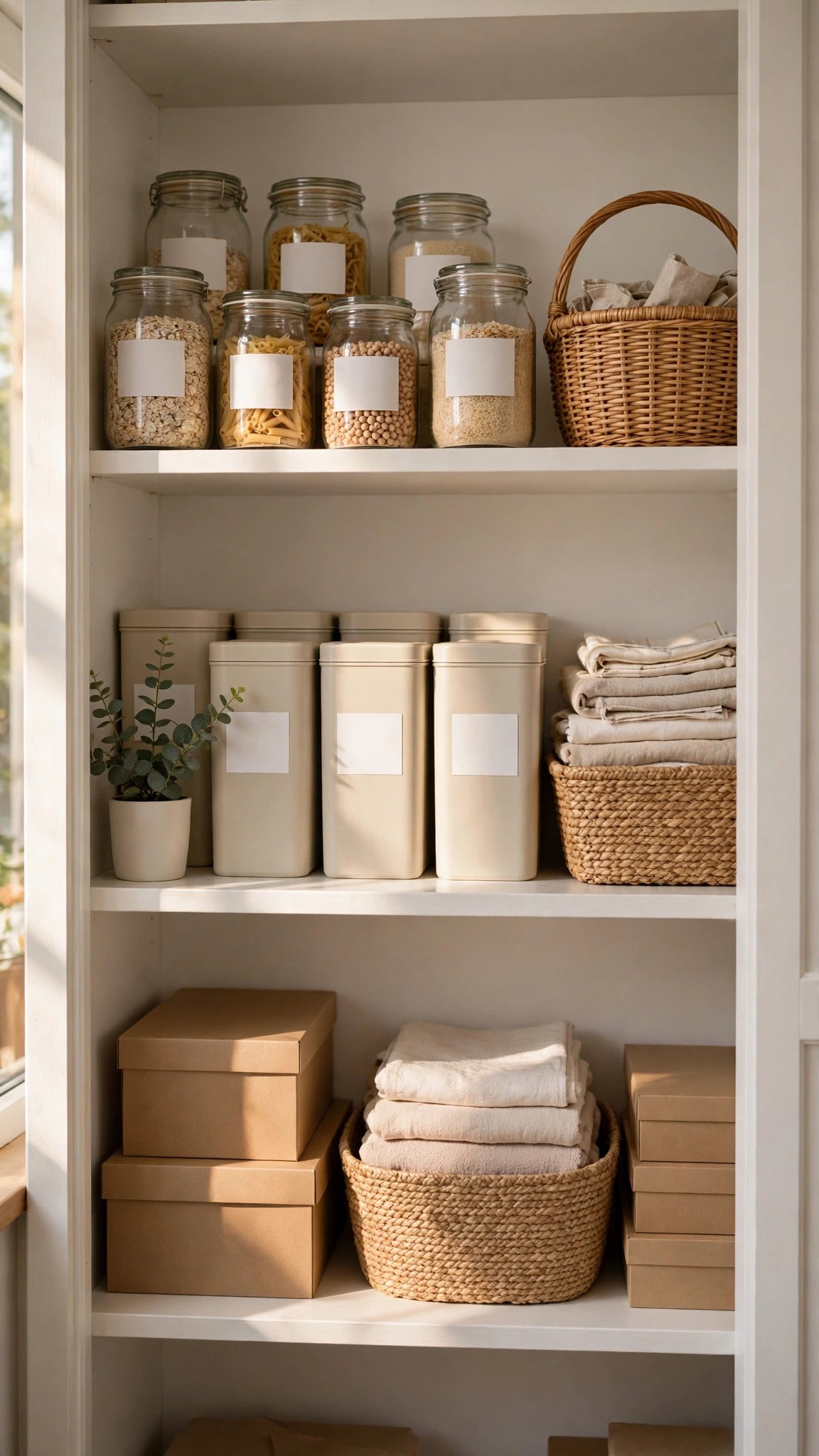
Group pantry food by how you cook, not by package size: breakfast together, baking together, snacks together, and one small bin for sauces and oils. Use clear containers for dry goods so you can see at a glance what is running low, and keep a single row of everyday items at eye level. Heavy bags go low, light boxes go high, and nothing sits directly on the floor. A narrow shelf riser inside a deep pantry can double the usable space for cans and jars for under $20. For a full step-by-step plan, read our pantry organization ideas and set aside one hour to empty, wipe, and restock a single shelf before moving on.
### Small Kitchen Storage Ideas
In a small kitchen, the walls and the insides of doors are storage too. Hang a rail with hooks for mugs and utensils, fix a magnetic strip for knives, and mount a narrow shelf above the sink for soap and sponges. Inside cabinets, stackable shelf risers create a second layer for plates and bowls, and a lazy Susan in a corner cabinet stops jars from disappearing at the back. Measure the gap between shelves before buying anything — most risers fit a 9 to 12 inch clearance. Our small kitchen storage ideas show how to add room without adding furniture or drilling into tile.
### Small Kitchen Organization Ideas
Start kitchen organization with a ruthless cull: duplicate spatulas, chipped mugs, and gadgets used once a year do not earn counter or cabinet space. Keep a “one in, one out” rule from now on, so every new tool replaces an old one. Store cooking tools beside the stove, prep tools beside the chopping board, and cleaning supplies under the sink — each job gets its own station. A simple daily reset takes five minutes: clear the counters, run the dishwasher, and wipe the stove. See our small kitchen organization ideas for a zone-by-zone routine that keeps a tiny kitchen working even on busy weeknights.
### Tiny Kitchen Cabinet Organization
Deep kitchen cabinets waste space at the back, so pull everything out and sort by use: daily, weekly, and rarely. Daily items live at the front and at eye level; rarely used items move to the highest shelf or another room entirely. Add pull-out baskets or small bins to deep base cabinets so you can slide a whole category out instead of reaching past it. In upper cabinets, keep plates and bowls in one stack and mugs on a single row, with a shelf riser adding a second tier where the gap allows. Our tiny kitchen cabinet organization guide walks through the measurements that matter before you buy a single organizer.
### Small Pantry Mistakes
The most common pantry mistake is buying matching containers before deciding what goes where — pretty bins cannot fix a pantry with no zones. Other frequent errors are storing food above the stove, where heat shortens its life; stacking cans three deep, so the ones at the back expire unseen; and keeping bulk buys you have no shelf for. Decant only what you use often, keep original labels on anything you might need instructions for, and check expiry dates once a month. Read our small pantry mistakes before your next grocery run so you stop paying for food that ends up in the bin.
### Small Kitchen Counter Organization
A clear counter starts with deciding what earns a permanent spot: usually the kettle or coffee maker, a knife block or strip, and a chopping board — everything else gets stored away. Use a single tray to corral oils, salt, and pepper near the stove so the group can be moved in one lift for wiping. A wall-mounted rail or a small shelf above the backsplash takes utensils and spices off the worktop without drilling into cabinets. Leave at least one stretch of counter, about 24 inches wide, completely empty for prep work. Our small kitchen counter organization guide shows how to keep that prep space clear for good.
### How to Organize a Small Pantry
Organizing a small pantry takes one afternoon and four steps: empty it fully, clean the shelves, sort food into keep, donate, and toss piles, then rebuild it by category. Measure each shelf before buying bins — standard pantry shelves are 12 to 16 inches deep, and bins wider than that will stick out and catch the door. Put the most-used categories at eye level, heavy items on the lowest shelf, and seldom-used bulk stock up high. Label every bin on the front, and keep a small notepad or phone list for items running low. Our how to organize a small pantry guide covers the full method, including what to do with awkward half-empty packets.
### Fridge Organization for Small Kitchens
A small fridge works best when every shelf has a job. Keep ready-to-eat food and leftovers at eye level, raw meat sealed on the lowest shelf, and dairy toward the back where it stays coldest. Clear bins, roughly 12 inches long, group similar items — one for sauces, one for breakfast, one for snacks — so a single pull brings out the whole category. Label leftovers with the date using masking tape, and do a two-minute check before each grocery shop to use up what is already open. See our fridge organization for small kitchens for a layout that fits a standard apartment fridge without extra gadgets.
### Spice Organization for a Small Kitchen
Spices take up little room but create big clutter when they live in three different cupboards. Gather them all in one spot, toss anything older than a year or with no smell left, and sort by how often you cook with them. A small stepped riser inside a cabinet keeps labels visible, while a magnetic rack on the fridge door or a narrow pull-out beside the stove works when cabinet space is gone. Keep everyday spices — salt, pepper, and your two or three most-used blends — within one step of the stove. Our spice organization for a small kitchen guide compares the best spots so you can pick the one your kitchen actually has room for.
### Junk Drawer Organization for a Small Kitchen
Every kitchen has a junk drawer, and the fix is not a bigger drawer but a smaller one. Empty it, throw out dried pens, dead batteries, and mystery keys, then sort what remains into tiny groups: batteries, tape and scissors, screws and picture hooks, and chargers. A shallow tray with four to six compartments, sized to the drawer — most kitchen drawers are about 12 to 15 inches wide — stops the groups from mixing again. Limit the drawer to one tray, and move anything that does not fit to its real home elsewhere. Our junk drawer organization for a small kitchen guide shows the five-minute reset that keeps it tidy for months.
## Closets & Bedroom
Bedrooms and closets hold the clothes, linens, and keepsakes that pile up fastest. The goal here is simple: everything you wear regularly should be visible, reachable, and easy to put back, and everything else should live somewhere harder to reach.
### Under-Bed Storage Ideas for Small Spaces
The space under the bed is one of the biggest unused storage spots in a small home — most bed frames leave 6 to 8 inches of clearance. Flat, lidded bins on wheels slide in and out easily and keep dust off out-of-season clothes, spare bedding, and shoes. Vacuum bags can shrink bulky winter coats and duvets to half their size, but leave one bag unsealed for items you reach for often. Label the short end of each bin so you can read it without pulling it out. For bin sizes, layouts, and what never to store under a bed, see our under-bed storage ideas for small spaces.
### Closet Organization Ideas
A closet works when you can see everything in it at once. Start by removing anything you have not worn in a year, then hang clothes by type and by color so outfits are easy to spot. Matching slim hangers free up surprising space — they take about half the width of bulky wooden ones. Add a second hanging rail below the first for shirts and folded trousers, and use the shelf above for labeled bins holding accessories and out-of-season pieces. Keep a small donate bag hanging on the closet door so letting go becomes a habit. Our closet organization ideas cover the full layout, from rail heights to shoe storage.
### Linen Closet Organization Ideas
Fold sheets, towels, and blankets into neat stacks by size, and store a full sheet set inside one of its own pillowcases so the pieces never separate. Keep everyday towels at eye level, guest bedding on a higher shelf, and cleaning cloths in a small basket at the bottom. Rolled towels save space and look tidy in a narrow linen closet, and a single labeled bin per family member stops the stacks from sliding into each other. Air the closet out once a season and check for damp, especially in homes without much ventilation. See our linen closet organization ideas for folding methods and shelf layouts that fit shallow closets.
### Small Bedroom Big Storage
A small bedroom needs furniture that does double duty: a bed with drawers underneath, a nightstand with a drawer instead of open shelves, and a tall narrow dresser rather than a wide low one. Use the wall above the dresser for a shelf or hooks, and keep a slim laundry basket in the corner so clothes never land on the floor. Store off-season clothes in labeled bins on top of the wardrobe, and keep only the current season hanging. A mirror on the wardrobe door adds light without taking floor space. Our small bedroom big storage guide shows how to fit a full wardrobe, bedding, and daily essentials into one small room.
## Bathroom & Laundry
Bathrooms and laundry corners are small, damp, and shared, so they need systems that survive daily use. Keep daily items at hand height, store the rest behind closed doors, and give cleaning supplies one fixed home.
### Small Bathroom Storage
In a small bathroom, the space above the toilet, behind the door, and under the sink is worth more than any new cabinet. A narrow shelf above the toilet holds spare towels and toiletries, while adhesive hooks on the door carry robes and hair tools. Roll towels instead of folding them to fit more into a small shelf, and keep only the products you use daily on the counter — the rest belongs in a basket inside a cabinet. A small tray corrals toothbrushes, soap, and skincare into one wipeable group. See our small bathroom storage guide for layouts that work in bathrooms with almost no counter space.
### Under-Sink Organization for a Small Bathroom
The cabinet under the bathroom sink is usually a tangle of bottles, so start by pulling everything out and grouping it: cleaning, hair care, skincare, and first aid. A small tension rod across the cabinet lets spray bottles hang by their triggers, freeing the floor of the cabinet for bins. Stackable drawers or a two-tier shelf, sized to clear the pipes — measure the height beside the drain before buying — keep everyday items reachable and spares below. Label each bin, and keep a small caddy of daily items that lifts out in one hand. Our under-sink organization for a small bathroom guide shows the measurements and layouts that actually fit around plumbing.
### Small Laundry Room Organization
A small laundry room runs smoothly when washing, drying, and folding each have a spot. Keep detergent, stain remover, and pegs in a basket or on a shelf directly above the machine, within one step of the drum. A wall-mounted drying rack folds away when not in use, and a narrow rolling cart between the washer and the wall holds supplies in a gap that would otherwise be wasted. Sort laundry into two or three labeled baskets — lights, darks, and delicates — so sorting never becomes a separate job. See our small laundry room organization guide for a setup that fits a laundry closet as well as a full room.
### Sage Green Laundry Room Makeover
A laundry room you enjoy using stays tidy longer, and a soft sage green is a calm, budget-friendly way to refresh one. Paint the walls or just one accent wall, then swap in matching baskets, a wooden shelf, and simple labels for a pulled-together look. Keep the makeover practical: open shelves for detergent and jars, hooks for an ironing board and drying rack, and a small folding surface if space allows. Most of the change comes from paint and storage you already own, with new baskets and hardware costing under $50 in total. Our sage green laundry room makeover shows the before-and-after steps and the exact touches that make a small laundry corner feel finished.
## Living Room & Entryway
The living room and entryway are the first things you see when you come home, so they set the mood for the whole house. Give shoes, keys, and bags a landing spot at the door, and keep the living room’s storage closed and calm.
### Small Living Room Storage
A small living room needs storage that looks like furniture. An ottoman with a lift-up lid hides blankets and board games, a coffee table with a shelf or drawer holds remotes and chargers, and a low media unit with closed doors keeps cables and clutter out of sight. Use the wall for a slim floating shelf or two, and keep a single basket near the sofa for the things in daily use — throws, books, and the remote. Measure before buying: leave at least 18 inches between the sofa and the coffee table so the room stays easy to walk through. See our small living room storage guide for furniture picks that add storage without crowding the room.
### Entryway Organization for Small Homes
A small entryway needs only three things: a place for shoes, a place for coats and bags, and a place for keys. A slim shoe rack or a low bench with shoe storage underneath keeps pairs off the floor, while two or three sturdy wall hooks hold coats at different heights for adults and children. A small tray or wall-mounted holder by the door catches keys, sunglasses, and mail, and a basket for outgoing items — returns, library books, letters to post — stops them from piling on a table. Our entryway organization for small homes guide shows how to build this landing zone in a hallway barely a metre wide.
## Home Office & Dining
Work and meals share space in many small homes, so these zones need to switch roles cleanly. The rule is simple: when work ends, the desk clears, and when dinner ends, the table clears too.
### Small Home Office Organization
A small home office works best when the desk holds only what the current task needs. Keep a laptop stand, a single pen cup, and a small tray for papers in progress; everything else goes in a drawer or on a shelf. Use a cable box or clips to keep chargers off the floor, and add a wall-mounted shelf above the desk for books and supplies instead of spreading them across the worktop. End each workday with a two-minute reset: file loose papers, clear the desk, and lay out tomorrow’s first task. Our small home office organization guide covers desk layouts and storage for offices carved out of a bedroom corner or a closet.
### Small Dining Room Organization
A small dining room should flex between meals, homework, and hosting. Choose a table that extends or folds, and store the extra leaves and placemats in a slim cabinet or on a high shelf nearby. Keep tableware in a sideboard or a wall-mounted cabinet close to the table so setting it takes one trip, and use a tray to hold the salt, candles, and napkins that live on the table between meals. A single basket under the sideboard holds tablecloths and seasonal pieces. See our small dining room organization guide for layouts that seat six without leaving the room crowded the rest of the week.
## Balcony, Hallway & Garage
The in-between spaces — balcony, hallway, and garage — are where overflow goes to hide. Treat them as real zones with their own systems, and they stop being dumping grounds.
### Balcony Storage for Small Apartments
A balcony stores best in weatherproof boxes that double as seating: a lidded bench holds cushions, plant tools, and outdoor toys, and a slim deck box against the wall keeps cleaning supplies dry. Use wall hooks or a narrow vertical rack for folding chairs, and keep plants in stackable pots so they take up floor space only once. Check your building’s rules before adding anything fixed to the railing, and keep a clear path to the door at all times. Our balcony storage for small apartments guide shows weatherproof options that survive rain and sun without rusting or fading fast.
### Hallway Storage for Small Homes
A narrow hallway can still earn its keep. A slim console or a wall-mounted shelf holds keys and mail, hooks at two heights take coats and children’s bags, and a long low bench with shoe storage underneath keeps the floor clear. Use the space above the door frame for a shallow shelf holding out-of-season items in labeled boxes, and keep the hallway itself free of anything wider than the bench — walkways need at least 36 inches clear. A mirror on one wall adds light and makes the space feel wider. See our hallway storage for small homes guide for layouts that fit hallways under four feet wide.
### Garage Organization Ideas
A garage works when the floor stays clear and everything has a wall or ceiling home. Start by sorting into keep, donate, and toss, then group what remains: tools, sports gear, garden supplies, and car care. Heavy-duty wall hooks and a pegboard keep tools visible and off the floor, while labeled bins on sturdy shelves hold seasonal items up high. Bikes hang from wall or ceiling mounts, and a single rolling cart holds the tools you reach for most. Our garage organization ideas cover the full zone system, from the first sort to a layout that still fits the car.
## Frequently Asked Questions
### How do I start organizing a small home when everything feels overwhelming?
Start with one zone, not the whole house. Pick the spot that bothers you most — usually the kitchen counter or the closet — set a timer for one hour, and empty only that zone. Sort into keep, donate, and toss, then put back only what you use. One finished zone gives you momentum and a visible win; trying to do every room at once is how most organizing projects stall halfway.
### What is the cheapest way to organize a small space?
The cheapest fixes cost nothing: declutter first, move daily items to eye level, and reuse jars, boxes, and baskets you already own. After that, buy only for a measured gap — a shelf riser, a few hooks, or one set of bins — rather than a matching set for the whole house. Most homes can set up the core systems for about $150–$400 in total, bought zone by zone.
### How do I keep a small home organized once it is done?
Build a five-minute daily reset into your routine: clear the counters, return stray items to their labeled homes, and run one load of laundry or dishes. Add a monthly ten-minute check of one zone — the pantry, the fridge, or the junk drawer — to catch clutter before it spreads. The system only works if every item has a home and everyone in the house knows where it is.
### Should I buy storage containers before or after decluttering?
Always after. Decluttering first usually cuts what you own by a third or more, so containers bought beforehand end up the wrong size or half empty. Measure the shelf or drawer, decide the zone, and then buy only what fits that exact space. One well-fitting bin beats five pretty ones that do not fit anywhere.
## More Organization Ideas
If you enjoyed this guide, start with three of our most-loved organization posts: Pantry Organization Ideas, Small Bedroom Big Storage, and Small Bathroom Storage. Each one goes deeper into its own zone with step-by-step layouts and measurements. And the full set of 27 ideas in this guide covers every corner of a small home — work through them zone by zone, and your home will feel calmer room by room.